Seattle, WA · coffee shop
Best neighborhoods for a coffee shop in Seattle
Finding the right neighborhood is critical when opening a coffee shop in Seattle. The city's diverse landscape offers distinct advantages and challenges for coffee entrepreneurs. This guide ranks the best neighborhoods for a coffee shop in Seattle based on demand, competition, rent fit, accessibility, and customer match.
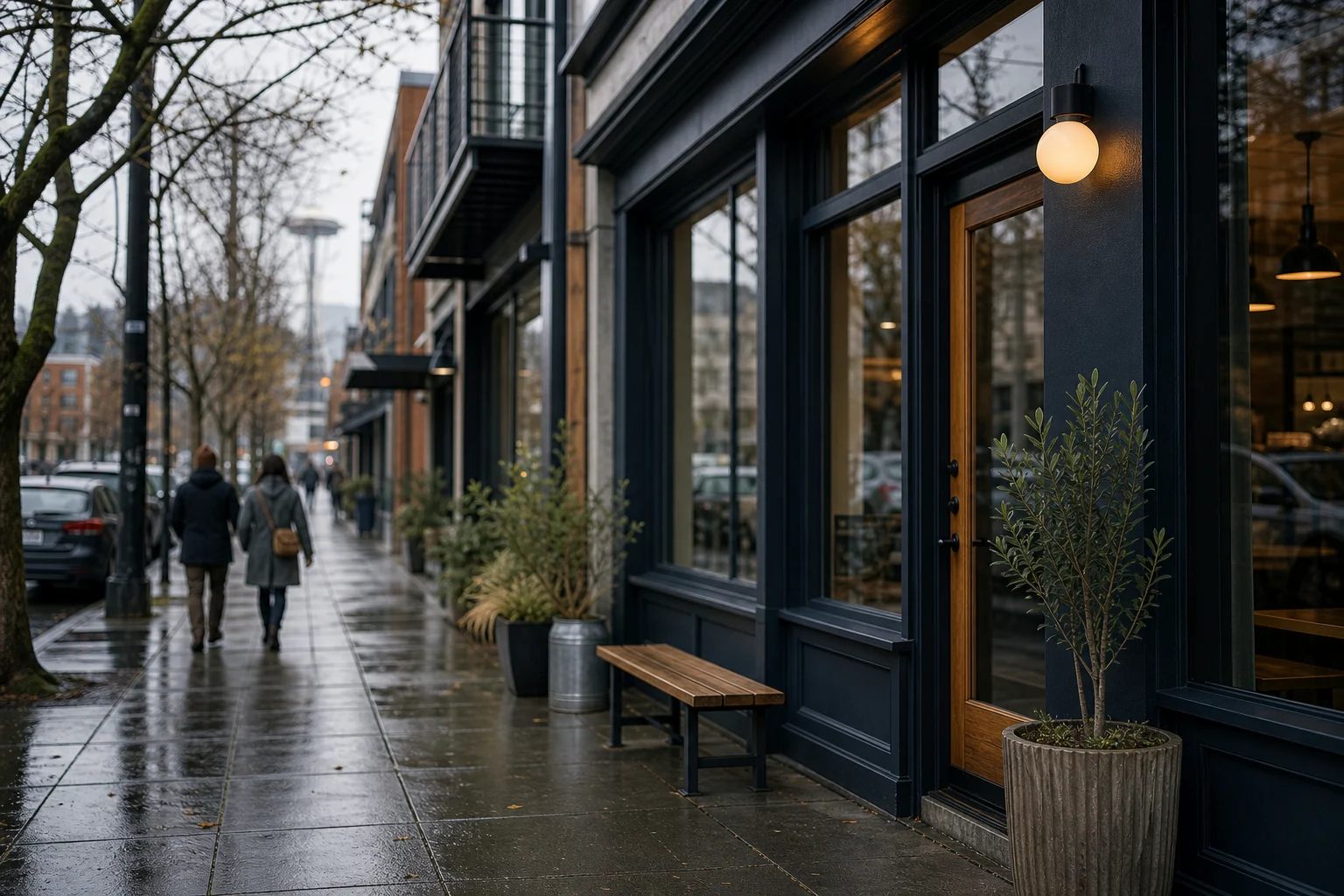
Why location fit matters for a coffee shop
Location determines your coffee shop's success. A prime spot brings consistent foot traffic, visibility, and accessibility. Seattle's neighborhoods vary dramatically in daytime population, rent costs, and coffee culture. The right location aligns with your target customers while balancing operational costs. A coffee shop in the wrong neighborhood struggles to build a loyal customer base, regardless of product quality. Seattle's competitive coffee market makes location selection even more critical.
Top 3 neighborhoods to consider
Based on Locavisor neighborhood scoring, these Seattle neighborhoods rank highest for coffee shop potential:
Eastlake / Cascade (7.8/10)
Eastlake / Cascade is your strongest bet — maxed-out office density from Amazon and Fred Hutch anchors a massive weekday coffee crowd. Expect roughly $30-50/sqft NNN, which is manageable for a medium-budget operator. ≈10,500 daytime workers within 800m create a reliable lunch-rush base. Market temperature is promising with medium competition density and low rent level. Score confidence is 78% based on the 2026-05 snapshot.
Capitol Hill (7.6/10)
Capitol Hill is Seattle's densest F&B corridor — walkability is near ceiling, daytime population is maxed out, and the light rail station drops commuters at your doorstep. Expect roughly $45-70/sqft NNN, which is the upper edge of medium-budget comfort. Market temperature is promising with medium competition density and medium rent level. Score confidence is 78% based on the 2026-05 snapshot.
Madrona / Leschi (7.5/10)
Madrona / Leschi is a quiet, affluent residential pocket along Lake Washington with a small but loyal commercial node at 34th Ave & Cherry. Expect roughly $30-50/sqft NNN — the most affordable rent of the top-ranked areas. ≈8,000 potential repeat households within 800m. The trade-off: car access is near-zero, parking is weak, and the commercial strip is short. Market temperature is promising with medium competition density and low rent level. Score confidence is 78% based on the 2026-05 snapshot.
How the neighborhood scores are built
Locavisor neighborhood scoring evaluates potential coffee shop locations across multiple dimensions. The algorithm analyzes daytime population density, commercial rent benchmarks, competition saturation, and customer demographics. Each neighborhood receives a score from 1-10 based on how well it aligns with coffee shop success factors. The scoring system weights high-traffic areas with reasonable rents and appropriate competition levels. Market temperature indicates overall opportunity potential, while competition density helps gauge market saturation. Rent levels are categorized as low, medium, or high relative to Seattle commercial benchmarks. Score confidence reflects data reliability based on neighborhood data completeness and recency.
How to validate the shortlist before signing a lease
Before committing to a lease, visit each neighborhood multiple times at different hours. Observe foot traffic patterns and note where people gather. Check for existing coffee shops and analyze their customer base. Consider visibility from main streets and proximity to complementary businesses. Test accessibility during both rush hours and off-peak times. Talk to local business owners about neighborhood dynamics and challenges. Review demographic data to ensure alignment with your target customer profile. Consider parking availability and public transportation access. Evaluate the physical condition of potential spaces and renovation requirements. Factor in build-out costs beyond base rent. The goal is to confirm that neighborhood data matches real-world conditions before making a significant financial commitment.
Common mistakes founders make in Seattle
Many coffee shop founders underestimate Seattle's competitive landscape. Some focus too heavily on trendy neighborhoods without analyzing actual foot traffic. Others overestimate their ability to differentiate in a market with established players. Rent negotiation often receives insufficient attention, with founders accepting first terms without exploring alternatives. Parking availability is frequently overlooked, particularly in neighborhoods with limited car access. Some founders fail to properly research neighborhood demographics, creating mismatched offerings for their customer base. Seasonal fluctuations in foot traffic are often underestimated, particularly in tourist-heavy areas. Permitting requirements and health department regulations can vary significantly between neighborhoods. Many founders don't adequately account for the time required to build a loyal customer base in a new location.

FAQ
Where is the best location for a Coffee Shop in Seattle? Based on Locavisor neighborhood scoring, Eastlake / Cascade ranks as the best neighborhood for a coffee shop in Seattle with a score of 7.8/10. This area offers strong weekday traffic from Amazon and Fred Hutch employees with manageable rent levels of $30-50/sqft NNN.
What rent can I expect in Seattle's top coffee shop neighborhoods? Rent varies by neighborhood. Eastlake / Cascade and Madrona / Leschi offer lower rent ranges of $30-50/sqft NNN, while Capitol Hill is at the higher end with $45-70/sqft NNN. These figures represent triple net lease costs before build-out expenses.
How much daytime population should I target for a coffee shop? Seattle's top coffee shop neighborhoods have significant daytime populations. Eastlake / Cascade has approximately 10,500 daytime workers within 800m, while Madrona / Leschi offers about 8,000 potential repeat households in the same radius. Higher daytime populations typically support stronger weekday business.
What's the competition like in these neighborhoods? All three top-ranked neighborhoods have medium competition density. This indicates a healthy market with established coffee shops but room for new entrants with strong differentiation. Market temperature across these areas is promising, suggesting opportunity for well-positioned newcomers.
How important is parking for a coffee shop in Seattle? Parking varies significantly by neighborhood. Madrona / Leschi has near-zero car access and weak parking, making it more suitable for walk-in customers. Eastlake / Cascade benefits from office workers who may have different transportation patterns. Your business model should align with the parking realities of your chosen neighborhood.
What's the confidence level of these neighborhood scores? The neighborhood scores have a confidence level of 78% based on the 2026-05 snapshot. This reflects good data reliability while acknowledging neighborhood dynamics can change. Regular updates to the data help maintain accuracy as neighborhoods evolve.
Should I consider residential neighborhoods for my coffee shop? Residential neighborhoods like Madrona / Leschi can be excellent for coffee shops with strong community ties. These areas offer repeat customers from nearby households but may have lower daytime traffic. The trade-off between residential and commercial neighborhoods depends on your business model and target customers.
How do I know if a neighborhood's coffee culture is right for me? Seattle's coffee culture varies by neighborhood. Visit local coffee shops to understand customer preferences and price points. Observe whether customers work on laptops, socialize briefly, or take drinks to go. These patterns inform your shop's design, menu, and service approach.
What's the typical timeline for a coffee shop to become profitable? Profitability timelines vary significantly based on location, concept, and execution. Neighborhoods with strong daytime traffic like Eastlake / Cascade may establish revenue faster than residential areas. Most coffee shops require 6-18 months to reach profitability, with prime locations potentially achieving this sooner.
How important is proximity to public transportation? Proximity to public transportation can significantly expand your customer base. Capitol Hill's light rail station directly serves commuters, making it easier to capture customers who don't live nearby. Areas with strong public transit connections often benefit from extended service hours and weekend traffic that might otherwise be limited.
Last reviewed: 2026-05-05
Sources: U.S. Census Bureau ACS, LEHD LODES, Google Places, OpenStreetMap, Locavisor neighborhood scoring.
Methodology: Locavisor scores neighborhoods across demand, competition fit, rent fit, accessibility, and customer match. Scores reflect a snapshot of recent data and should be combined with on-the-ground research before lease decisions.
Disclaimer: This article provides informational content only and does not constitute legal, financial, accounting, or real-estate advice. Verify lease terms, licensing, local regulations, costs, and professional requirements with qualified local professionals before making business decisions.
Free preview shows top 3 neighborhoods. Full $9.99 report covers all 10 areas with personalized scoring + 90-day check-ins.
Informational only. Verify lease, licensing, local regulations, costs, and professional requirements with qualified local professionals.