Washington, DC · barber shop
Cost to open a barber shop in Washington
Opening a barber shop in Washington requires careful planning of startup costs. The cost to open a barber shop in Washington varies significantly based on location, buildout quality, equipment needs, and staffing requirements. Washington's market temperature is promising with medium competition density and medium rent levels, making it an attractive but challenging market for new barbershops.
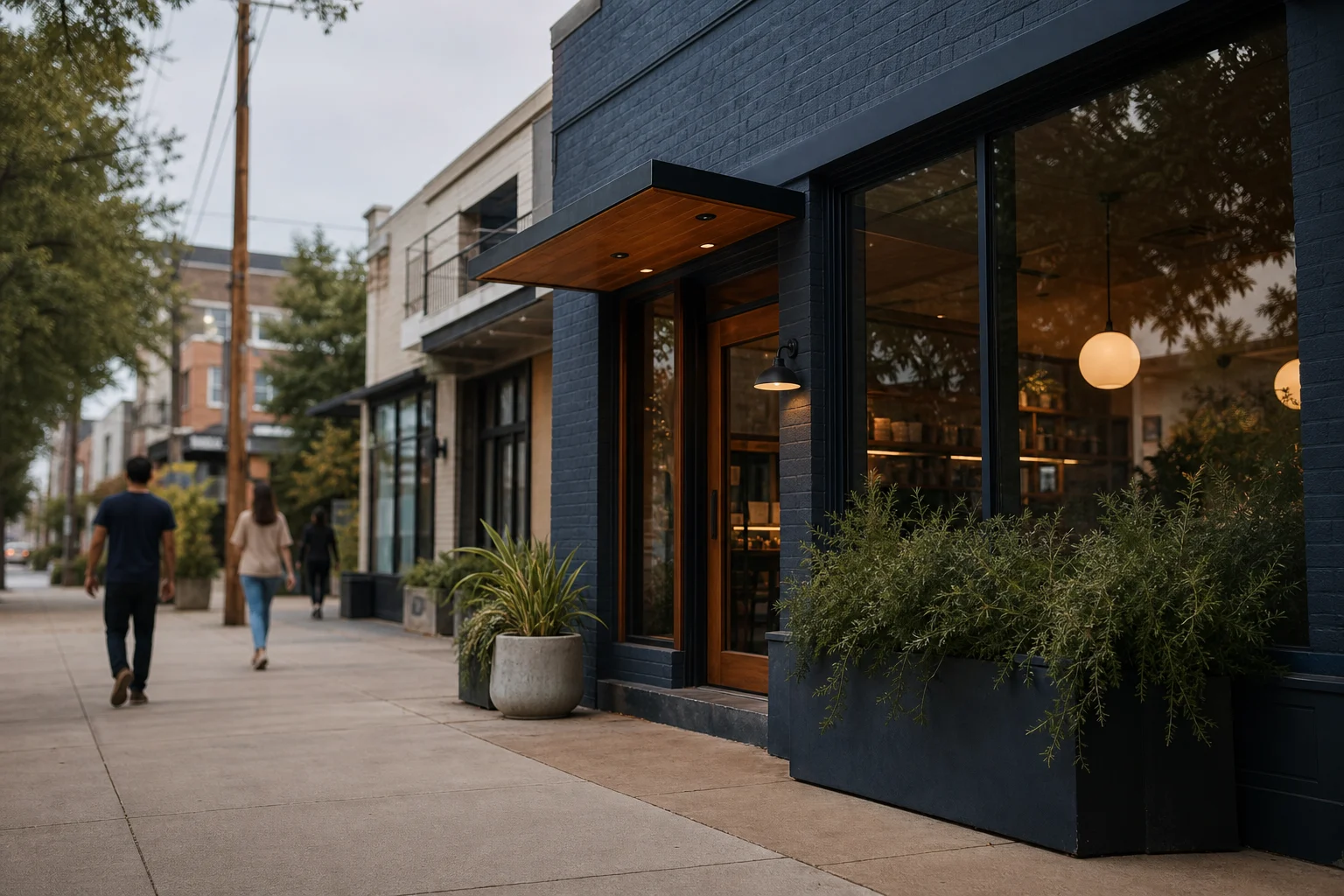
Main startup cost categories
The cost to open a barber shop in Washington involves several key categories that need consideration. Rent represents the largest fixed cost, followed by buildout and equipment expenses, staffing costs, inventory, permits, and cash reserves for the initial operating period. Each category requires careful planning and budgeting to ensure sufficient capital is allocated.
Rent and lease assumptions in Washington
Washington's top three neighborhoods for barber shops offer different rent structures and market dynamics. Foggy Bottom / GWU presents the strongest overall score at 7.1/10, with rent ranging from $30-50/sqft NNN. Logan Circle follows with a 6.9/10 score and higher rent expectations of $45-70/sqft NNN. Chevy Chase DC also scores 6.9/10 but offers the most affordable rent range at $20-35/sqft NNN.
The rent level directly impacts your monthly fixed costs and break-even calculations. In Foggy Bottom / GWU, the risk involves building a loyal repeat base in a transient student-heavy zone where barber economics need a 60%+ rebook rate. Logan Circle delivers dense young-professional residential population and strong office-worker lunch traffic, with 7 barber competitors within 800m confirming demand. The late-night score in Logan Circle is mid-tier, making it a daytime-and-evening play rather than a late-night option.
Chevy Chase DC presents a different opportunity with its stable, family-oriented residential corridor and the best rentFit score (9.2) among the top three areas. With only one barber competitor (Stayfly Cutz, unrated) within 800m, this location offers low competition but also unvalidated demand. This represents a lower-risk, lower-reward play for an operator seeking steady neighborhood repeat business.
Buildout, equipment, payroll, opening inventory, permits, and cash reserve
Buildout costs depend heavily on the condition of your commercial space and the aesthetic you want to create. A new buildout in Washington could range from basic functional designs to premium experiences that match neighborhood expectations. Equipment represents another significant investment, including barber chairs, mirrors, wash stations, clippers, scissors, and styling tools.
Payroll costs include not just stylists' wages but also benefits, insurance, and potential commission structures. Opening inventory covers initial supplies like shampoo, conditioner, styling products, capes, towels, and retail merchandise. Permits and licensing requirements in Washington include barber licenses, business licenses, health department permits, and potentially alcohol licenses if offering beverages.
Cash reserves are critical for covering operating expenses during the initial ramp-up period when client base is building. The market temperature in Washington is promising, but new businesses typically need sufficient capital to reach sustainable revenue levels. This cash buffer should cover rent, utilities, payroll, inventory replenishment, and marketing expenses.

Lean vs moderate vs generous launch budgets
Launch budget approaches vary significantly among Washington barbershop founders. A lean budget might focus on a smaller space with minimal buildout, used equipment, and a lean staffing model. A moderate budget allows for quality buildout, new equipment, and a more comprehensive service menu. A generous budget enables premium design, high-end equipment, expanded services, and additional staff.
The competition density in Washington is medium, with Foggy Bottom / GWU having 8 barber competitors within 700m and Logan Circle having 7 within 800m. This level of competition suggests that differentiation through service quality, atmosphere, or specialization will be important for market entry. Chevy Chase DC's single competitor within 800m presents both opportunity and challenge regarding market validation.
Budget allocation should prioritize revenue-generating elements while maintaining quality standards. The score confidence in Locavisor's neighborhood data is 85%, providing reliable guidance for location selection but requiring on-the-ground validation of foot traffic, demographics, and competitive positioning.
What to validate before spending money
Before committing significant capital to a Washington barbershop, validate several critical factors. Lease assumptions should be verified through actual foot traffic counts at different times and days. Buildout scope should align with neighborhood expectations while staying within budget constraints. Equipment needs should be based on service offerings and stylist preferences rather than aspirational ideals.
Payroll models must reflect realistic client acquisition and retention expectations. Opening inventory should be sufficient for initial operations without excessive overstock. Cash reserve requirements should account for seasonal variations and the typical ramp-up period for new service businesses. Local professional reviews of your concept, pricing, and location choice can provide valuable insights before finalizing plans.
The data vintage of 2026-05 provides current neighborhood scoring, but on-the-ground conditions may have changed. Foggy Bottom / GWU's massive daytime worker and student population creates both opportunity and challenge regarding client retention. Logan Circle's dense young-professional residential population offers strong potential for repeat business. Chevy Chase DC's family-oriented residential corridor suggests a different client demographic with potentially different service expectations.
FAQ
How much does it cost to open A Barber Shop in Washington?
The exact total cost to open a barber shop in Washington cannot be estimated from the provided data. Startup costs vary significantly based on location, space size, buildout quality, equipment needs, staffing requirements, inventory levels, and permit fees. The cost to open a barber shop in Washington depends on multiple variables that require validation before final budgeting. Potential founders should research specific lease terms, buildout quotes, equipment pricing, staffing costs, and permit requirements in their chosen neighborhood to develop accurate cost projections.
What are the best neighborhoods for a barbershop in Washington?
Based on Locavisor neighborhood scoring, the top three neighborhoods for a barbershop in Washington are Foggy Bottom / GWU (7.1/10), Logan Circle (6.9/10), and Chevy Chase DC (6.9/10). Each offers different advantages: Foggy Bottom / GWU has the highest score and proven demand with 8 competitors within 700m; Logan Circle offers strong residential and office traffic; Chevy Chase DC provides the most affordable rent and lowest competition but unvalidated demand.
What rent can I expect for a barbershop in Washington?
Rent expectations vary by neighborhood: Foggy Bottom / GWU ranges from $30-50/sqft NNN; Logan Circle ranges from $45-70/sqft NNN; and Chevy Chase DC ranges from $20-35/sqft NNN. These rent levels directly impact monthly fixed costs and should be factored into financial projections alongside buildout costs, equipment expenses, staffing needs, and inventory requirements.
How much competition exists in Washington's barbershop market?
Competition density in Washington is medium. Foggy Bottom / GWU has 8 barber competitors within 700m, Logan Circle has 7 within 800m, and Chevy Chase DC has only 1 competitor (Stayfly Cutz, unrated) within 800m. This varying level of competition affects market entry strategy and differentiation opportunities in each neighborhood.
What should I consider when choosing a location for my barbershop?
When choosing a location, consider walkability scores, daytime population density, residential demographics, competition levels, rent costs, and client retention potential. Foggy Bottom / GWU offers maxed-out walkability and a massive daytime population but requires a 60%+ rebook rate due to its transient nature. Logan Circle provides strong residential and office traffic with mid-tier late-night potential. Chevy Chase DC offers stable family-oriented residential appeal with the lowest rent but unvalidated demand.
Last reviewed: 2026-05-08
Sources: U.S. Census Bureau ACS, LEHD LODES, Google Places, OpenStreetMap, Locavisor neighborhood scoring.
Methodology: Locavisor scores neighborhoods across demand, competition fit, rent fit, accessibility, and customer match. Scores reflect a snapshot of recent data and should be combined with on-the-ground research before lease decisions.
Disclaimer: This article provides informational content only and does not constitute legal, financial, accounting, or real-estate advice. Verify lease terms, licensing, local regulations, costs, and professional requirements with qualified local professionals before making business decisions.
Free preview shows top 3 neighborhoods. Full $9.99 report covers all 10 areas with personalized scoring + 90-day check-ins.
Informational only. Verify lease, licensing, local regulations, costs, and professional requirements with qualified local professionals.