Austin, TX · coffee shop
Cost to open a coffee shop in Austin
Opening a coffee shop in Austin requires careful planning and budgeting. The cost to open a coffee shop in Austin varies significantly based on location, size, concept, and operational approach. Austin's dynamic food scene presents both opportunities and challenges for new coffee entrepreneurs. This guide breaks down the practical startup-cost stack for coffee shops in Austin's top neighborhoods.
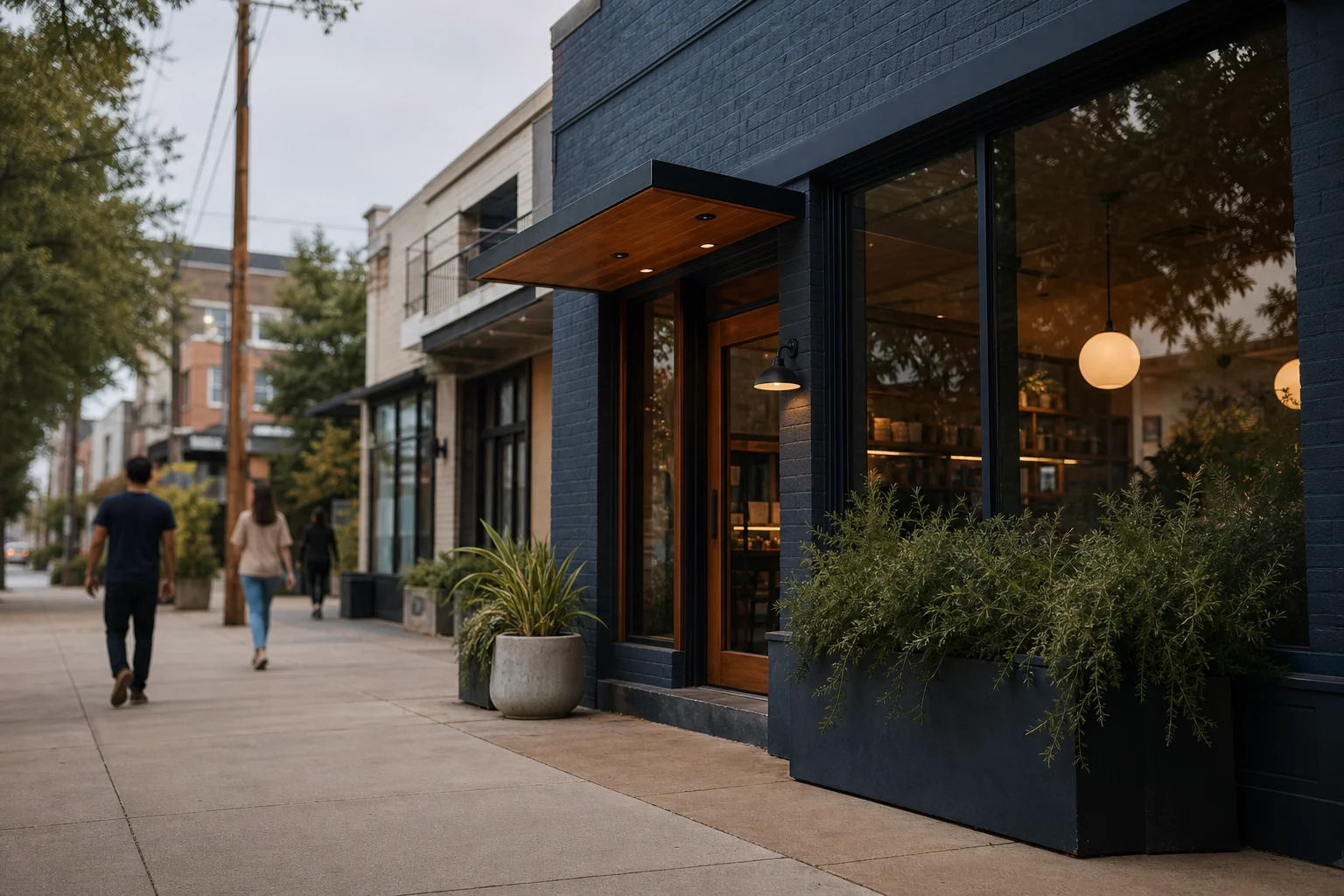
Main startup cost categories
The cost structure for opening a coffee shop in Austin includes several major components. Each category requires careful consideration and validation before committing funds. The primary cost categories include rent and lease assumptions, buildout and equipment, payroll, opening inventory, permits, and cash reserves. Understanding these categories helps founders develop realistic financial projections and avoid common cost traps that can derail new coffee businesses.
Rent and lease assumptions in Austin
Location significantly impacts startup costs and long-term viability. Locavisor neighborhood scoring identifies three top areas for coffee shops in Austin:
Domain / North Austin (6.8/10) — Top-ranked area anchored by The Domain mixed-use complex with heavy tech-office density (Indeed, Apple, Google). Strong lunch traffic from ≈10,500 weekday workers within 800m. Rent at roughly $30-50/sqft NNN is manageable for a medium-budget operator.
Hyde Park (6.4/10) — Historic bungalow neighborhood north of UT with strong walkability and transit access. Student index is near ceiling — ≈8,000 potential repeat households within 800m plus UT faculty and young families. Rent runs roughly $45-70/sqft NNN, a step up from Domain but still workable. Existing coffee options include Merit Coffee Co.
Downtown Austin (6.1/10) — Austin's primary CBD with Congress Ave, State Capitol, Indeed Tower, and 6th St entertainment. Daytime worker density is near ceiling — strong lunch traffic from office towers and government buildings. Rent is trophy-tier at roughly $90-140/sqft NNN, which will consume most of a medium budget.
Austin's market temperature is mixed with medium competition density. Rent levels vary significantly across neighborhoods, with Downtown commanding premium rates. The Domain offers the most balanced proposition for new coffee shops, combining strong daytime traffic with more manageable rent compared to Downtown.
Buildout, equipment, payroll, opening inventory, permits, and cash reserve
Buildout represents one of the largest startup costs for coffee shops. The scope of buildout depends heavily on the condition of the space and your concept requirements. Austin's commercial spaces often require significant plumbing, electrical, and layout modifications to meet coffee shop operational needs.
Equipment needs vary based on your service model. Essential equipment typically includes espresso machines, grinders, brewers, refrigeration, and POS systems. The scale and quality of equipment directly impact both startup costs and operational capabilities.
Payroll considerations extend beyond initial hiring to include training periods and potential seasonal fluctuations. Austin's competitive service industry means attracting and retaining qualified staff requires competitive compensation packages.
Opening inventory needs include coffee beans, milk, syrups, pastries, and supplies. Initial inventory levels should support operations while minimizing waste during the learning phase of business operations.
Permits and licensing requirements vary by location and concept type. Austin has specific regulations for food service businesses that must be addressed before opening.
Cash reserves are critical for covering unexpected expenses and supporting operations during the initial ramp-up period. Many coffee shops require several months of operating capital before reaching consistent profitability.

Lean vs moderate vs generous launch budgets
Founders must decide on their approach to startup budgets, with significant implications for cost structure. A lean launch minimizes buildout and equipment costs while potentially limiting operational capacity. A moderate budget balances quality and cost-effectiveness, allowing for solid infrastructure without excessive overhead. A generous budget enables premium equipment, extensive buildout, and comprehensive staffing but requires higher initial investment and longer break-even timeline.
Austin's market conditions influence budget decisions. The Domain's moderate rent levels support a moderate budget approach, while Downtown's premium rent may necessitate a leaner model regardless of concept ambitions. Hyde Park's student population suggests a moderate budget could work well with value-focused pricing strategies.
What to validate before spending money
Before committing significant funds to a coffee shop venture, founders should thoroughly validate key assumptions. Lease assumptions require careful review of terms, renewal options, and hidden costs. Buildout scope validation includes obtaining multiple contractor bids and understanding the full scope of required modifications.
Equipment list validation involves researching reliable suppliers and comparing total cost of ownership versus purchase price. Payroll model validation should include market rate research for Austin's service industry and realistic staffing needs based on projected volume.
Opening inventory validation requires calculating optimal initial stock levels based on projected sales and supplier lead times. Cash reserve validation should account for unexpected expenses and slower-than-expected ramp-up periods.
Finally, local professional review is essential. Austin-specific regulations, market conditions, and operational requirements may not be fully captured in general research. Consulting with local coffee shop owners, commercial real estate professionals, and business advisors can provide valuable insights specific to the Austin market.
FAQ
How much does it cost to open a Coffee Shop in Austin?
The exact total cost to open a coffee shop in Austin cannot be estimated from the provided data. Startup costs vary significantly based on multiple factors including location within Austin, size of the space, concept complexity, equipment quality, and buildout requirements. To develop accurate cost projections, founders should validate specific lease terms, obtain detailed buildout quotes, research equipment costs, model staffing needs, calculate inventory requirements, understand permit fees, and develop a realistic cash reserve plan. Austin's varying rent levels across neighborhoods create substantial cost differences that must be accounted for in any financial planning.
Last reviewed: 2026-05-05
Sources: U.S. Census Bureau ACS, LEHD LODES, Google Places, OpenStreetMap, Locavisor neighborhood scoring.
Methodology: Locavisor scores neighborhoods across demand, competition fit, rent fit, accessibility, and customer match. Scores reflect a snapshot of recent data and should be combined with on-the-ground research before lease decisions.
Disclaimer: This article provides informational content only and does not constitute legal, financial, accounting, or real-estate advice. Verify lease terms, licensing, local regulations, costs, and professional requirements with qualified local professionals before making business decisions.
Free preview shows top 3 neighborhoods. Full $9.99 report covers all 10 areas with personalized scoring + 90-day check-ins.
Informational only. Verify lease, licensing, local regulations, costs, and professional requirements with qualified local professionals.