Atlanta, GA · dry cleaner
Cost to open a dry cleaner in Atlanta
Opening a dry cleaner in Atlanta requires careful planning of startup costs. The cost to open a dry cleaner in Atlanta varies significantly based on location, size, and business model. This guide breaks down the practical startup-cost stack for Atlanta dry cleaners, helping founders make informed decisions about rent, buildout, equipment, permits, hiring, launch cash, and common cost traps.
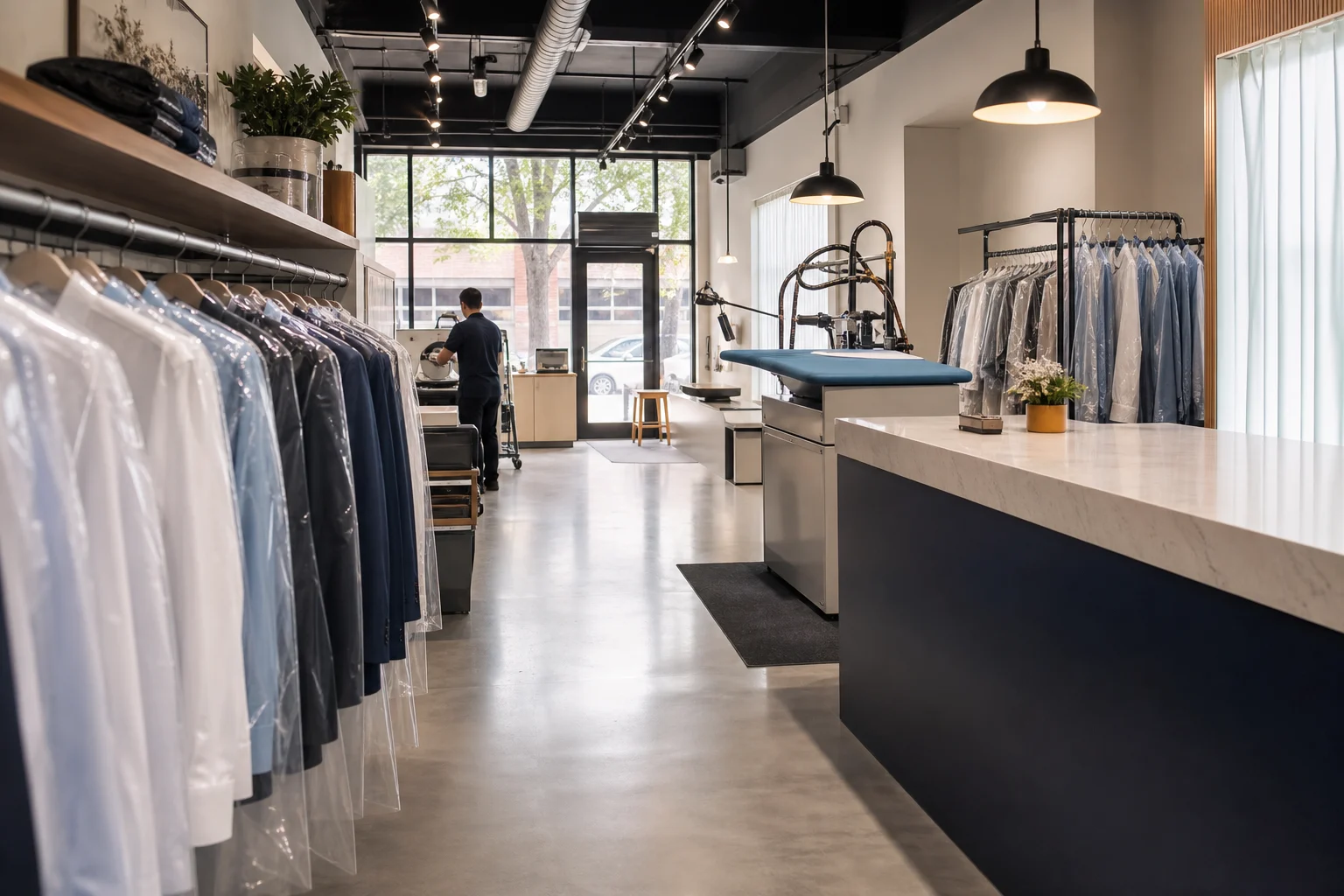
Main startup cost categories
Starting a dry cleaner involves several major cost categories that founders need to plan for. Each category comes with its own considerations and potential cost pressures. The primary cost categories include:
- Rent and lease assumptions
- Buildout and renovation
- Equipment purchase and installation
- Permits and licensing
- Initial staffing and payroll
- Opening inventory
- Cash reserves for operations before profitability
Understanding these categories helps founders develop a realistic budget and avoid common financial pitfalls when launching a dry cleaning business in Atlanta.
Rent and lease assumptions in Atlanta
Rent represents one of the largest fixed costs for a dry cleaner in Atlanta. According to Locavisor neighborhood scoring data, rent levels vary significantly across Atlanta's top areas for dry cleaners.
Smyrna / Vinings leads the pack for a dry cleaner on a medium budget. Office index is maxed out — strong daytime worker pool for weekday drop-off/pickup cycles. Zero direct competitors detected in the search area, giving you a clear first-mover window. Rent runs roughly $45-70/sqft NNN, which is manageable for a 1,000 sqft service-only format.
Sandy Springs scores well on customer match (8.0) and demand (7.2), with zero dry-cleaner gap in the immediate search area — but three existing operators are within 800m. $4.50 JC One Price Cleaners (3.4★, 75 reviews), Joe May Cleaners (4.2★, 26 reviews), and European Dry Cleaning (3.9★, 17 reviews) all operate nearby. Rent is premium at roughly $65-95/sqft NNN, which pressures a medium budget.
West Midtown / Westside has the strongest demand score (8.2) and maxed-out daytime population density, but rent is at the absolute ceiling (rent proxy near max). Expect roughly $90-140/sqft NNN — trophy-tier pricing that's very hard to make work for a dry cleaner on a medium budget. One competitor (dryo cleaners, 5★ but only 1 review) is nearby.
The market temperature in these areas is promising, with medium competition density. The Smyrna/Vinings area offers the best balance of factors with a score of 7.4/10, though the data confidence is at 78%.
Buildout, equipment, payroll, opening inventory, permits, and cash reserve
Beyond rent, several other significant cost factors impact the startup budget for an Atlanta dry cleaner.
Buildout costs depend heavily on the condition of the space and the specific requirements of dry cleaning operations. A service-only format minimizes buildout needs compared to a retail operation with customer waiting areas. The buildout must accommodate specialized equipment, ventilation systems, and potentially hazardous material storage.
Equipment represents a substantial portion of startup costs. Dry cleaning requires specialized machinery including washing machines, dryers, pressing equipment, and potentially spot treatment stations. The scale and quality of equipment directly impact operational capacity and efficiency.
Payroll planning must account for both initial staffing needs and the learning curve associated with training employees. Dry cleaning operations typically require staff for customer service, garment handling, and machine operation. The staffing model should align with expected customer traffic patterns and service level goals.
Opening inventory includes cleaning supplies, solvents, bags, hangers, and packaging materials. The initial inventory should support projected demand while avoiding overstocking of perishable supplies.
Permits and licensing requirements vary by location but typically include business licenses, health permits, and environmental compliance documentation. Atlanta may have specific regulations regarding dry cleaning operations that must be addressed before opening.
Cash reserves are critical for covering operating expenses before reaching profitability. Many businesses underestimate the time required to build a steady customer base and generate consistent cash flow.

Lean vs moderate vs generous launch budgets
Founders should consider different budget approaches based on their financial resources and risk tolerance. A lean launch minimizes fixed costs and focuses on essential services and equipment. This approach reduces initial investment but may limit growth potential and service offerings.
A moderate budget allows for a more complete setup with quality equipment and comfortable customer spaces. This approach balances initial investment with operational flexibility and customer experience.
A generous budget enables premium positioning with high-end equipment, prime locations, and comprehensive marketing. This approach maximizes initial impact but requires significantly more capital and carries higher financial risk.
The appropriate budget depends on the target market, competitive positioning, and founder's financial capacity. Smyrna/Vinings offers the most favorable rent structure for a medium-budget approach, while West Midtown commands premium pricing that may require a more substantial investment.
What to validate before spending money
Before committing significant capital to a dry cleaning startup in Atlanta, founders should validate several key assumptions:
Lease assumptions should be thoroughly researched. Beyond the base rent, understand common area maintenance (CAM) charges, property taxes, insurance requirements, and lease terms. Consider the length of the lease renewal options and potential rent increases. Verify that the space meets zoning requirements for dry cleaning operations.
Buildout scope should align with both immediate needs and future growth plans. Obtain detailed quotes from contractors familiar with dry cleaning facilities. Consider the timeline for buildout and potential delays that could impact opening date.
Equipment needs should match the business model and service offerings. Research different equipment options and their lifespans. Consider whether purchasing new or used equipment makes financial sense for your situation.
Payroll model should reflect realistic staffing needs based on expected customer traffic. Consider both full-time and part-time staff options. Factor in payroll taxes, benefits, and training costs.
Opening inventory should be sufficient to support initial operations without excessive capital tied up in supplies. Consider supplier relationships and potential volume discounts.
Cash reserve should cover at least six months of operating expenses, including rent, utilities, payroll, and supplies. Many businesses underestimate the time required to reach consistent profitability.
Local professional review is essential. Consult with an accountant familiar with dry cleaning businesses and a commercial real estate broker with experience in Atlanta retail spaces. Consider legal review of lease agreements and business structure.
FAQ
How much does it cost to open A Dry Cleaner in Atlanta?
The exact total cost to open a dry cleaner in Atlanta cannot be estimated from the provided data. Startup costs vary significantly based on location, size, equipment quality, and business model. Key variables to validate include lease terms and buildout requirements for your specific location, equipment needs aligned with your service offerings, staffing model based on expected customer traffic, inventory requirements, and adequate cash reserves for operations before reaching profitability. The rent structure varies across Atlanta neighborhoods, with Smyrna/Vinings offering more manageable rates ($45-70/sqft NNN) compared to premium areas like West Midtown ($90-140/sqft NNN). Founders should develop detailed financial projections based on their specific business plan and location considerations.
Last reviewed: 2026-05-08
Sources: U.S. Census Bureau ACS, LEHD LODES, Google Places, OpenStreetMap, Locavisor neighborhood scoring.
Methodology: Locavisor scores neighborhoods across demand, competition fit, rent fit, accessibility, and customer match. Scores reflect a snapshot of recent data and should be combined with on-the-ground research before lease decisions.
Disclaimer: This article provides informational content only and does not constitute legal, financial, accounting, or real-estate advice. Verify lease terms, licensing, local regulations, costs, and professional requirements with qualified local professionals before making business decisions.
Free preview shows top 3 neighborhoods. Full $9.99 report covers all 10 areas with personalized scoring + 90-day check-ins.
Informational only. Verify lease, licensing, local regulations, costs, and professional requirements with qualified local professionals.