Austin, TX · dry cleaner
Cost to open a dry cleaner in Austin
Opening a dry cleaner in Austin requires careful planning and budgeting. The cost to open a dry cleaner in Austin varies significantly based on location, size, and business model. Understanding these startup costs is crucial for any founder looking to enter this market. Austin's mixed market temperature and medium competition density create both opportunities and challenges for new dry cleaning businesses.
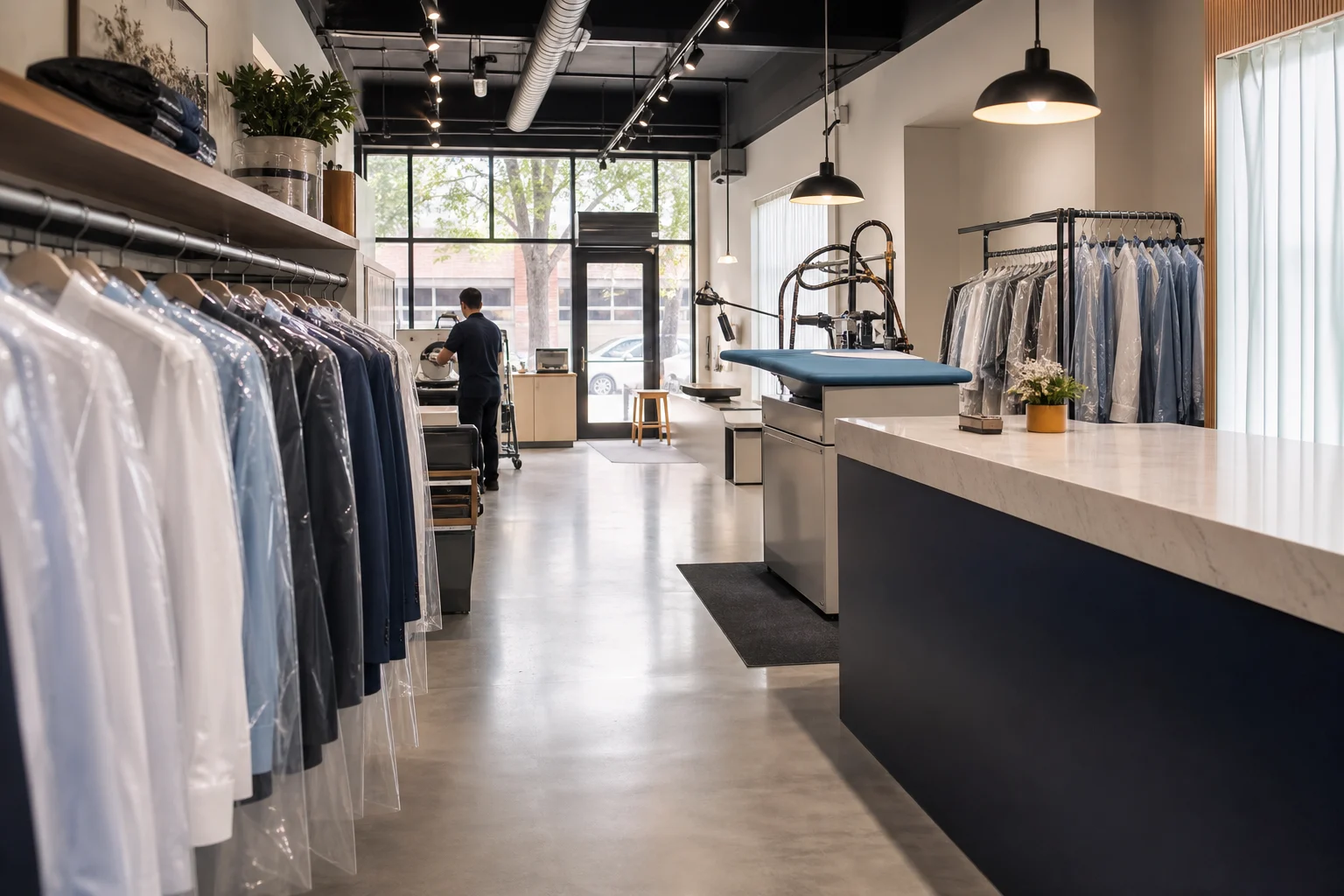
Main startup cost categories
Startup costs for a dry cleaner in Austin fall into several key categories. Rent represents your largest fixed expense. Buildout transforms raw space into a functional dry cleaning operation. Equipment includes washers, dryers, pressing machines, and specialized cleaning tools. Payroll covers staff during the initial ramp-up period. Opening inventory consists of supplies needed for the first weeks of operation. Permits and licenses ensure legal compliance. Finally, cash reserve provides a buffer for unexpected expenses during the launch phase.
Rent and lease assumptions in Austin
Location significantly impacts your rent expense and overall startup costs. Locavisor neighborhood scoring identifies three top areas for dry cleaner operations in Austin:
Domain / North Austin (7.2/10) — Top-ranked area overall — The Domain delivers the strongest dry-cleaner demand profile in Austin: dense daytime office population (Apple, Google, Indeed offices nearby), high affluence, and zero direct competitors within the search radius. Rent is manageable for a medium-budget operator at roughly $30-50/sqft NNN.
Rainey Street (6.6/10) — Rainey Street ranks second on demand and customer match — it's downtown-adjacent with maxed-out office density, high affluence, and strong residential density. The dealbreaker is rent: this is trophy-tier territory at roughly $90-140/sqft NNN, which would crush a medium-budget dry-cleaner's unit economics.
Crestview / Brentwood (6.2/10) — Crestview / Brentwood is a solid mid-tier option — a neighborhood retail corridor with good transit access (Crestview Station), strong parking, and moderate rent at roughly $45-70/sqft NNN. No direct dry-cleaner competitors found. The daytime office population is decent but not Domain-level.
The medium-high rent level in Austin creates significant cost pressure for new dry cleaning businesses. Your lease terms directly impact your monthly overhead and break-even point. Negotiating favorable lease terms becomes a critical financial consideration.
Buildout, equipment, payroll, opening inventory, permits, and cash reserve
Beyond rent, several major cost categories require careful planning. Buildout transforms your leased space into a functional dry cleaning operation. This includes plumbing, electrical work, ventilation systems, and specialized flooring designed to handle cleaning chemicals and moisture.
Equipment represents another substantial investment. Professional dry cleaning requires specialized machinery that can handle different fabric types and cleaning processes. The scale of your operation determines your equipment needs.
Payroll costs extend beyond initial hiring. Training staff to properly operate equipment and handle customer service requires time and resources. Opening inventory includes cleaning solvents, detergents, garment bags, and other supplies needed for initial operations.
Permits and licenses ensure compliance with local regulations. These requirements vary based on location and specific services offered. Cash reserve provides essential protection against unexpected expenses during the critical launch phase.

Lean vs moderate vs generous launch budgets
Founders approach dry cleaner launches with different budget philosophies. A lean launch minimizes upfront investment by focusing on essential equipment and modest space. This approach reduces initial financial burden but may limit growth potential.
A moderate launch balances investment with operational flexibility. This approach typically includes quality equipment and a well-designed space that accommodates future growth. Most successful dry cleaners in Austin follow this balanced approach.
A generous launch maximizes initial investment with premium equipment, extensive buildout, and prime location. This approach offers the highest potential for immediate market presence but requires substantial capital and carries greater financial risk.
What to validate before spending money
Before committing significant capital, validate several key assumptions. Lease terms should be thoroughly reviewed with legal counsel. Buildout scope must align with your equipment requirements and workflow needs. Equipment specifications should match your service offerings and volume expectations.
Payroll models should reflect realistic staffing needs and market wage rates. Opening inventory requirements should be based on projected customer demand. Permit requirements must be fully understood before signing any lease agreements.
Cash reserve targets should cover at least six months of operating expenses. Local professional review from experienced dry cleaners or industry consultants can provide valuable insights into your specific market entry strategy.
FAQ
How much does it cost to open A Dry Cleaner in Austin?
The exact total cannot be estimated from the provided data. Startup costs vary significantly based on location, size, equipment quality, and business model. To determine your specific costs, validate lease terms, buildout requirements, equipment needs, staffing levels, inventory requirements, permit costs, and cash reserve targets with local professionals.
What are the best areas in Austin for a dry cleaner?
Locavisor neighborhood scoring identifies Domain / North Austin (7.2/10) as the top-ranked area, followed by Rainey Street (6.6/10) and Crestview / Brentwood (6.2/10). Each area offers different advantages and challenges based on rent levels, competition density, and customer demographics.
How does rent impact dry cleaner profitability in Austin?
Rent represents your largest fixed expense and significantly impacts unit economics. Austin's medium-high rent level creates cost pressure that must be carefully managed. Domain / North Austin offers more manageable rent at roughly $30-50/sqft NNN, while Rainey Street's trophy-tier rent at roughly $90-140/sqft NNN would challenge medium-budget operators.
What equipment is essential for a dry cleaner startup?
Essential equipment includes washers, dryers, pressing machines, and specialized cleaning tools tailored to different fabric types. The specific equipment needs depend on your service offerings and scale of operations. Quality equipment represents a significant portion of startup costs but is essential for delivering professional results.
How important is location for a dry cleaner in Austin?
Location significantly impacts customer acquisition and operational costs. Areas with dense daytime office populations, high affluence, and minimal direct competitors offer the strongest demand profiles. Domain / North Austin delivers the strongest dry-cleaner demand profile with zero direct competitors within the search radius.
Last reviewed: 2026-05-08
Sources: U.S. Census Bureau ACS, LEHD LODES, Google Places, OpenStreetMap, Locavisor neighborhood scoring.
Methodology: Locavisor scores neighborhoods across demand, competition fit, rent fit, accessibility, and customer match. Scores reflect a snapshot of recent data and should be combined with on-the-ground research before lease decisions.
Disclaimer: This article provides informational content only and does not constitute legal, financial, accounting, or real-estate advice. Verify lease terms, licensing, local regulations, costs, and professional requirements with qualified local professionals before making business decisions.
Free preview shows top 3 neighborhoods. Full $9.99 report covers all 10 areas with personalized scoring + 90-day check-ins.
Informational only. Verify lease, licensing, local regulations, costs, and professional requirements with qualified local professionals.