Boston, MA · dry cleaner
Cost to open a dry cleaner in Boston
Opening a dry cleaner in Boston requires careful planning and understanding of the startup costs involved. The cost to open a dry cleaner in Boston varies based on location, equipment needs, buildout requirements, and other factors. This guide will help you understand the practical startup-cost stack for a dry cleaner in Boston.
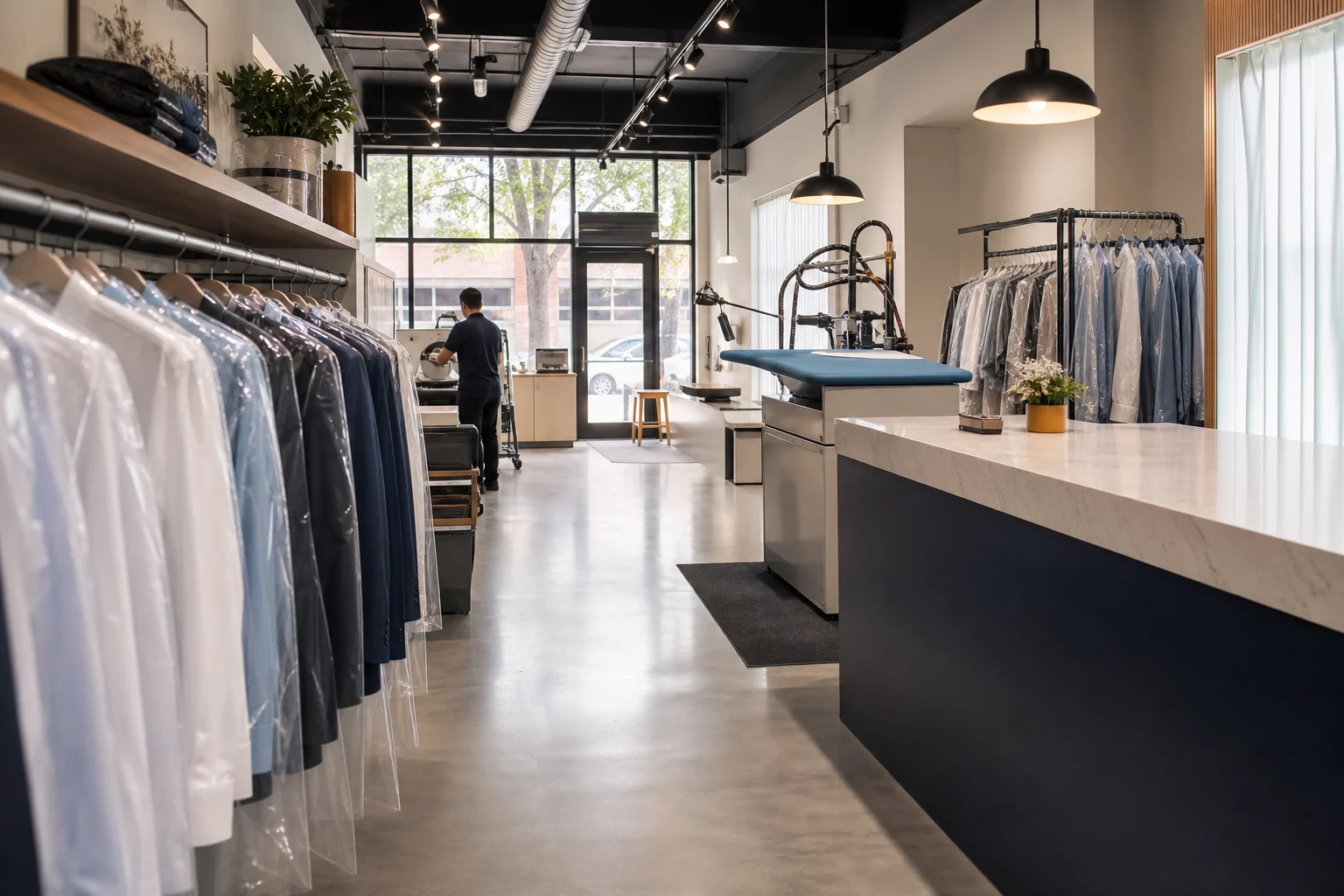
Main Startup Cost Categories
When planning to open a dry cleaner in Boston, several key cost categories need consideration. These include rent and lease assumptions, buildout expenses, equipment costs, payroll, opening inventory, permits, and cash reserves. Each category requires careful evaluation to ensure your business has the necessary foundation for success.
Rent and Lease Assumptions in Boston
Rent is one of the most significant expenses for a dry cleaner in Boston. Locavisor neighborhood scoring identifies Quincy Center / North Quincy as the best area with a score of 7.9/10. Rent in this area is manageable at roughly $30-50/sqft NNN. The area has zero direct dry-cleaner competition within the search radius, strong daytime office-worker density, and dense residential properties.
Assembly Row (Somerville) scores 7.1/10 but comes with punishing rent at roughly $65-95/sqft NNN. This premium mixed-use node features the Assembly Row mall, Orange Line station, and maxed-out daytime population. East Boston also has steep rent at roughly $65-95/sqft NNN, similar to Assembly Row, despite scoring 7.0/10. East Boston is a dense residential corridor with Blue Line transit access and a growing waterfront gentrification wave.
Buildout, Equipment, Payroll, Opening Inventory, Permits, and Cash Reserve
The buildout for a dry cleaner in Boston will depend on the condition of the space and your specific requirements. Equipment costs include pressing machines, dry cleaning machines, steam tables, and other specialized machinery necessary for operations.
Payroll expenses will vary based on staffing needs and local wage requirements. Opening inventory includes cleaning supplies, hangers, bags, and other materials needed to begin operations.
Permits and licenses are essential for legal operation and may include business licenses, health permits, and environmental compliance certificates. Cash reserves should cover at least six months of operating expenses to ensure business continuity during the initial launch phase.

Lean vs Moderate vs Generous Launch Budgets
When planning your budget, consider three approaches: lean, moderate, and generous. A lean budget focuses on essential equipment and minimal staffing, suitable for a small operation with limited services. A moderate budget allows for more comprehensive equipment and additional staffing, supporting a broader range of services. A generous budget enables premium equipment, full staffing, and extensive marketing to establish a strong market presence.
What to Validate Before Spending Money
Before committing significant funds to your dry cleaner venture, validate several key assumptions. First, verify lease terms and ensure the space meets your operational needs. Second, confirm buildout requirements and associated costs with contractors familiar with dry cleaner installations. Third, research equipment options and obtain multiple quotes to ensure competitive pricing.
Fourth, develop a detailed payroll model based on local wage rates and staffing requirements. Fifth, calculate opening inventory needs based on projected customer demand. Sixth, identify all necessary permits and associated fees. Finally, establish a realistic cash reserve that covers all startup costs and initial operating expenses.
FAQ
How much does it cost to open A Dry Cleaner in Boston?
The exact total cost to open a dry cleaner in Boston cannot be estimated from the provided data. Startup costs vary significantly based on location, lease terms, buildout requirements, equipment needs, staffing levels, inventory requirements, permit fees, and cash reserves. Before making financial commitments, validate your specific lease assumptions, buildout scope, equipment list, payroll model, opening inventory needs, and local professional review to develop an accurate cost projection for your unique situation.
Last reviewed: 2026-05-08
Sources: U.S. Census Bureau ACS, LEHD LODES, Google Places, OpenStreetMap, Locavisor neighborhood scoring.
Methodology: Locavisor scores neighborhoods across demand, competition fit, rent fit, accessibility, and customer match. Scores reflect a snapshot of recent data and should be combined with on-the-ground research before lease decisions.
Disclaimer: This article provides informational content only and does not constitute legal, financial, accounting, or real-estate advice. Verify lease terms, licensing, local regulations, costs, and professional requirements with qualified local professionals before making business decisions.
Free preview shows top 3 neighborhoods. Full $9.99 report covers all 10 areas with personalized scoring + 90-day check-ins.
Informational only. Verify lease, licensing, local regulations, costs, and professional requirements with qualified local professionals.