Chicago, IL · dry cleaner
Cost to open a dry cleaner in Chicago
Opening a dry cleaner in Chicago requires careful planning and understanding of the startup cost stack. The cost to open a dry cleaner in Chicago varies significantly based on location, size, and operational approach. With a promising market temperature and medium competition density, Chicago presents opportunities for new dry cleaning businesses, but the high rent level in prime locations adds substantial pressure to startup budgets.
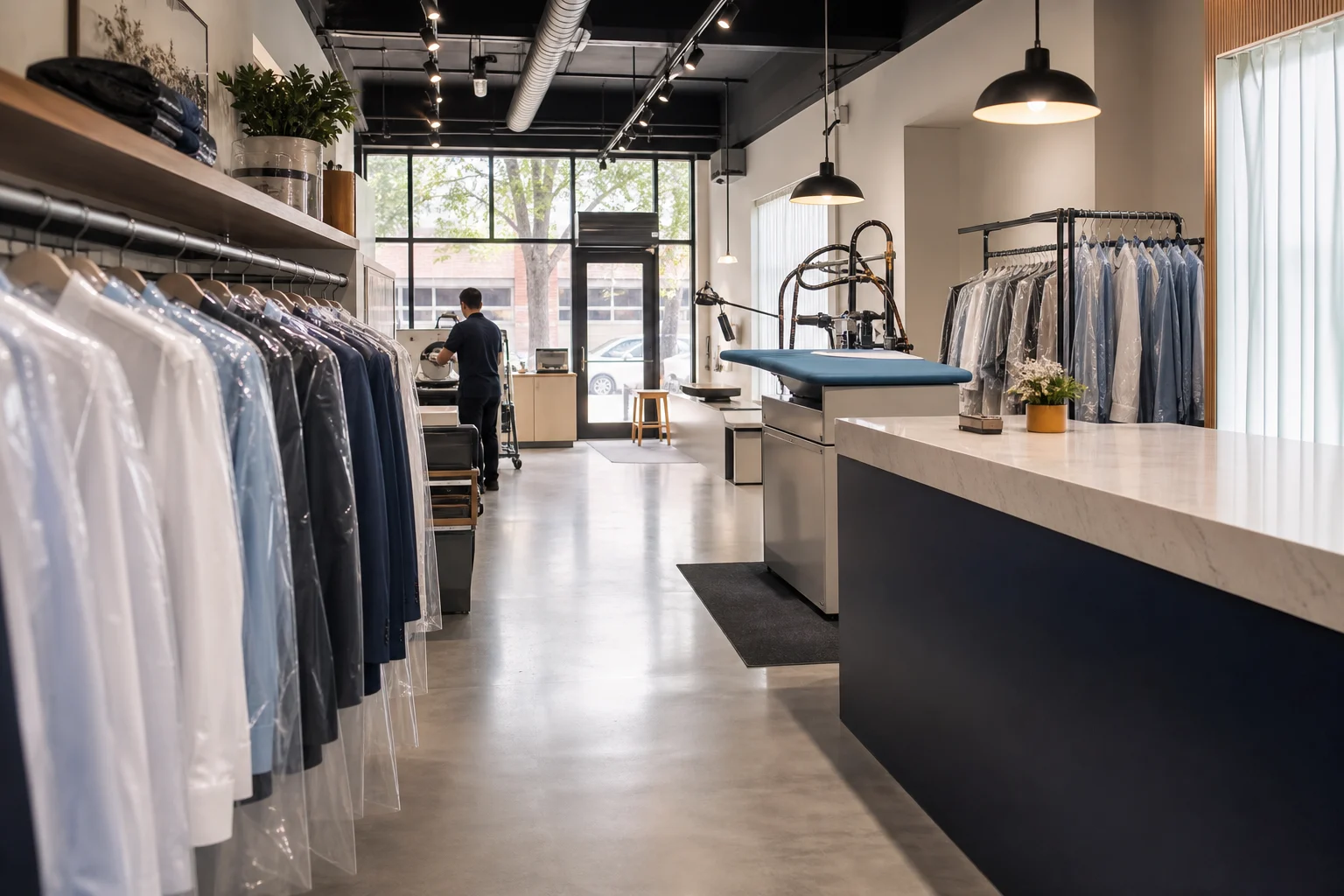
Main startup cost categories
When planning to open a dry cleaner in Chicago, founders need to consider several key cost categories. These include rent and lease assumptions, buildout expenses, equipment acquisition, payroll considerations, opening inventory, permits and licensing, and cash reserves for the initial launch period. Each category carries its own cost pressures and requires careful validation before committing significant capital.
Rent and lease assumptions in Chicago
Rent represents one of the largest fixed costs for a dry cleaner in Chicago. The rent level in Chicago is high, particularly in the most desirable areas. Based on Locavisor neighborhood scoring, three areas stand out for dry cleaning businesses:
South Loop (7.0/10) — South Loop ranks highest overall thanks to strong demand (8.4), perfect competitionFit (10), and solid customerMatch (8). The dense residential base plus Roosevelt Rd corridor foot traffic means steady weekday volume. But rent is punishing — expect roughly $90-140/sqft NNN, which is trophy-tier for a dry cleaner.
The Loop (6.8/10) — The Loop has the highest daytime worker density in Chicago — perfect for commuter drop-off. Demand (8.5) and competitionFit (10) are maxed out. But rentFit scores 0 — expect roughly $90-140/sqft NNN. The area has 8 dry cleaners within walking distance including Grant Park Cleaners (4.6★) just 43m from centroid. Weekend and evening volume is thin since residential density is low.
West Loop (6.8/10) — West Loop combines strong office density (Fulton Market tech corridor, McDonald's HQ, Google) with trendy evening dining scene. Demand (8.4) and competitionFit (10) are excellent. But rent is equally punishing at roughly $90-140/sqft NNN — the Fulton Market premium. 9 dry cleaners operate nearby including West Loop Cleaners (4.3★) and Clean As A Whistle Cleaners (4.3★).
These areas offer strong demand and competition fit, but the high rent levels create significant cost pressure for new entrants. The rent range of $90-140/sqft NNN represents trophy-tier pricing that must be carefully evaluated against projected revenue.
Buildout, equipment, payroll, opening inventory, permits, and cash reserve
Beyond rent, several other major cost categories impact the startup budget for a dry cleaner in Chicago. Buildout expenses include the physical transformation of the space to accommodate dry cleaning operations, including plumbing, electrical work, ventilation systems, and customer waiting areas. Equipment costs encompass dry cleaning machines, pressing equipment, garment racks, point-of-sale systems, and other specialized machinery necessary for operations.
Payroll represents another significant cost category, including wages for dry cleaning technicians, front counter staff, management, and potential delivery personnel. Opening inventory consists of initial supplies such as cleaning solvents, hangers, bags, and packaging materials.
Permits and licensing requirements add to the startup costs, though specific fees vary based on location and business structure. Finally, maintaining adequate cash reserves is crucial for covering initial operating expenses before the business achieves positive cash flow.

Lean vs moderate vs generous launch budgets
Founders must decide on their approach to launch budgets, which can range from lean to moderate to generous. A lean budget minimizes upfront investment but may limit growth potential and operational flexibility. A moderate budget provides a balance between initial investment and operational capacity. A generous budget allows for premium equipment, prime locations, and robust staffing but requires higher capital commitment.
The appropriate budget approach depends on the founder's financial resources, risk tolerance, and growth objectives. Regardless of the approach, each cost category must be carefully validated against realistic revenue projections to ensure the business can sustain itself through the initial launch period.
What to validate before spending money
Before committing significant capital to a dry cleaner in Chicago, founders should validate several key assumptions:
Lease assumptions must be thoroughly evaluated, including not just the base rent but also common area maintenance (CAM) charges, property taxes, insurance, and lease terms. Buildout scope should align with operational needs while avoiding unnecessary expenses. Equipment lists should prioritize essential items while considering future scalability.
Payroll models must account for staffing needs during different operational periods and potential wage increases. Opening inventory should be sufficient to meet initial demand without tying up excessive capital in supplies. Cash reserves should cover at least several months of operating expenses to provide a buffer during the initial launch phase.
Finally, engaging local professionals such as commercial real estate brokers, dry cleaning equipment suppliers, and business accountants can provide valuable insights specific to the Chicago market and help validate cost assumptions.
FAQ
How much does it cost to open A Dry Cleaner in Chicago?
The exact total cost to open a dry cleaner in Chicago cannot be estimated from the provided data. Startup costs vary significantly based on location, size, equipment choices, and operational approach. Founders should validate key variables including lease terms, buildout requirements, equipment needs, staffing models, inventory requirements, and local regulatory requirements before developing a comprehensive budget. The high rent levels in prime Chicago locations represent a significant cost factor that must be carefully evaluated against projected revenue.
Last reviewed: 2026-05-08
Sources: U.S. Census Bureau ACS, LEHD LODES, Google Places, OpenStreetMap, Locavisor neighborhood scoring.
Methodology: Locavisor scores neighborhoods across demand, competition fit, rent fit, accessibility, and customer match. Scores reflect a snapshot of recent data and should be combined with on-the-ground research before lease decisions.
Disclaimer: This article provides informational content only and does not constitute legal, financial, accounting, or real-estate advice. Verify lease terms, licensing, local regulations, costs, and professional requirements with qualified local professionals before making business decisions.
Free preview shows top 3 neighborhoods. Full $9.99 report covers all 10 areas with personalized scoring + 90-day check-ins.
Informational only. Verify lease, licensing, local regulations, costs, and professional requirements with qualified local professionals.