Dallas, TX · dry cleaner
Cost to open a dry cleaner in Dallas
Opening a dry cleaner in Dallas requires careful planning and understanding of the local market dynamics. The cost to open a dry cleaner in Dallas varies significantly based on location, buildout requirements, equipment needs, and operational factors. Dallas presents promising market conditions with medium competition density and relatively low rent levels compared to other major metropolitan areas.
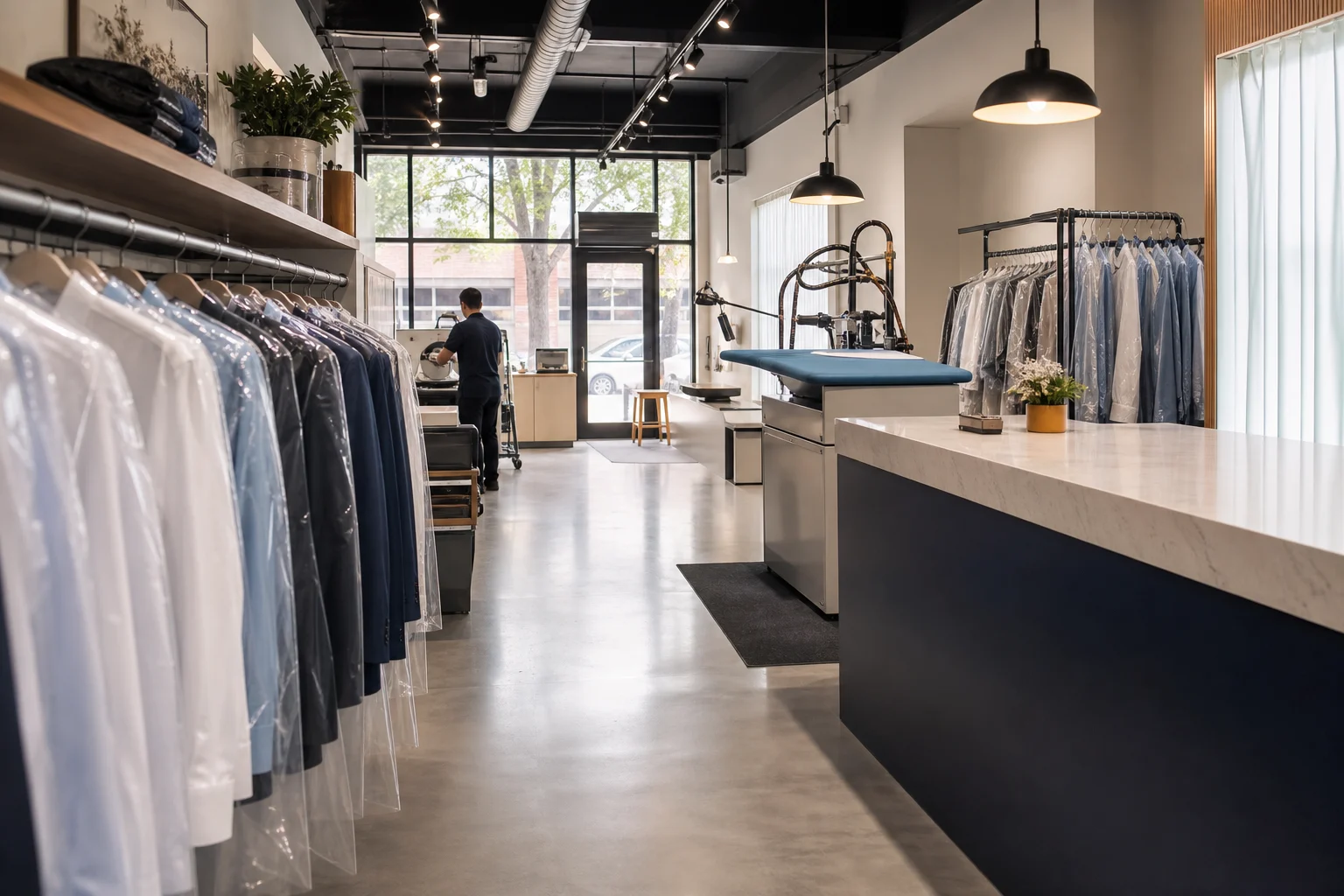
Main startup cost categories
Starting a dry cleaner involves several major cost categories that require careful consideration. These include rent and lease assumptions, buildout and construction, equipment purchases, payroll expenses, opening inventory, permits and licensing, and cash reserves for the initial launch period. Each category carries its own cost pressures and considerations specific to the Dallas market.
The most significant upfront expense typically comes from securing a suitable location. Dallas offers several promising areas for dry cleaners, with Addison ranking highest according to Locavisor neighborhood scoring. The rent level in Dallas is generally low compared to other major markets, which helps reduce one of the biggest ongoing expenses for a new business.
Rent and lease assumptions in Dallas
When evaluating potential locations in Dallas, three areas stand out based on Locavisor neighborhood scoring. These areas offer different advantages for a dry cleaner startup:
Addison (7.9/10) — Addison ranks #1 for dry-cleaner with a strong office-lunch daypart profile and zero direct competitors detected. Expect roughly $30-50/sqft NNN — a neighborhood-corridor price point that's workable for a medium-budget operator. The area pulls heavily from office workers and young professionals, with ≈10,500 weekday workers within 800m.
Plano Legacy West / The Shops at Legacy (7.5/10) — Plano Legacy West / The Shops at Legacy ranks #2 with strong demand and a perfect competitionFit score. Expect roughly $45-70/sqft NNN — a strong urban-corridor price point that's the highest rent in this set. The area has a maxed-out daytime population and office density anchored by Toyota HQ and coworking spaces.
Las Colinas (Irving) (7.5/10) — Las Colinas (Irving) ranks #3 with a balanced profile — strong office demand from ExxonMobil/Verizon campuses, zero direct dry-cleaner competitors detected, and rent in the $30-50/sqft NNN range. Walkability is above-average for a suburban office park, and the DART Orange Line provides transit access.
The rent levels in these areas represent a significant portion of your ongoing costs. Addison and Las Colinas offer similar rent ranges at $30-50/sqft NNN, while Plano Legacy West commands higher rents at $45-70/sqft NNN. The market temperature is promising across all three locations, with medium competition density and strong office-worker presence.
Buildout, equipment, payroll, opening inventory, permits, and cash reserve
Beyond rent, several major cost categories require careful planning. Buildout costs will depend heavily on the condition of your chosen space and the specific requirements of a dry cleaning operation. Dallas commercial spaces may require significant modifications to accommodate specialized equipment, ventilation systems, and customer areas.
Equipment represents another substantial investment. Dry cleaning operations require specialized machinery that must meet environmental and safety regulations. The exact equipment needs will depend on your business model, whether you offer basic dry cleaning, specialized services, or alterations.
Payroll expenses will vary based on your staffing model and service offerings. Dallas's labor market should be factored into your cost planning, with considerations for both skilled technicians and customer service staff.
Opening inventory includes cleaning supplies, hangers, bags, and other consumables needed to begin operations. The scale of your inventory will depend on your initial customer base and service capacity.
Permits and licensing requirements in Dallas must be factored into your startup costs. These may include business licenses, environmental permits for handling cleaning chemicals, and health department approvals.
Finally, maintaining adequate cash reserves is crucial for covering expenses before your business becomes profitable. This reserve should account for potential delays in opening, slower-than-expected customer acquisition, and unexpected costs.

Lean vs moderate vs generous launch budgets
When planning your dry cleaner startup, different budget approaches can significantly impact your initial investment and operational flexibility. A lean budget approach might involve a smaller space with minimal buildout, basic equipment, and a limited service offering. This approach reduces upfront costs but may limit growth potential and customer appeal.
A moderate budget allows for a more comprehensive setup with quality equipment, comfortable customer areas, and a broader range of services. This approach balances initial investment with operational capabilities, positioning your business for steady growth from the start.
A generous budget enables premium equipment, extensive buildout, prime locations, and comprehensive marketing. This approach maximizes initial impact but requires significantly more capital and carries higher financial risk.
The rent level in Dallas's top areas suggests that a moderate budget approach might be particularly viable, allowing for quality operations without the highest market costs. The promising market temperature and medium competition density further support a balanced approach that invests in quality while maintaining financial prudence.
What to validate before spending money
Before committing significant funds to your dry cleaner startup, thorough validation of several key factors is essential. First, verify your lease assumptions by confirming the exact terms, including rent increases, maintenance responsibilities, and lease duration. The rent ranges provided by Locavisor neighborhood scoring should be independently verified for your specific property.
Second, validate your buildout scope by obtaining detailed quotes from contractors familiar with commercial dry cleaning facilities. Ensure your buildout plans meet all regulatory requirements while optimizing for operational efficiency.
Third, confirm your equipment needs by consulting with industry specialists who understand the specific requirements of Dallas's market. Equipment quality and capacity should align with your service goals and customer expectations.
Fourth, validate your payroll model by researching local wage rates and staffing requirements. Consider whether you'll need specialized technicians or can train staff in-house.
Fifth, confirm your opening inventory requirements by consulting with suppliers and industry veterans. Inventory levels should support your initial service capacity while avoiding overstocking.
Sixth, verify all permit requirements and associated costs with Dallas authorities. Environmental regulations for dry cleaning operations can be complex and costly to implement.
Finally, validate your cash reserve needs by developing detailed financial projections that account for potential delays and unexpected expenses. The promising market temperature suggests good potential, but realistic planning is essential.
FAQ
How much does it cost to open A Dry Cleaner in Dallas?
The exact total cost to open a dry cleaner in Dallas cannot be estimated from the provided data. Startup costs vary significantly based on location, buildout requirements, equipment needs, and operational factors. The Locavisor neighborhood scoring indicates rent ranges of $30-50/sqft NNN in Addison and Las Colinas, and $45-70/sqft NNN in Plano Legacy West / The Shops at Legacy. However, these figures represent only one component of total startup costs. Before committing funds, you should validate your specific lease terms, buildout requirements, equipment needs, staffing model, inventory requirements, permit costs, and cash reserve needs through detailed planning and professional consultation.
Last reviewed: 2026-05-08
Sources: U.S. Census Bureau ACS, LEHD LODES, Google Places, OpenStreetMap, Locavisor neighborhood scoring.
Methodology: Locavisor scores neighborhoods across demand, competition fit, rent fit, accessibility, and customer match. Scores reflect a snapshot of recent data and should be combined with on-the-ground research before lease decisions.
Disclaimer: This article provides informational content only and does not constitute legal, financial, accounting, or real-estate advice. Verify lease terms, licensing, local regulations, costs, and professional requirements with qualified local professionals before making business decisions.
Free preview shows top 3 neighborhoods. Full $9.99 report covers all 10 areas with personalized scoring + 90-day check-ins.
Informational only. Verify lease, licensing, local regulations, costs, and professional requirements with qualified local professionals.