Houston, TX · dry cleaner
Cost to open a dry cleaner in Houston
Opening a dry cleaner in Houston requires careful planning of startup costs. The cost to open a dry cleaner in Houston varies significantly based on location, scale, and business model. Houston's market temperature is promising with medium competition density, making it an attractive opportunity for entrepreneurs. This guide breaks down the practical startup-cost stack to help you validate your assumptions before investing capital.
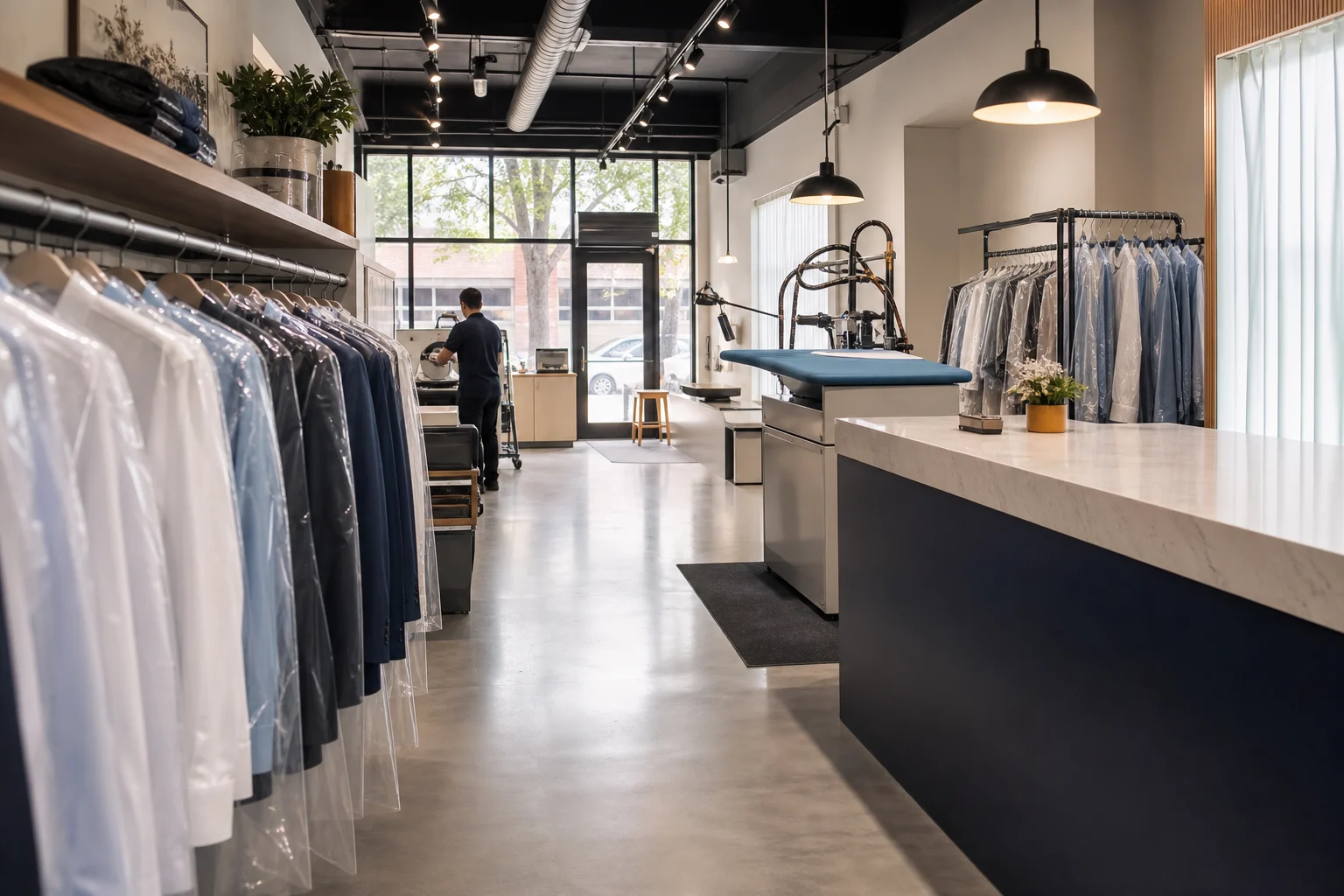
Main startup cost categories
The cost structure for opening a dry cleaner in Houston follows several key categories. Each category carries different cost pressures depending on your chosen location and business model. Understanding these categories helps you allocate resources effectively and avoid common financial pitfalls.
Rent typically represents the largest fixed cost in your startup budget. Houston offers varying rent levels across different neighborhoods, with the Galleria/Uptown area commanding premium rates. Equipment costs include industrial dry cleaning machines, pressing equipment, and specialized cleaning technology. Buildout expenses cover transforming a raw space into a functional dry cleaning facility with proper ventilation and plumbing. Labor costs include hiring trained staff for cleaning, pressing, and customer service. Opening inventory consists of cleaning supplies, detergents, and packaging materials. Permits and licensing fees vary by location and business type. Finally, maintaining adequate cash reserves ensures you can cover operating expenses before reaching profitability.
Rent and lease assumptions in Houston
Houston's commercial real estate market offers distinct advantages and challenges for dry cleaner startups. Locavisor neighborhood scoring identifies three top areas for dry cleaner businesses in Houston, each with different rent levels and market characteristics.
Galleria / Uptown (7.4/10) represents the highest-demand corridor for a dry cleaner in Houston. This area features maxed-out daytime population, strong office-worker density, and a premium retail ecosystem around The Galleria. The catch: rent runs roughly $45-70/sqft NNN, which is steep for a medium-budget operator. This premium positioning may justify higher rent through increased customer traffic and higher average transaction values.
Energy Corridor (7.3/10) offers the strongest rent-fit play among the top areas. Rent here runs roughly $30-50/sqft NNN, significantly lower than Galleria/Uptown. The area benefits from near-maxed office density from Conoco/Shell/BP campuses. Notably, no dry-cleaner competitors exist in the search area, which is striking given the weekday office-worker population. This combination of lower rent and untapped market potential creates an attractive opportunity for cost-conscious operators.
Memorial (7.1/10) provides the best rent fit of all ranked areas, with rent roughly $30-50/sqft NNN. This area features a solid residential base and moderate office density. The critical difference: Memorial is the only area where actual dry-cleaner competitors exist. Select Cleaners (4.7★, 26 reviews), Pro Dry Cleaners (4.1★, 12 reviews), and US Star Cleaners (2.8★, 6 reviews) are all within 600m of the centroid. This existing competition may limit market share potential but validates customer demand in the area.
Buildout, equipment, payroll, opening inventory, permits, and cash reserve
Beyond rent, several cost categories require careful consideration when planning your dry cleaner startup. Buildout expenses depend heavily on the condition of your chosen space and the specific requirements of dry cleaning operations. Industrial dry cleaning equipment represents a significant capital investment that directly impacts your service quality and capacity.
Payroll costs extend beyond base salaries to include training, benefits, and potential overtime. Opening inventory must balance sufficient supply with the risk of obsolescence. Permits and licensing requirements vary by location and may involve inspections and compliance costs. Maintaining adequate cash reserves provides crucial buffer against unexpected expenses and slow initial revenue periods.
Each of these cost categories interacts with your location choice. Higher rent areas like Galleria/Uptown may allow for premium pricing but require more investment in equipment and buildout to match customer expectations. Lower rent areas like Energy Corridor and Memorial may require less upfront investment but demand more marketing to establish market presence.

Lean vs moderate vs generous launch budgets
Your budget approach significantly impacts your startup cost structure. A lean launch minimizes fixed costs by focusing on essential equipment and staffing. This approach works well in areas with lower rent like Energy Corridor and Memorial, where existing competition validates market demand.
A moderate budget allows for quality equipment and sufficient staffing to handle peak demand without excessive overtime. This approach balances cost with service quality, particularly in areas like Memorial where competition exists. A generous budget enables premium equipment, additional staffing, and comprehensive marketing to establish a strong market position quickly.
The cost to open a dry cleaner in Houston varies dramatically based on your budget approach. Lean launches may focus on essential equipment and minimal staffing, while generous launches invest in premium technology and comprehensive service offerings. Your budget should align with your target market expectations and long-term growth plans.
What to validate before spending money
Before committing significant capital to your dry cleaner startup, validate several critical assumptions. Lease assumptions require careful examination of not just rent but also triple net charges, lease terms, and renewal options. Buildout scope must account for the specific requirements of dry cleaning equipment and ventilation systems.
Equipment selection should balance initial investment with operational efficiency and service quality. Payroll models must accurately reflect staffing needs for different demand periods. Opening inventory levels should match expected customer demand without excessive carrying costs. Cash reserve requirements should cover at least six months of operating expenses.
Professional review of your business plan by local dry cleaning operators or industry consultants can reveal blind spots in your cost structure. Market validation through customer surveys or test marketing can help refine your pricing strategy and service offerings. Each validation step reduces financial risk and increases the likelihood of sustainable operations.
FAQ
How much does it cost to open A Dry Cleaner in Houston?
The exact total cost to open a dry cleaner in Houston cannot be estimated from the provided data. Startup costs vary significantly based on location, scale, and business model. Variables to validate include lease terms and buildout requirements in your chosen area, equipment selection based on service capacity needs, staffing requirements for different demand periods, opening inventory levels, permit and licensing costs, and adequate cash reserves for operating expenses before reaching profitability. Locavisor neighborhood scoring identifies Galleria/Uptown, Energy Corridor, and Memorial as top areas for dry cleaner businesses, each with different rent levels and market characteristics that impact cost structure.
Last reviewed: 2026-05-08
Sources: U.S. Census Bureau ACS, LEHD LODES, Google Places, OpenStreetMap, Locavisor neighborhood scoring.
Methodology: Locavisor scores neighborhoods across demand, competition fit, rent fit, accessibility, and customer match. Scores reflect a snapshot of recent data and should be combined with on-the-ground research before lease decisions.
Disclaimer: This article provides informational content only and does not constitute legal, financial, accounting, or real-estate advice. Verify lease terms, licensing, local regulations, costs, and professional requirements with qualified local professionals before making business decisions.
Free preview shows top 3 neighborhoods. Full $9.99 report covers all 10 areas with personalized scoring + 90-day check-ins.
Informational only. Verify lease, licensing, local regulations, costs, and professional requirements with qualified local professionals.