New Orleans, LA · dry cleaner
Cost to open a dry cleaner in New Orleans
Opening a dry cleaner in New Orleans requires careful planning of startup costs across multiple categories. The cost to open a dry cleaner in New Orleans varies significantly based on location, size, and business model. With a market temperature that's currently weak and competition density at medium levels, potential founders need to understand the full cost stack before committing funds. This guide breaks down the practical startup-cost considerations for a dry cleaner in New Orleans without providing specific dollar estimates.
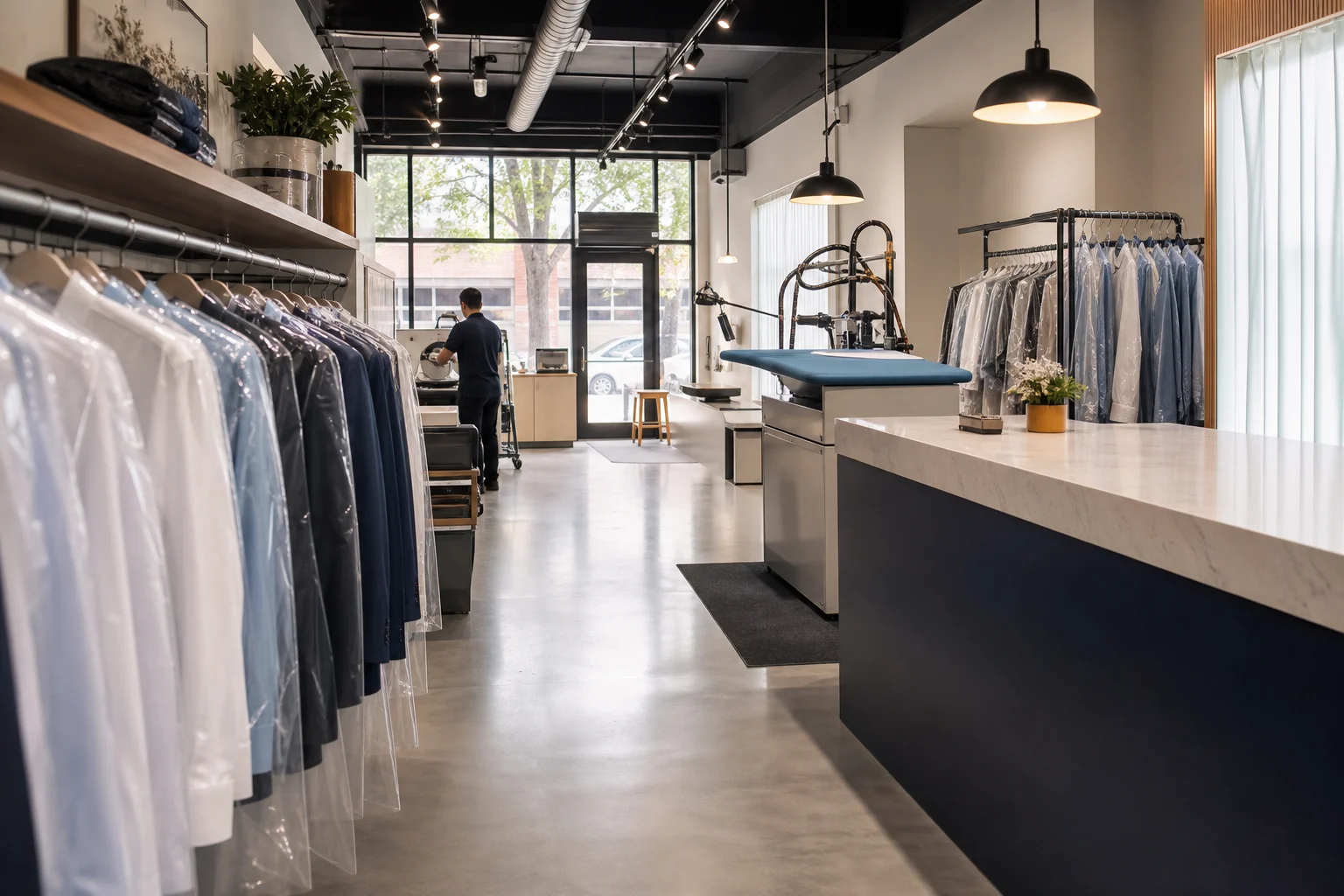
Main startup cost categories
The startup cost stack for a dry cleaner in New Orleans includes several major categories. Each category requires careful consideration and validation before spending money. The primary cost categories include rent and lease assumptions, buildout and equipment, payroll, opening inventory, permits and licensing, and cash reserves. These categories interact in complex ways, with decisions in one area affecting costs in others. A dry cleaner founder must balance upfront investment with ongoing operational expenses while positioning the business competitively in the New Orleans market.
Rent and lease assumptions in New Orleans
Rent represents one of the largest cost components for a dry cleaner in New Orleans. Locavisor neighborhood scoring identifies three top areas for a dry cleaner, each with distinct characteristics and rent levels:
Lakeview (5.3/10) — Lakeview is the top-ranked area for a dry cleaner in New Orleans — and it's the only one with an existing dry cleaner on the ground (Young's Dry Cleaning, 4.5★, 270 reviews). Strong residential density and above-average office presence mean a solid base of weekday drop-off customers. The catch: rent is at the ceiling, roughly $90-140/sqft NNN, which is trophy-tier for this market.
French Quarter (4.9/10) — French Quarter has zero dry cleaners despite massive daytime population density and tourist foot traffic. That's not an opportunity — it's a signal that the business model doesn't fit here. Tourists don't drop off shirts, and the residential base skews low-affluence. Rent is near-trophy tier (~$90-140/sqft NNN).
CBD / Warehouse District (4.9/10) — CBD / Warehouse District has strong daytime office-worker density and zero dry-cleaner competitors — but the rent is punishing (trophy-tier, roughly $90-140/sqft NNN) and the resident affluence is low. The office index is solid, meaning weekday lunch-hour drop-off from professionals is plausible.
The positioning recommendation for a dry cleaner in New Orleans is to go small-footprint with eco-cleaning and alterations-first in Lakeview, despite the high rent levels. This approach leverages the proven demand while managing cost pressures in a high-rent market.
Buildout, equipment, payroll, opening inventory, permits, and cash reserve
Beyond rent, several other cost categories require careful consideration. Buildout costs depend on the condition of the space and the specific requirements of dry cleaning operations. Equipment represents a significant investment, with industrial dry cleaning machines, pressing equipment, and point-of-sale systems all requiring substantial capital.
Payroll costs include not just wages but also payroll taxes and benefits for staff. Opening inventory covers initial supplies like hangers, bags, and cleaning chemicals. Permits and licensing include local business licenses, environmental permits for chemical handling, and potentially special zoning approvals.
Cash reserves are critical for covering operating expenses during the ramp-up period before the business reaches steady-state revenue. The market temperature being weak suggests founders should plan for a potentially longer ramp-up period than in stronger markets.

Lean vs moderate vs generous launch budgets
Founders can approach their dry cleaner launch with different budget philosophies, each with trade-offs. A lean launch minimizes upfront investment by focusing on essential equipment and smaller space. This approach reduces financial risk but may limit growth potential and operational efficiency from day one.
A moderate launch balances initial investment with future growth needs, allowing for quality equipment and a well-designed space that supports business expansion. This approach provides more operational flexibility while maintaining reasonable financial risk.
A generous launch maximizes upfront investment with premium equipment, prime location, and extensive marketing. This approach positions the business for immediate competitive advantage but requires significantly more capital and carries higher financial risk.
The optimal approach depends on the founder's financial resources, risk tolerance, and long-term vision for the business. In New Orleans' current market with weak temperature, a more conservative approach may be prudent.
What to validate before spending money
Before committing significant funds to a dry cleaner launch, founders should validate several key assumptions:
Lease assumptions require careful verification of quoted rent figures, common area maintenance charges, and lease terms. Buildout scope should be validated against actual space conditions and local building codes. Equipment needs must be confirmed through industry research and potentially conversations with existing dry cleaner operators.
Payroll models should reflect realistic staffing requirements for the specific location and business model. Opening inventory levels must align with projected early-month customer demand. Cash reserve requirements should account for potential delays in reaching steady-state revenue.
Finally, local professional review from a business attorney, accountant, and potentially a dry cleaning industry consultant can identify blind spots in the financial planning. The 65% score confidence in the Locavisor data suggests that additional local validation is particularly important.
FAQ
How much does it cost to open A Dry Cleaner in New Orleans?
The exact total cost to open a dry cleaner in New Orleans cannot be estimated from the provided data. Startup costs vary significantly based on location, size, equipment quality, and business model. Variables to validate include rent and lease terms, buildout requirements, equipment costs, staffing needs, inventory requirements, permit fees, and cash reserve requirements. Founders should develop detailed financial models based on their specific business plan and location choice.
This article provides qualitative guidance on cost considerations rather than specific dollar amounts. For precise financial planning, founders should consult with local professionals and develop detailed projections based on their specific circumstances.
Last reviewed: 2026-05-08
Sources: U.S. Census Bureau ACS, LEHD LODES, Google Places, OpenStreetMap, Locavisor neighborhood scoring.
Methodology: Locavisor scores neighborhoods across demand, competition fit, rent fit, accessibility, and customer match. Scores reflect a snapshot of recent data and should be combined with on-the-ground research before lease decisions.
Disclaimer: This article provides informational content only and does not constitute legal, financial, accounting, or real-estate advice. Verify lease terms, licensing, local regulations, costs, and professional requirements with qualified local professionals before making business decisions.
Free preview shows top 3 neighborhoods. Full $9.99 report covers all 10 areas with personalized scoring + 90-day check-ins.
Informational only. Verify lease, licensing, local regulations, costs, and professional requirements with qualified local professionals.