Philadelphia, PA · dry cleaner
Cost to open a dry cleaner in Philadelphia
Opening a dry cleaner in Philadelphia requires careful planning of startup costs across multiple categories. The cost to open a dry cleaner in Philadelphia varies significantly based on location, scale, and business model. This guide breaks down the practical startup cost stack for dry cleaners in Philadelphia's top neighborhoods, helping founders make informed decisions about rent, buildout, equipment, permits, hiring, launch cash, and common cost traps.
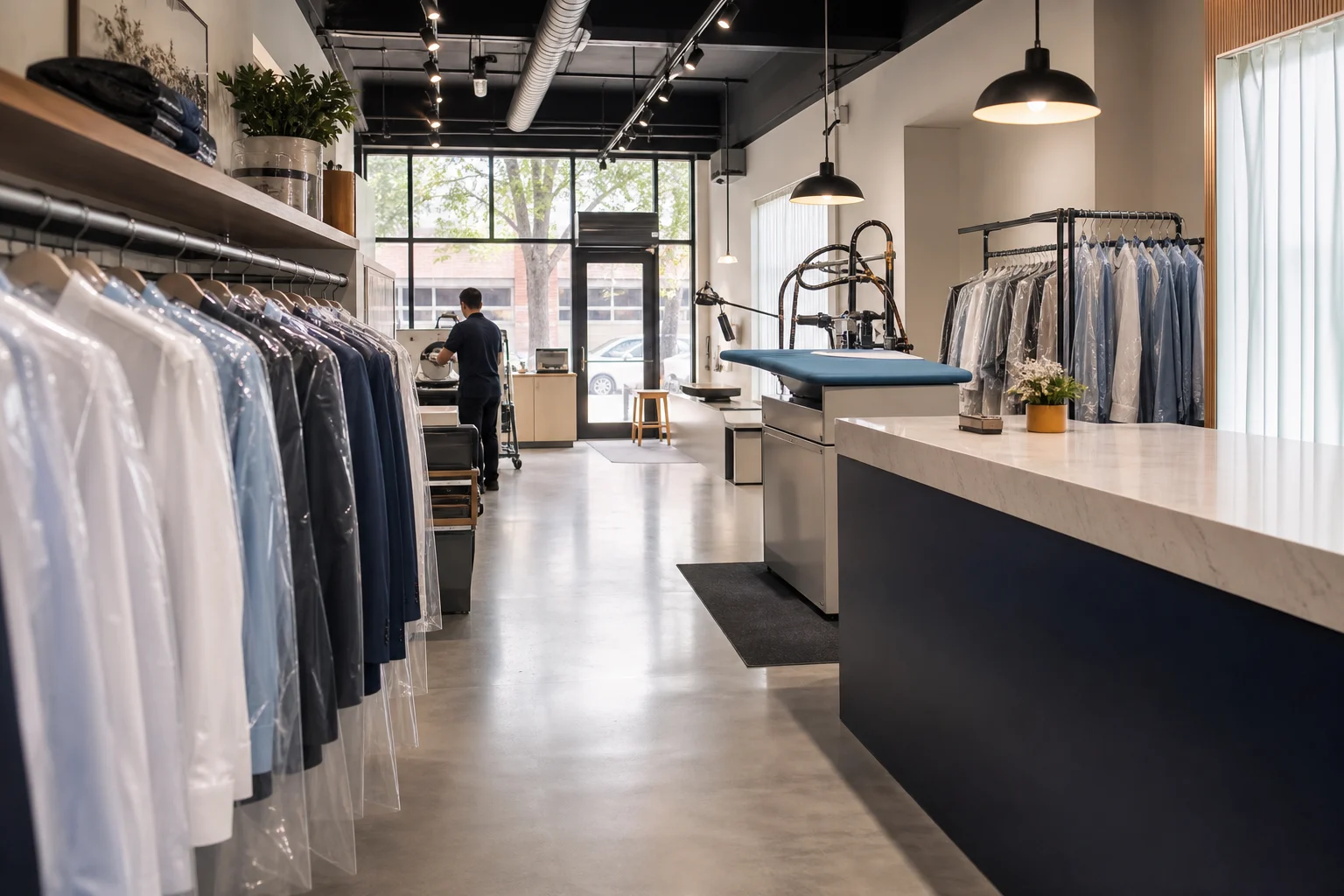
Main startup cost categories
The startup cost stack for a Philadelphia dry cleaner includes several major categories. Rent represents your largest fixed cost, especially in prime locations. Buildout costs cover transforming your space into a functional dry cleaning facility. Equipment expenses include washers, dryers, pressing machines, and specialized cleaning tools. Payroll covers staff training and initial hiring. Opening inventory consists of supplies, hangers, and cleaning chemicals. Permits and licenses ensure legal operation. Finally, cash reserves provide runway for the initial operating period before reaching profitability.
Each category requires careful consideration based on your specific business model and target market. The Philadelphia market presents unique opportunities and challenges across different neighborhoods, with varying rent levels, competition density, and customer demographics.
Rent and lease assumptions in Philadelphia
Philadelphia's dry cleaner market shows significant variation in rent levels across neighborhoods. Locavisor neighborhood scoring identifies three top areas for dry cleaner startups, each with distinct characteristics:
Rittenhouse Square (6.5/10) — Rittenhouse Square is Philadelphia's premier luxury corridor — high-income residents, dense office towers, and tourist foot traffic create strong dry-cleaning demand. But rent is maxed out: expect roughly $90-140/sqft NNN. With 15+ existing dry cleaners within a half-mile, you'd be entering a saturated market where differentiation on service speed and tailoring is essential.
University City (6.4/10) — University City combines Penn/Drexel students, faculty, and young professionals with strong daytime population density. Rent is steep but more manageable than Rittenhouse — expect roughly $65-95/sqft NNN. Only 3 direct competitors found nearby, with Top Notch Cleaners (4.7★, 209 reviews) as the dominant player. Student-heavy customer base means lower average ticket but higher volume potential.
Fairmount / Art Museum Area (6.2/10) — Fairmount / Art Museum Area offers a dense mix of upscale residential, office workers, and tourist traffic near the Philadelphia Museum of Art. Rent is premium — expect roughly $65-95/sqft NNN. The area has 7 dry cleaners within a half-mile, but many have modest review counts and limited hours. Fairmount Cleaners (4.5★, 60 reviews) closes Wednesdays — a clear service gap.
The market temperature is mixed, with medium competition density across these areas. Rent levels are high, particularly in Rittenhouse Square, which presents both opportunity and challenge. The score confidence is 75%, based on the 2026-05 snapshot of Philadelphia's dry cleaner market.
Buildout, equipment, payroll, opening inventory, permits, and cash reserve
Buildout costs depend heavily on your space's condition and required modifications. Dry cleaning facilities need specialized plumbing, ventilation, and electrical systems. Consider the scope of renovations needed to meet industry standards and local regulations.
Equipment represents another significant investment. Beyond basic washing and drying machines, specialized cleaning equipment for different fabric types, pressing systems, and finishing tools are essential. The scale of your operation will determine equipment requirements.
Payroll considerations include not just wages but also training costs for staff. Dry cleaning requires specialized knowledge of fabrics, cleaning techniques, and customer service. Factor in the learning curve for new employees and potential productivity impacts during training.
Opening inventory encompasses cleaning solvents, detergents, hangers, bags, and packaging materials. The right mix of inventory supports your service offerings while minimizing waste. Consider seasonal variations in demand when planning initial inventory levels.
Permits and licenses ensure compliance with Philadelphia's regulations. Research local requirements for dry cleaning operations, environmental regulations for chemical handling, and business licensing processes. Factor in application timelines and potential inspection requirements.
Cash reserves provide crucial runway during the initial operating period. Beyond startup costs, maintain sufficient operating capital to cover expenses before reaching consistent revenue. Consider seasonal fluctuations and potential delays in reaching your customer base.

Lean vs moderate vs generous launch budgets
Founders approach dry cleaner launches with varying budget philosophies. A lean launch minimizes fixed costs by starting with essential equipment and smaller space. This approach reduces initial investment but may limit service capabilities and growth potential.
A moderate launch balances cost considerations with operational needs. This approach typically includes standard equipment, functional space, and sufficient inventory to meet initial demand without excessive overstocking.
A generous launch maximizes capabilities with premium equipment, larger space, and comprehensive inventory. This approach supports immediate service expansion and higher-end positioning but requires significantly more capital.
Each approach presents trade-offs between initial investment and operational flexibility. Consider your target market, competitive positioning, and growth plans when determining your budget philosophy.
What to validate before spending money
Before committing significant capital to your dry cleaner launch, validate several key assumptions:
For lease assumptions, verify the quoted rent per square foot against comparable properties. Confirm lease terms including duration, renewal options, and potential rent increases. Assess foot traffic patterns during different times of day and week. Evaluate parking availability and accessibility for customers.
Regarding buildout scope, obtain multiple contractor bids for required renovations. Confirm that your space can accommodate necessary equipment and workflow. Verify compliance with Philadelphia's building codes and regulations for dry cleaning facilities.
For equipment needs, research reliable suppliers and compare total cost of ownership beyond purchase price. Consider energy efficiency and maintenance requirements. Ensure equipment meets your projected capacity needs without excessive overcapacity.
When planning payroll, research prevailing wages for dry cleaning staff in Philadelphia. Factor in training time and potential productivity impacts during the learning curve. Consider whether you'll need specialized staff for certain services like leather cleaning or alterations.
For opening inventory, calculate optimal initial stock levels based on projected demand. Consider supplier relationships and potential bulk purchase discounts. Factor in storage requirements for different types of supplies.
Regarding permits, confirm all required licenses and permits for your specific location and services. Factor in application processing times and potential inspection requirements. Research environmental regulations for handling and disposing of cleaning chemicals.
Finally, maintain sufficient cash reserves to cover unexpected expenses and delays. Consider potential revenue shortfalls during the ramp-up period. Build relationships with local professionals who can provide ongoing guidance as you establish your business.
FAQ
How much does it cost to open A Dry Cleaner in Philadelphia?
The exact total cost to open a dry cleaner in Philadelphia cannot be estimated from the provided data. Startup costs vary significantly based on multiple factors including location within Philadelphia, space size, equipment quality, buildout requirements, and business model. To determine your specific startup costs, validate these key variables: lease terms and square footage requirements, equipment needs based on your service offerings, buildout scope for your specific space, staffing requirements and training costs, inventory needs for your initial service offerings, permit and licensing requirements, and sufficient cash reserves for the initial operating period. Each of these factors will contribute to your total startup investment and should be thoroughly researched before committing capital to your dry cleaner launch.
Last reviewed: 2026-05-08
Sources: U.S. Census Bureau ACS, LEHD LODES, Google Places, OpenStreetMap, Locavisor neighborhood scoring.
Methodology: Locavisor scores neighborhoods across demand, competition fit, rent fit, accessibility, and customer match. Scores reflect a snapshot of recent data and should be combined with on-the-ground research before lease decisions.
Disclaimer: This article provides informational content only and does not constitute legal, financial, accounting, or real-estate advice. Verify lease terms, licensing, local regulations, costs, and professional requirements with qualified local professionals before making business decisions.
Free preview shows top 3 neighborhoods. Full $9.99 report covers all 10 areas with personalized scoring + 90-day check-ins.
Informational only. Verify lease, licensing, local regulations, costs, and professional requirements with qualified local professionals.