Portland, OR · dry cleaner
Cost to open a dry cleaner in Portland
Portland's dry cleaning market presents both opportunities and challenges for entrepreneurs looking to enter this service industry. Understanding the cost structure is crucial before making significant financial commitments. The market temperature is mixed, with medium competition density and low rent levels, creating a landscape that requires careful analysis.
Main Startup Cost Categories
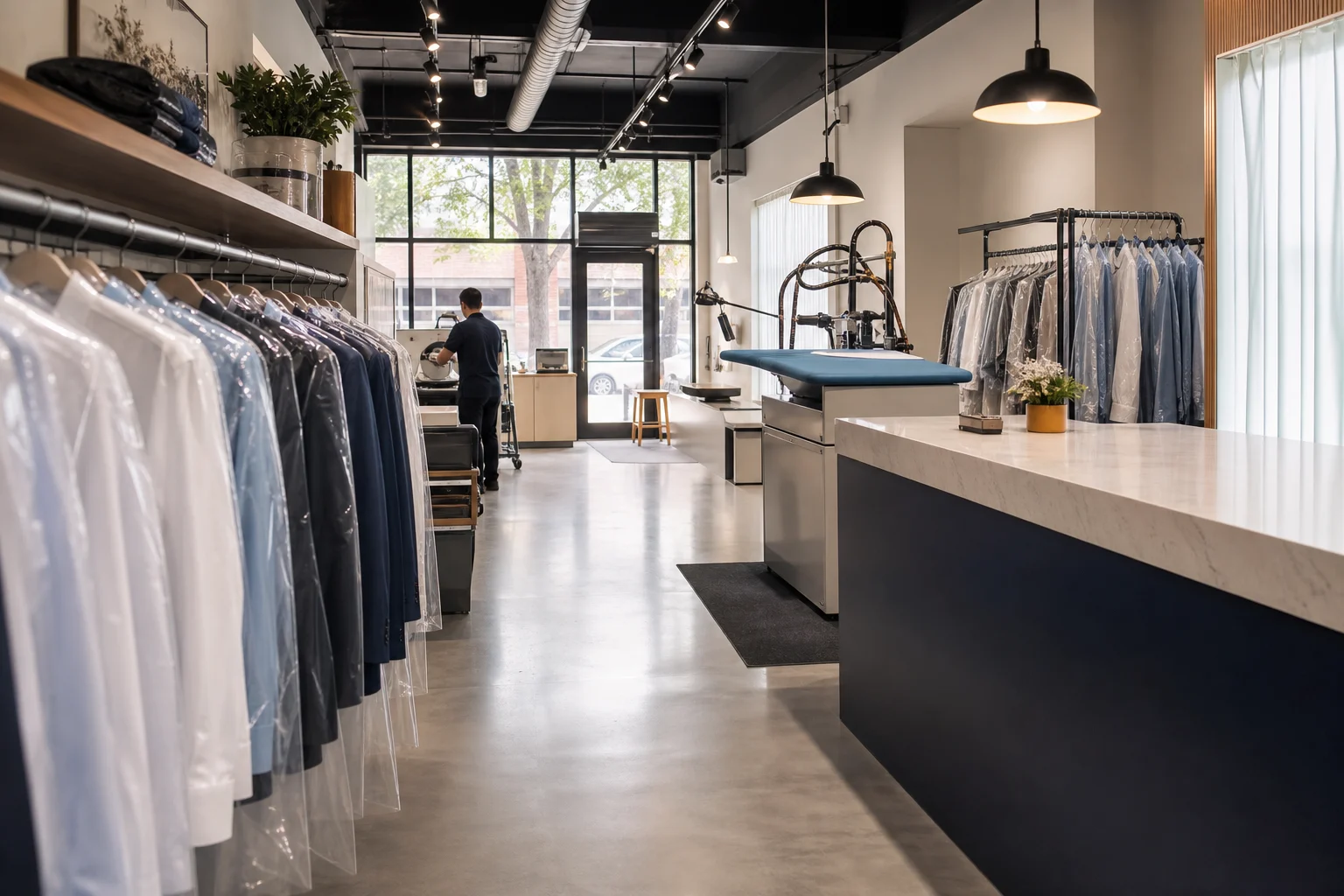
Opening a dry cleaner involves several major cost categories that need consideration. Rent typically represents the largest fixed expense, followed by equipment purchases, buildout costs, staffing, permits, and inventory. Each category requires careful planning based on your specific location and business model.
The cost to open a dry cleaner in Portland varies significantly based on neighborhood selection and operational scale. Market conditions, competition density, and local regulations all impact the financial requirements. Entrepreneurs should develop detailed projections for each cost category before committing to a location or business plan.
Rent and Lease Assumptions in Portland
Rent levels in Portland vary by neighborhood, with St. Johns offering roughly $30-50/sqft NNN, while Hollywood District provides options at $20-35/sqft NNN. Downtown Portland presents different challenges with near-zero office daytime population due to the work-from-home trend, which affects customer traffic patterns.
St. Johns ranks #1 for a dry cleaner in Portland according to Locavisor neighborhood scoring — zero direct competitors, strong rent fit at roughly $30-50/sqft NNN, and a solid residential base along N Lombard. The catch: car-access and parking scores are weak, which matters for a business where 55% of customers arrive by car. You'd need dedicated curbside drop-off to overcome the below-average parking situation.
Hollywood District scores well on rent fit (roughly $20-35/sqft NNN) and walkability, but the customerMatch score is low — this is a retail/dining corridor, not a dry-cleaning destination. Two existing dry cleaners (Tie's Dry Cleaners at 4.3★/142 reviews and Majestic Cleaners at 4.1★/20 reviews) already serve the area.
Downtown Portland has the highest walkability and transit scores in the city, plus strong tourist and student populations. But the dry-cleaning fundamentals are shaky: near-zero office daytime population (WFH headwind), two existing competitors (Bee Cleaners at 3.9★/80 reviews and Auditorium Cleaners at 2.9★/17 reviews), and a low customerMatch score.
Buildout, Equipment, Payroll, Opening Inventory, Permits, and Cash Reserve
Buildout costs depend heavily on the condition of your commercial space and local building codes. Dry cleaning facilities require specialized ventilation systems, plumbing for solvent handling, and appropriate flooring. Equipment represents another significant investment, including washing machines, dry cleaning machines, pressing equipment, and point-of-sale systems.
Payroll expenses must account for trained staff who understand fabric care and customer service. Opening inventory includes cleaning solvents, detergents, hangers, bags, and packaging materials. Permits and licenses are necessary for environmental compliance, business operation, and potentially hazardous materials handling.
Cash reserves are critical for covering operating expenses before the business reaches profitability. Market temperature, competition density, and rent level all impact how quickly a new dry cleaner might establish customer loyalty and regular revenue streams.
Lean vs Moderate vs Generous Launch Budgets
A lean launch budget might focus on a smaller space with used equipment and minimal marketing. This approach reduces initial investment but may limit growth potential and operational efficiency. The low rent levels in Portland neighborhoods like Hollywood District could support this approach.
A moderate budget allows for new equipment, professional buildout, and targeted marketing campaigns. This balance between investment and risk might be suitable for entrepreneurs with some industry experience who want to establish a stronger market presence.
A generous launch budget enables premium equipment, extensive buildout, comprehensive marketing, and potentially multiple locations. This approach might be appropriate for entrepreneurs with significant capital who want to establish a premium brand quickly in a competitive market like Portland.
What to Validate Before Spending Money
Before committing significant capital, validate your lease assumptions by understanding the true NNN costs, including property taxes, insurance, and maintenance. Confirm that the space can accommodate your equipment needs and meets all building and environmental codes.
Research your competition thoroughly. In Portland, areas like Hollywood District already have established players like Tie's Dry Cleaners and Majestic Cleaners. Understanding their strengths, weaknesses, and pricing models can help you position your business effectively.
Consider customer demographics and traffic patterns. St. Johns offers a solid residential base but requires addressing parking challenges. Downtown Portland has strong walkability and transit but suffers from low office daytime population due to work-from-home trends.

Develop a detailed payroll model based on industry standards and Portland's labor market. Factor in training costs for specialized dry cleaning skills. Establish realistic inventory requirements based on your service offerings and customer volume.
Build a comprehensive cash reserve that covers at least six months of operating expenses. This buffer provides flexibility during the initial ramp-up period when customer acquisition costs are highest and revenue streams are still developing.
FAQ
How much does it cost to open A Dry Cleaner in Portland?
The exact total cost to open a dry cleaner in Portland cannot be estimated from the provided data. Startup costs vary significantly based on location, scale, equipment quality, and operational approach. Key variables to validate include lease terms and buildout requirements, equipment needs and condition, staffing requirements and wages, inventory needs, permit costs, and cash reserve requirements.
What are the best neighborhoods in Portland for a dry cleaner?
According to Locavisor neighborhood scoring (2026-05 snapshot), St. Johns ranks #1 with a score of 6.4/10, followed by Hollywood District and Downtown, both with scores of 5.7/10. St. Johns offers zero direct competitors and strong rent fit at roughly $30-50/sqft NNN, though car-access and parking scores are weak.
How does competition impact startup costs?
Competition density affects startup costs through pricing pressure and customer acquisition requirements. In areas with existing competitors like Hollywood District (with Tie's Dry Cleaners and Majestic Cleaners) and Downtown (with Bee Cleaners and Auditorium Cleaners), you may need higher marketing budgets to establish your brand and attract customers.
What are the biggest cost traps for new dry cleaners in Portland?
Common cost traps include underestimating buildout requirements for specialized dry cleaning facilities, inadequate parking solutions in areas like St. Johns where 55% of customers arrive by car, and insufficient cash reserves to cover the initial ramp-up period before reaching profitability.
How does the work-from-home trend affect dry cleaner profitability?
The work-from-home trend impacts areas with traditionally strong office daytime populations like Downtown Portland, which now has near-zero office daytime population. This reduces potential customer traffic during traditional business hours, requiring business models that cater to residential customers or alternative service hours.
Last reviewed: 2026-05-08
Sources: U.S. Census Bureau ACS, LEHD LODES, Google Places, OpenStreetMap, Locavisor neighborhood scoring.
Methodology: Locavisor scores neighborhoods across demand, competition fit, rent fit, accessibility, and customer match. Scores reflect a snapshot of recent data and should be combined with on-the-ground research before lease decisions.
Disclaimer: This article provides informational content only and does not constitute legal, financial, accounting, or real-estate advice. Verify lease terms, licensing, local regulations, costs, and professional requirements with qualified local professionals before making business decisions.
Free preview shows top 3 neighborhoods. Full $9.99 report covers all 10 areas with personalized scoring + 90-day check-ins.
Informational only. Verify lease, licensing, local regulations, costs, and professional requirements with qualified local professionals.