Austin, TX · dry cleaner
Dry cleaner equipment costs Austin
Starting a dry cleaning business in Austin requires careful planning, especially when it comes to equipment and buildout costs. Understanding dry cleaner equipment costs in Austin is crucial for budgeting and securing financing. The market temperature is mixed, with medium competition density and medium-high rent levels, making equipment decisions even more important for your bottom line.
Based on Locavisor neighborhood scoring data from May 2026, three areas stand out for dry cleaner startups: Domain/North Austin (7.2/10), Rainey Street (6.6/10), and Crestview/Brentwood (6.2/10). Each location presents different opportunities and challenges that will impact your equipment and buildout planning.
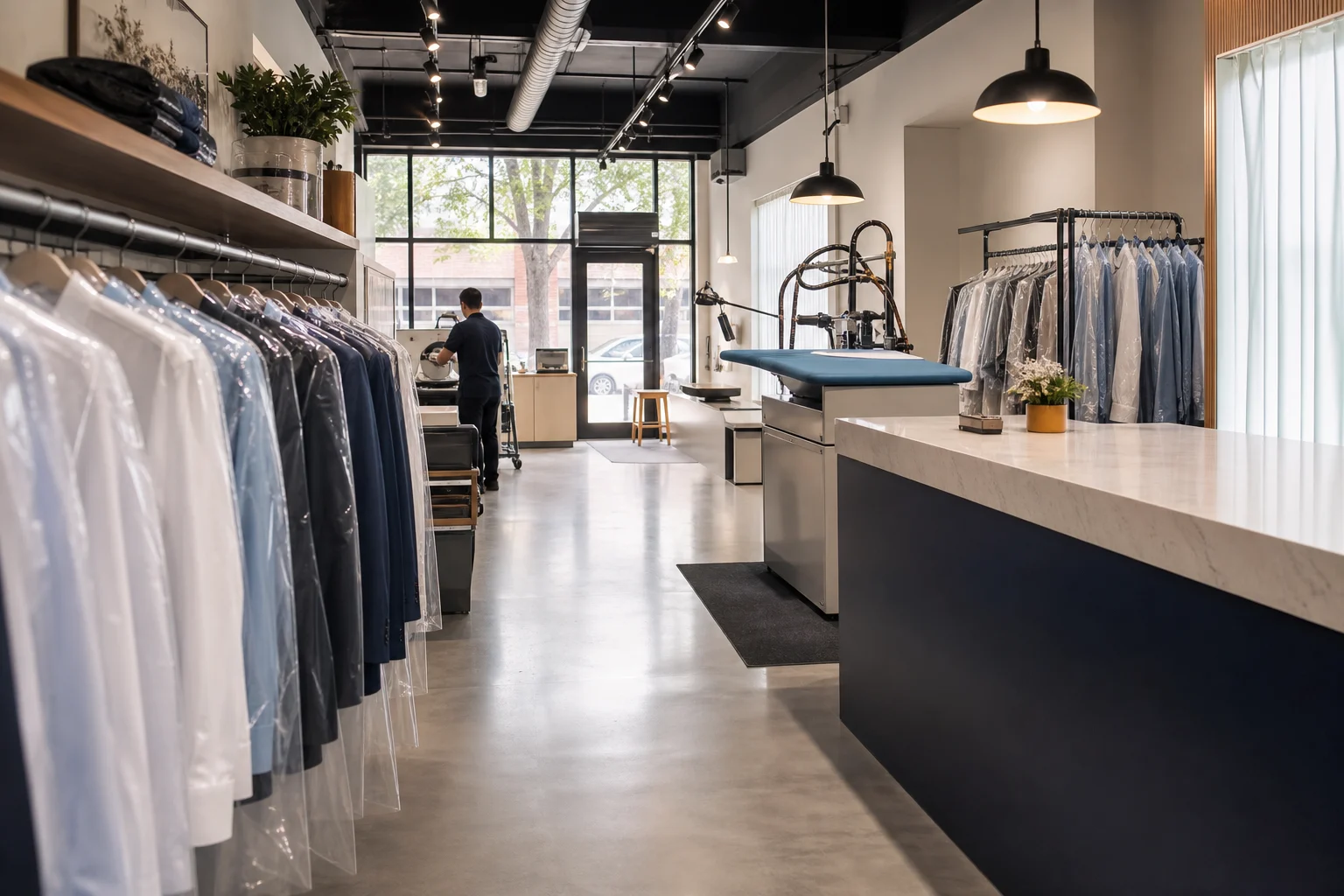
Equipment categories by launch format
The equipment needed for a dry cleaner varies significantly based on your chosen format. A basic drop-off operation requires less equipment than a full-service dry cleaning facility with on-site cleaning and pressing capabilities. For Austin's market, consider how your equipment needs align with the customer profiles in your target neighborhood.
In Domain/North Austin, with its dense daytime office population from nearby Apple, Google, and Indeed offices, you might prioritize efficiency and quick turnaround times. This could mean investing in more pressing equipment or automated sorting systems to handle the high volume of business professionals needing their garments cleaned during lunch hours or after work.
Rainey Street's downtown-adjacent location with maxed-out office density and high affluence suggests a customer base willing to pay premium prices for specialized services. Here, you might consider investing in higher-end equipment for delicate fabrics or specialized cleaning processes that command higher prices.
Crestview/Brentwood's neighborhood retail corridor with good transit access and strong parking might support a more traditional dry cleaning model with a focus on convenience for local residents. Equipment decisions here might lean toward reliability and capacity to handle steady residential demand.
Buildout assumptions that change the budget
Buildout requirements significantly impact your budget, and these vary by location and format. In Austin's competitive market, understanding how buildout costs differ across neighborhoods is essential for making informed decisions.
Domain/North Austin offers manageable rent at roughly $30-50/sqft NNN, which allows for a medium-budget buildout. This neighborhood's zero direct competitors within the search radius means you can design a space that perfectly matches your equipment needs without feeling pressure to match existing competitors' layouts.
Rainey Street's trophy-tier rent at roughly $90-140/sqft NNN would crush a medium-budget dry-cleaner's unit economics. In this location, buildout decisions become even more critical, as you'll need to maximize every square foot. This might mean opting for more compact, efficient equipment or creative space planning to maintain functionality within the constraints of high rent.
Crestview/Brentwood presents moderate rent at roughly $45-70/sqft NNN, offering a middle ground for buildout planning. This neighborhood's good transit access and strong parking allow for more flexibility in designing a customer-friendly layout that accommodates both drop-off and pickup traffic.
New vs used equipment tradeoffs
The decision between new and used equipment affects your initial investment and long-term maintenance costs. In Austin's mixed market temperature, this tradeoff requires careful consideration based on your budget, timeline, and risk tolerance.
New equipment offers the latest technology, energy efficiency, and warranty protection. In Domain/North Austin, where the daytime office population demands reliability, new equipment might justify its higher price through reduced downtime and consistent quality. The absence of direct competitors in this area also means you can establish your quality standards from the start.
Used equipment presents significant cost savings but comes with higher maintenance risks and potentially higher operating costs. In Crestview/Brentwood, where rent is moderate but not low, the cost savings of used equipment might allow for a more substantial buildout or additional service offerings. The neighborhood's strong parking and transit access mean customers might be less sensitive to minor operational hiccups.
Rainey Street's high rent levels make the new vs used decision particularly challenging. The premium pricing environment might support investing in new equipment that justifies higher service charges, but only if your business model can absorb the higher initial investment and potential rent increases.
What to inspect in a second-generation space
When considering an existing dry cleaner location, thorough inspection of equipment and buildout is essential. Austin's market with medium competition density means second-generation spaces can offer opportunities, but come with their own challenges.
In Domain/North Austin, where no direct competitors exist within the search radius, an existing space might indicate a previous business failure rather than market saturation. Inspect the equipment carefully for signs of neglect or incompatibility with current dry cleaning standards. The area's high affluence means customers expect quality, so ensure the existing equipment can deliver.
Rainey Street's trophy-tier rent suggests that any existing space has likely undergone multiple renovations. Inspect not just the equipment but also the buildout quality, as high-rent locations often feature premium finishes and layouts that might reduce your initial investment. However, be wary of spaces where previous tenants couldn't sustain the high rent levels.
Crestview/Brentwood's moderate rent and neighborhood retail corridor make second-generation spaces potentially attractive. Look for equipment that has been well-maintained and a layout that works efficiently for dry cleaning operations. The area's good transit access and strong parking are valuable assets that shouldn't be compromised by poor space planning.
FAQ
What equipment do I need for A Dry Cleaner in Austin?
The essential equipment for a dry cleaner in Austin includes:
- Dry cleaning machines (either petroleum-based or solvent-based)
- Still for distilling and reusing solvents
- Finishing equipment (presses, steamers, form finishers)
- Garment sorting and storage systems
- Point-of-sale system
- Customer waiting area furnishings
The specific equipment needed depends on your chosen format and location. For example, a drop-off operation in Domain/North Austin might prioritize efficiency and quick turnaround, while a full-service operation in Rainey Street might need specialized equipment for handling luxury fabrics.
How does location affect equipment needs in Austin?
Location significantly impacts equipment needs based on customer demographics and competition. Domain/North Austin's daytime office population might require efficient processing equipment, while Rainey Street's high-end clientele might demand specialized fabric care equipment. Crestview/Brentwood's residential focus might necessitate different capacity considerations.
Should I buy new or used equipment for my Austin dry cleaner?
The new vs used equipment decision depends on your budget, risk tolerance, and location. Higher-rent areas like Rainey Street might justify new equipment's higher cost through premium pricing, while moderate-rent areas like Crestview/Brentwood might benefit from the cost savings of used equipment. Domain/North Austin's lack of direct competitors might allow you to establish quality standards with new equipment.
How does buildout vary by Austin neighborhood?
Buildout requirements vary significantly by neighborhood. Domain/North Austin's medium-high rent requires efficient space planning, while Rainey Street's trophy-tier rent demands maximum space utilization. Crestview/Brentwood's moderate rent offers more flexibility in design and layout.
What should I look for in a second-generation dry cleaner space?
When inspecting a second-generation space, evaluate the condition of existing equipment, the efficiency of the layout, and the quality of buildout. Consider how well the space meets your specific operational needs and whether any modifications would be required. Also assess the neighborhood's characteristics to ensure they align with your target customer base.
Last reviewed: 2026-05-08
Sources: U.S. Census Bureau ACS, LEHD LODES, Google Places, OpenStreetMap, Locavisor neighborhood scoring.
Methodology: Locavisor scores neighborhoods across demand, competition fit, rent fit, accessibility, and customer match. Scores reflect a snapshot of recent data and should be combined with on-the-ground research before lease decisions.
Disclaimer: This article provides informational content only and does not constitute legal, financial, accounting, or real-estate advice. Verify lease terms, licensing, local regulations, costs, and professional requirements with qualified local professionals before making business decisions.
Free preview shows top 3 neighborhoods. Full $9.99 report covers all 10 areas with personalized scoring + 90-day check-ins.
Informational only. Verify lease, licensing, local regulations, costs, and professional requirements with qualified local professionals.