Boston, MA · dry cleaner
Dry cleaner equipment costs Boston
Planning a dry cleaner in Boston requires careful consideration of equipment and buildout costs. The dry cleaner equipment costs Boston market presents unique challenges and opportunities depending on your chosen location. Understanding these costs is crucial for budgeting and ensuring your business has the right foundation for success.
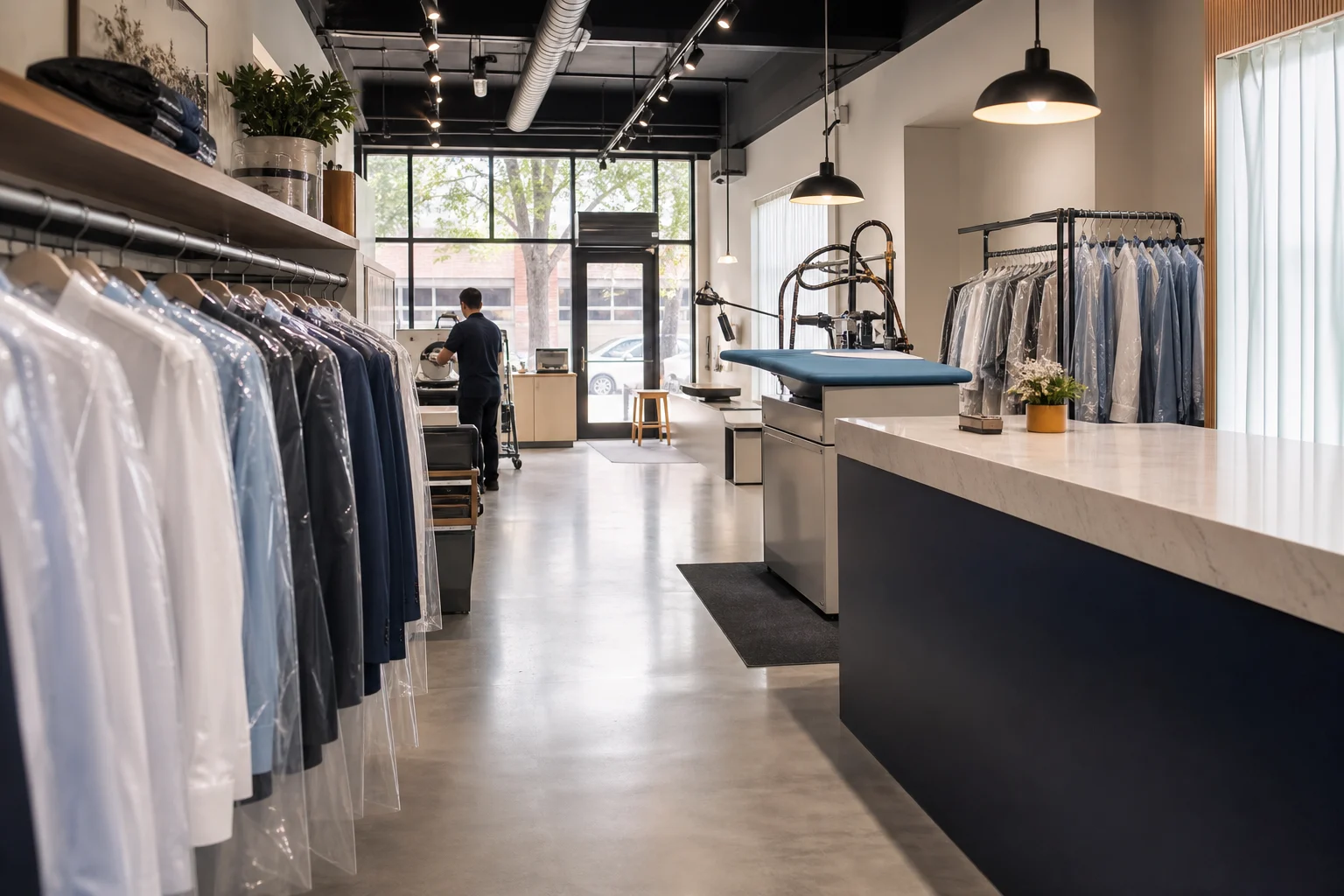
Equipment categories by launch format
When launching a dry cleaning business in Boston, your equipment needs will vary significantly based on your chosen format. A full-service dry cleaner requires different equipment than a drop-off location or a specialized wet cleaning operation. The Boston market, particularly in the top three areas identified by Locavisor neighborhood scoring, presents specific considerations for each format.
In Quincy Center / North Quincy, with zero direct dry-cleaner competition within the search radius, you have flexibility in choosing your format. A full-service operation would need pressing equipment, dry cleaning machines, spotting stations, and finishing tools. Meanwhile, Assembly Row (Somerville) and East Boston, both with zero dry-cleaner competition but higher rent levels, might benefit from more specialized or efficient equipment to maximize the premium space.
The equipment categories generally fall into cleaning, pressing, finishing, and management systems. Each category has different cost implications and space requirements. In Boston's competitive market, investing in efficient equipment can reduce long-term operational costs, which is particularly important given the medium-high rent levels in your top three locations.
Buildout assumptions that change the budget
Buildout requirements significantly impact your budget when opening a dry cleaner in Boston. The physical space needs to accommodate specialized equipment, ventilation systems, and customer areas. Quincy Center / North Quincy offers more manageable rent at roughly $30-50/sqft NNN, allowing for more comprehensive buildout options. In contrast, Assembly Row and East Boston present steeper rent challenges at roughly $65-95/sqft NNN, requiring more strategic space utilization.
Buildout considerations include plumbing for steam and solvent systems, electrical requirements for heavy machinery, ventilation for chemical fumes, and layout optimization for workflow efficiency. The strong daytime office-worker density in Quincy Center / North Quincy suggests a customer flow that benefits from a well-designed customer service area. Meanwhile, Assembly Row's mixed-use nature with the Assembly Row mall and Orange Line station requires careful planning for both customer access and back-of-house operations.
The buildout budget should account for these spatial requirements while considering the market temperature, which is promising across all three areas. A well-planned buildout that accommodates both current needs and future expansion can provide flexibility as your business grows in Boston's dynamic market.
New vs used equipment tradeoffs
Deciding between new and used equipment is a critical financial consideration for Boston dry cleaner startups. New equipment offers the latest technology, energy efficiency, and warranty protection, which can reduce long-term operating costs. However, the initial investment is significantly higher. In Quincy Center / North Quincy's more moderate rent environment, the higher upfront cost of new equipment might be more manageable.
Used equipment presents a lower initial investment option, which could be particularly attractive in Assembly Row and East Boston where rent levels are steep. However, older machines may have higher maintenance costs and lower energy efficiency. The zero dry-cleaner competition in all three areas suggests you have time to evaluate equipment options carefully without immediate competitive pressure.
The tradeoff between new and used equipment should consider your long-term business vision and available capital. In Boston's promising market with medium competition density, investing in reliable equipment—whether new or carefully selected used—can provide a solid foundation for growth. Consider the total cost of ownership, including maintenance, energy consumption, and potential downtime when making this decision.
What to inspect in a second-generation space
When evaluating existing dry cleaner spaces in Boston, thorough inspection of existing infrastructure can save significant buildout costs. Look for properly installed ventilation systems, plumbing for steam and solvent lines, and electrical systems capable of handling heavy machinery. The zero dry-cleaner competition in Quincy Center / North Quincy, Assembly Row, and East Boston means you might find spaces with existing dry cleaning infrastructure.
In Quincy Center / North Quincy, with its manageable rent levels, you have more flexibility to modify spaces to your specific needs. Assembly Row's premium mixed-use environment might offer spaces with modern infrastructure but at higher cost. East Boston's dense residential corridor with Blue Line transit access presents opportunities in spaces that previously served other retail needs but have adaptable layouts.
When inspecting second-generation spaces, verify that existing equipment meets current environmental and safety standards. The growing waterfront gentrification wave in East Boston suggests areas that may have previously housed industrial uses could be repurposed for retail, including dry cleaning. Ensure any existing infrastructure aligns with your business model and can be upgraded or modified to meet your specific requirements.
FAQ
What equipment do I need for A Dry Cleaner in Boston?
A dry cleaner in Boston typically needs several categories of equipment: cleaning machines (dry cleaning units, wet cleaning systems), pressing equipment (steam presses, finishing systems), spotting stations, management software, and customer service infrastructure. The specific equipment needed depends on your business format—whether full-service, drop-off only, or specialized cleaning services.
How does location affect equipment needs in Boston?
Location impacts equipment needs based on customer demographics and space constraints. Quincy Center / North Quincy's strong daytime office-worker density suggests equipment that can handle quick turnaround for business customers. Assembly Row's mixed-use environment with high rent levels might favor space-efficient equipment. East Boston's residential focus could benefit from equipment that handles volume processing for neighborhood customers.
What buildout considerations are unique to Boston dry cleaners?
Boston dry cleaner buildouts must address specific challenges including ventilation requirements for chemical fumes, plumbing for steam systems, and electrical capacity for heavy machinery. The city's building codes have specific requirements for commercial spaces handling chemicals. Additionally, accessibility compliance under the Americans with Disabilities Act is crucial for customer areas.
How do I balance equipment costs with rent expenses in Boston?
Balance equipment costs with rent by considering the total cost of ownership. Quincy Center / North Quincy's more moderate rent levels ($30-50/sqft NNN) allow for higher equipment investment. In Assembly Row and East Boston with steeper rent ($65-95/sqft NNN), consider space-efficient equipment that maximizes productivity per square foot. The promising market temperature across all three areas suggests that investing in quality equipment can provide good returns over time.
What should I look for when evaluating used dry cleaning equipment?
When evaluating used equipment, check for proper maintenance records, signs of wear on critical components, and compliance with current environmental standards. Test equipment thoroughly before purchase. Consider the age of the equipment and potential repair costs. In Boston's market with zero dry-cleaner competition in your top three areas, you have time to find quality used equipment without immediate competitive pressure.
Last reviewed: 2026-05-08
Sources: U.S. Census Bureau ACS, LEHD LODES, Google Places, OpenStreetMap, Locavisor neighborhood scoring.
Methodology: Locavisor scores neighborhoods across demand, competition fit, rent fit, accessibility, and customer match. Scores reflect a snapshot of recent data and should be combined with on-the-ground research before lease decisions.
Disclaimer: This article provides informational content only and does not constitute legal, financial, accounting, or real-estate advice. Verify lease terms, licensing, local regulations, costs, and professional requirements with qualified local professionals before making business decisions.
Free preview shows top 3 neighborhoods. Full $9.99 report covers all 10 areas with personalized scoring + 90-day check-ins.
Informational only. Verify lease, licensing, local regulations, costs, and professional requirements with qualified local professionals.