Chicago, IL · dry cleaner
Dry cleaner equipment costs Chicago
Opening a dry cleaner in Chicago requires careful planning around equipment and buildout costs. The equipment choices you make will directly impact your operational efficiency, customer satisfaction, and long-term profitability. Chicago's competitive market demands that you get these decisions right from the start, as they'll form the foundation of your business.
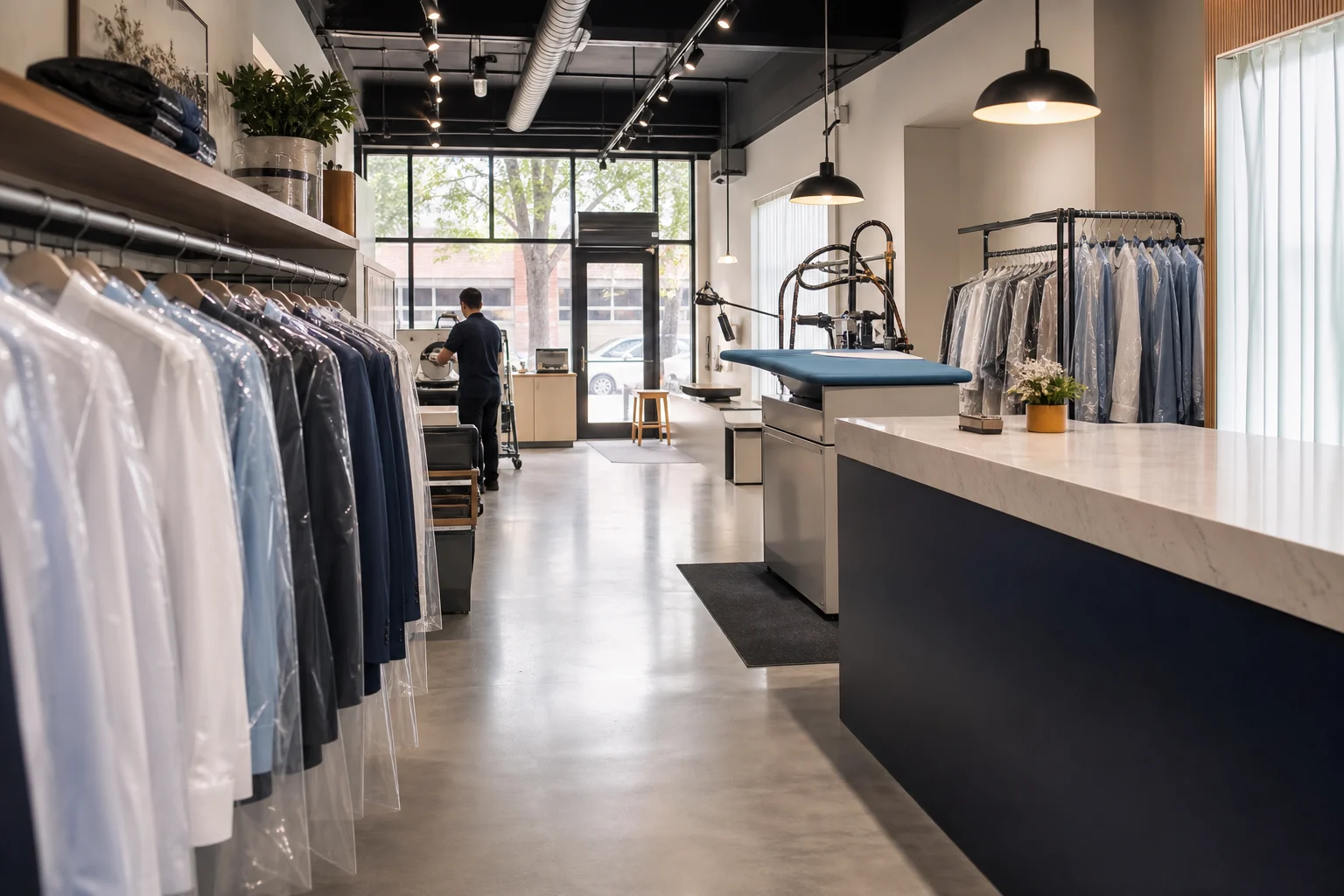
What equipment do you need to open a dry cleaner in Chicago?
The core equipment for a dry cleaner typically includes cleaning machines, finishing equipment, and supporting systems. For a Chicago location, you'll need to consider how your equipment choices align with local space constraints and utility requirements. The specific equipment needs will vary based on your business model-whether you're offering full-service cleaning, drop-off only, or specialized services.
Key equipment categories include:
- Dry cleaning machines (perc or hydrocarbon)
- Laundry machines and dryers
- Finishing equipment (presses, steamers, formers)
- Spotting boards and treatment stations
- Conveyor systems
- Computerized order management systems
- Customer-facing equipment (point-of-sale, app integration)
Your equipment selection should consider Chicago's specific requirements, including ventilation standards and water usage regulations that may affect certain neighborhoods differently.
Buildout cost categories
When planning your dry cleaner buildout in Chicago, several cost categories require careful consideration. These expenses will vary significantly based on your chosen neighborhood and the condition of your space.
Plumbing and electrical
Chicago building codes have specific requirements for dry cleaner plumbing and electrical systems. You'll need to install specialized plumbing for solvent recovery systems and ensure electrical capacity meets the demands of your equipment. The South Loop, with its rent band of $22-$80/sqft/yr NNN, may present different infrastructure challenges compared to Fulton Market's $58/sqft/yr NNN rate.
HVAC and ventilation
Proper ventilation is non-negotiable for dry cleaning operations in Chicago. The city's building codes mandate specific air exchange rates and filtration systems to manage solvent fumes. Your HVAC system must be designed to handle the unique requirements of dry cleaning while maintaining comfortable conditions for both staff and customers.
Flooring and finishes
Dry cleaner flooring requires specialized materials that can withstand chemical exposure and heavy foot traffic. In neighborhoods like The Loop (score 6.8/10, rent band $22-$80/sqft/yr NNN), you'll need to balance durability with aesthetic considerations that match the area's commercial character.
Permits-driven items
Chicago's Department of Buildings and Department of Public Health will require specific permits for dry cleaning operations. These may include environmental permits for solvent handling and operational permits for your business type. Always verify requirements with the issuing agencies, as they can significantly impact your buildout timeline and costs.
Furniture and signage
Customer-facing elements like counters, seating, and signage contribute to your brand experience. In competitive areas like River North (score 6.8/10, rent band $22-$80/sqft/yr NNN), these details can differentiate your business from established operators like Grant Park Cleaners.
Equipment line items to validate in Chicago
When sourcing equipment for your Chicago dry cleaner, focus on validating these critical line items:
- Dry cleaning machines: Compare perc versus hydrocarbon systems based on Chicago's environmental regulations and your target neighborhood's utility costs
- Finishing equipment: Ensure presses and steamers can handle Chicago's varied garment types and customer expectations
- Recovery systems: Chicago's environmental standards may require specific solvent recovery technology
- Order management: Consider systems that integrate with Chicago customers' preferences for app-based ordering and notifications
- Safety equipment: Chicago OSHA requirements mandate specific safety features for solvent handling
How established operators in Chicago configure their kitchens
Looking at established dry cleaners in Chicago provides valuable insights into equipment configuration. Operators in the South Loop, such as Plymouth Court Cleaners & Tailors and Millennium Cleaners, have built successful businesses with equipment setups that balance efficiency and customer experience.
These established businesses typically invest in:
- High-capacity dry cleaning machines suitable for urban demand
- Multiple finishing stations to handle peak hours
- Computerized order tracking systems that meet Chicago customers' expectations
- Customer waiting areas that reflect neighborhood character
The Loop's Grant Park Cleaners demonstrates how equipment placement can optimize customer flow in high-traffic areas. Their configuration likely considers the foot traffic from nearby office buildings and tourist destinations.
Used vs. new vs. lease
Chicago's dry cleaning market presents different options for equipment acquisition:
New equipment offers the latest technology and warranty protection but comes with higher upfront costs. This may be justified in premium neighborhoods like Fulton Market, where the $58/sqft/yr NNN rent band supports higher operational expenses.
Used equipment can reduce initial investment but requires careful inspection for Chicago-specific compliance. Established operators in the West Loop have successfully implemented used equipment strategies while maintaining quality standards.
Leased equipment provides flexibility and predictable monthly costs, which can be advantageous for new businesses in competitive areas like River North. However, total lease costs may exceed equipment purchase over time.
| Equipment Acquisition Option | Pros for Chicago Market | Cons for Chicago Market |
|---|---|---|
| New Equipment | Latest technology, warranty protection, compliance certainty | Higher upfront costs, longer ROI period |
| Used Equipment | Lower initial investment, faster implementation | Potential compliance issues, limited warranty |
| Leased Equipment | Predictable monthly costs, flexibility | Total cost may exceed purchase, dependency on vendor |
Buildout timeline
Chicago's permitting process and contractor availability can significantly impact your buildout timeline. The city's Department of Buildings typically requires a variable local timeline for permit review, but this can vary based on your neighborhood and project complexity.
Key timeline considerations:
- Permit application and approval (a variable local timeline)
- Contractor scheduling and mobilization (a variable local timeline)
- Equipment delivery and installation (a variable local timeline)
- System testing and compliance verification (a variable local timeline)
- Staff training and operational setup (1 week)
Neighborhoods with higher development activity, like Fulton Market, may experience longer contractor lead times due to current construction demand.
Common buildout overruns
Chicago dry cleaner projects often encounter unexpected costs during buildout:
- Utility upgrades: Older buildings in neighborhoods like The Loop may require electrical or plumbing upgrades to support dry cleaning equipment
- Code compliance: Chicago's specific environmental and safety codes may necessitate additional equipment or modifications
- Space constraints: Urban locations often have limited space, requiring creative equipment layouts that may increase costs
- Permit delays: Chicago's regulatory process can experience backlogs, particularly in high-demand neighborhoods
- Union labor: Certain Chicago neighborhoods may have prevailing wage requirements that impact labor costs
FAQ
Q: What are the most cost-effective neighborhoods for a dry cleaner in Chicago?
A: Based on Locavisor scoring, the South Loop (7.0/10) offers the best balance of customer density and rental costs ($22-$80/sqft/yr NNN). The Loop, West Loop, and River North all score 6.8/10 with similar rent bands, while Fulton Market's higher $58/sqft/yr NNN rate may justify premium pricing.
Q: How do I ensure my dry cleaner equipment meets Chicago regulations?
A: Work with equipment vendors who understand Chicago's specific requirements and consult with local environmental and safety experts. The Chicago Department of Public Health and Department of Buildings can provide guidance on compliance standards.
Q: Can I start a dry cleaner in Chicago with a small space?
A: Yes, but space constraints will impact your equipment choices and service offerings. Compact dry cleaning machines and efficient layouts are essential. Neighborhoods like The Loop have many smaller commercial spaces suitable for specialized dry cleaning operations.
Last reviewed: 2026-05-30
Sources: U.S. Census Bureau ACS, LEHD LODES, Google Places, OpenStreetMap, Locavisor neighborhood scoring.
Methodology: Locavisor scores neighborhoods across demand, competition fit, rent fit, accessibility, and customer match. Scores reflect a snapshot of recent data and should be combined with on-the-ground research before lease decisions.
Disclaimer: This article provides informational content only and does not constitute legal, financial, accounting, or real-estate advice. Verify lease terms, licensing, local regulations, costs, and professional requirements with qualified local professionals before making business decisions.
Free preview shows top 3 neighborhoods. Full $9.99 report covers all 10 areas with personalized scoring + 90-day check-ins.
Informational only. Verify lease, licensing, local regulations, costs, and professional requirements with qualified local professionals.