Detroit, MI · dry cleaner
Dry cleaner equipment costs Detroit
Starting a dry cleaning business in Detroit requires careful planning of equipment and buildout costs. The right equipment setup depends on your business format, location, and target market. Detroit offers several promising neighborhoods for dry cleaning businesses, each with unique characteristics that impact equipment needs and buildout planning.
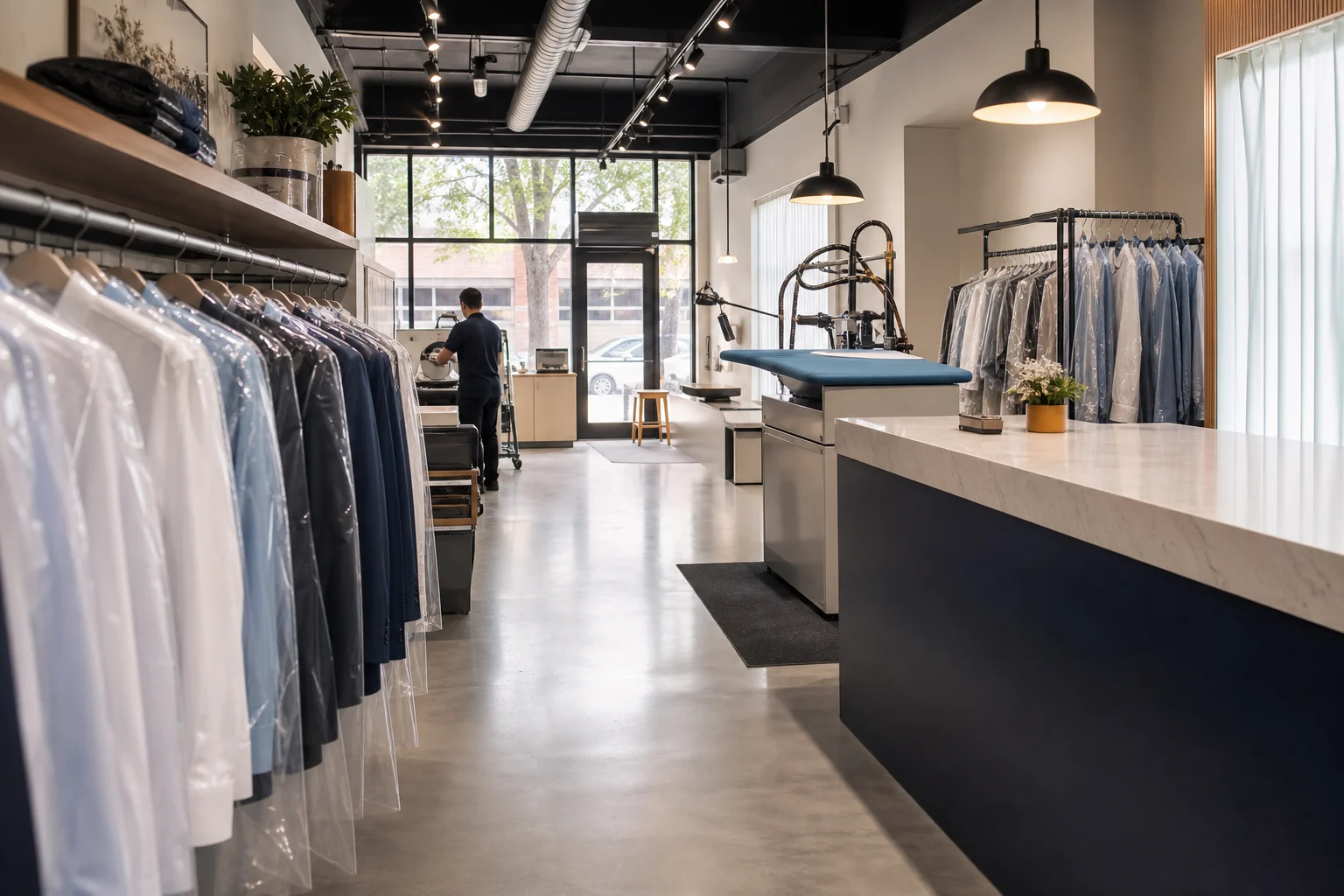
Equipment categories by launch format
Dry cleaning equipment needs vary significantly based on your business format. A drop-off and pickup operation requires different equipment than a full-service dry cleaning facility with on-site cleaning capabilities. For a basic drop-off model in Detroit, you'll need industrial-grade garment racks, point-of-sale systems, and secure storage for customer garments.
A full-service operation requires additional investment in cleaning machinery, pressing equipment, and specialized finishing tools. The Lafayette Park area, with its zero dry-cleaner competitors and dense daytime office population of approximately 10,500 weekday workers within 800m, presents an opportunity for a well-equipped drop-off location that leverages the car-dependent drop-off model.
Consider how your equipment aligns with neighborhood characteristics. In Downtown Detroit, with its dense weekday office concentration around the Penobscot Building and Guardian Building, you might prioritize equipment that handles high-volume processing during business hours. Greektown's excellent transit access and walkability suggest different equipment needs than a location in Lafayette Park with its strong parking access.
Buildout assumptions that change the budget
Buildout requirements significantly impact your equipment planning and budget. A ground-up construction allows for optimal equipment placement and workflow design but requires substantial investment. In contrast, retrofitting an existing space may limit equipment options but reduces initial costs.
Detroit's rent levels in the top neighborhoods range from roughly $30-50/sqft NNN, which influences how much you can allocate to buildout versus equipment. The Lafayette Park area offers strong potential with zero competitors, allowing you to design a space specifically for your equipment needs.
When planning buildout, consider how equipment placement affects customer flow and operational efficiency. In Greektown, where Clifford Street Cleaners operates with limited hours (closes 6 PM weekdays, 3 PM Saturday), you might design a buildout that accommodates extended hours to capture unmet demand. Downtown Detroit's existing dry cleaner at 436m from the centroid has a modest 3.9★ rating with 34 reviews, suggesting an opportunity for a better-positioned competitor with superior equipment and layout.
New vs used equipment tradeoffs
Choosing between new and used equipment affects both upfront costs and long-term reliability. New equipment typically comes with warranties, energy efficiency, and the latest technology, but represents a significant capital investment. Used equipment offers lower initial costs but may require more maintenance and have shorter lifespans.
Detroit's market temperature is promising, suggesting a good time to invest in quality equipment that will serve your business for years. The medium competition density means you have room to differentiate through superior equipment and service.
In Lafayette Park, where you'd be the first dry cleaner, investing in new equipment could establish your business as the premium option from day one. In Downtown Detroit, where Clifford Street Cleaners operates with limited hours and a modest rating, newer, more efficient equipment could help you capture market share by offering better service and reliability.
What to inspect in a second-generation space
When considering a previously operated dry cleaning space, thorough inspection of existing equipment and infrastructure is crucial. Check for signs of wear on machinery, plumbing connections for solvent systems, and ventilation that meets current environmental standards.
The Lafayette Park area's zero competition means you won't find existing dry cleaning spaces, but other commercial properties may require significant buildout to accommodate dry cleaning equipment. In Greektown and Downtown Detroit, where existing dry cleaners operate, inspect the space for equipment that could be repurposed or upgraded.
Pay special attention to infrastructure that supports dry cleaning operations, including electrical systems that can handle industrial equipment, ventilation for solvent fumes, and plumbing for specialized cleaning processes. The existing dry cleaner in Downtown Detroit at 436m from the centroid might leave behind infrastructure that could be adapted, though its modest 3.9★ rating suggests potential improvements are needed.
FAQ
What equipment do I need for A Dry Cleaner in Detroit?
The essential equipment for a dry cleaner in Detroit depends on your business format. A basic drop-off operation requires garment racks, point-of-sale systems, and secure storage. A full-service facility needs additional cleaning machinery, pressing equipment, and finishing tools. Your specific needs will vary based on location—Lafayette Park's car-dependent model differs from Greektown's walkable, transit-accessible area. Consider neighborhood characteristics when selecting equipment to best serve your target customers.
How does Detroit's market temperature affect equipment planning?
Detroit's promising market temperature suggests a good time to invest in quality equipment that will serve your business long-term. The medium competition density means you have room to differentiate through superior equipment and service. In areas like Lafayette Park with zero competitors, investing in new equipment can establish your business as the premium option from day one.
What should I consider when planning buildout for a dry cleaner?
Buildout planning should consider how equipment placement affects customer flow and operational efficiency. Detroit's rent levels in top neighborhoods range from roughly $30-50/sqft NNN, influencing how much you can allocate to buildout versus equipment. Design your space to accommodate your specific equipment needs while optimizing for customer experience and operational efficiency.
How do Detroit's top neighborhoods for dry cleaning differ in equipment needs?
Lafayette Park's dense daytime office population and car-dependent model suggest equipment that handles high-volume drop-offs with convenient parking access. Greektown's walkability and transit access require different equipment considerations than Lafayette Park. Downtown Detroit's dense office concentration around buildings like the Penobscot and Guardian suggests equipment optimized for business-hour processing. Each neighborhood's unique characteristics should inform your equipment selection and buildout planning.
What are the advantages of new versus used equipment for a Detroit dry cleaner?
New equipment offers warranties, energy efficiency, and the latest technology but requires significant capital investment. Used equipment provides lower initial costs but may need more maintenance. In Detroit's promising market, investing in quality equipment—whether new or carefully selected used—can help establish your business as a superior alternative to existing competitors like Clifford Street Cleaners with its modest 3.9★ rating.
Last reviewed: 2026-05-08
Sources: U.S. Census Bureau ACS, LEHD LODES, Google Places, OpenStreetMap, Locavisor neighborhood scoring.
Methodology: Locavisor scores neighborhoods across demand, competition fit, rent fit, accessibility, and customer match. Scores reflect a snapshot of recent data and should be combined with on-the-ground research before lease decisions.
Disclaimer: This article provides informational content only and does not constitute legal, financial, accounting, or real-estate advice. Verify lease terms, licensing, local regulations, costs, and professional requirements with qualified local professionals before making business decisions.
Free preview shows top 3 neighborhoods. Full $9.99 report covers all 10 areas with personalized scoring + 90-day check-ins.
Informational only. Verify lease, licensing, local regulations, costs, and professional requirements with qualified local professionals.