Fort Worth, TX · dry cleaner
Dry cleaner equipment costs Fort Worth
Planning a dry cleaner in Fort Worth requires careful consideration of equipment needs and buildout requirements. The city offers distinct neighborhoods with varying market conditions, competition levels, and rent structures that impact your equipment decisions. Locavisor neighborhood scoring identifies three prime areas for your dry cleaner venture, each with unique characteristics affecting your equipment planning.
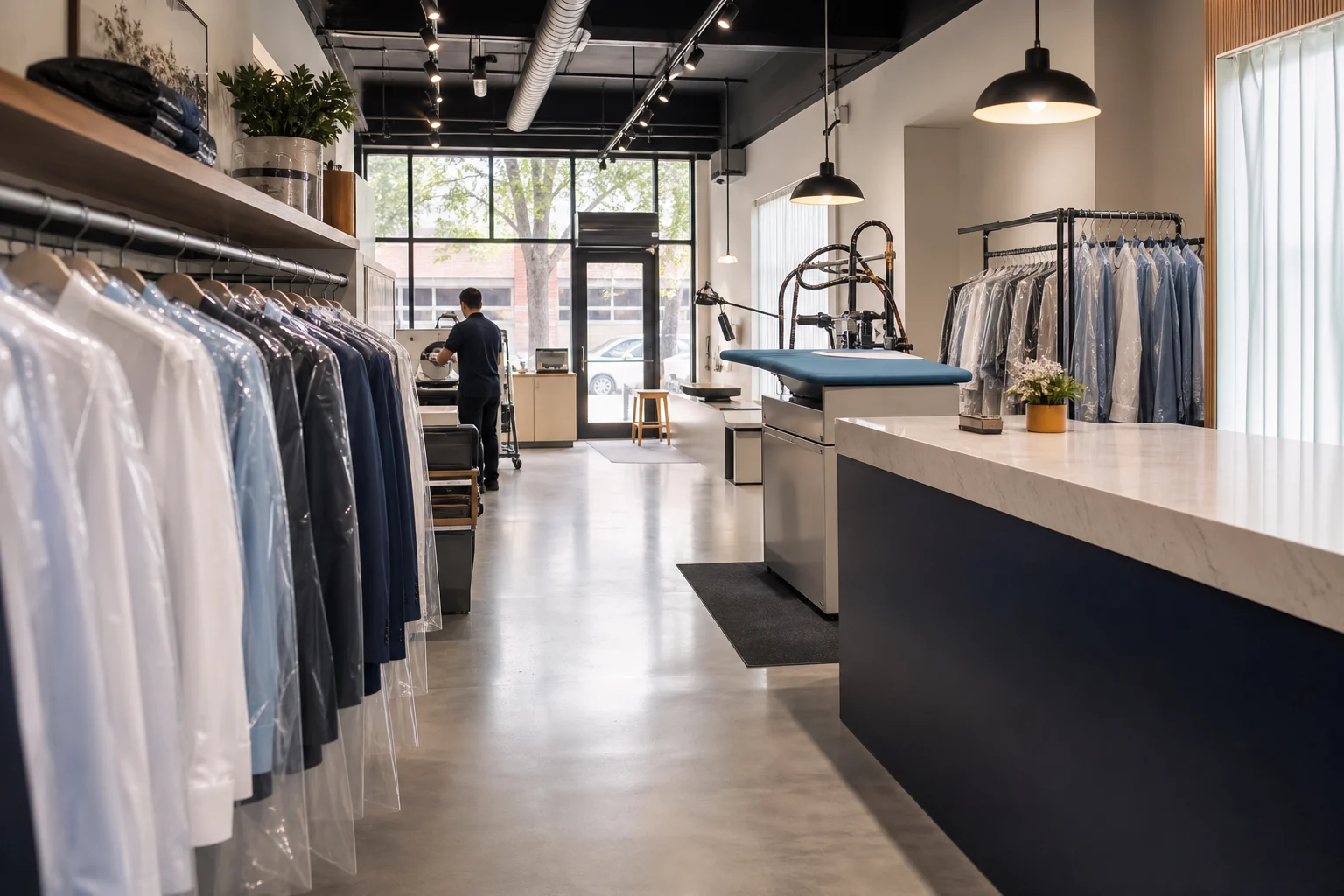
Equipment categories by launch format
Dry cleaner equipment needs vary significantly based on your chosen format and location within Fort Worth. The three primary areas identified by Locavisor neighborhood scoring—Sundance Square, Hospital District / Park Hill, and Arlington Heights / Westover Hills—each present different equipment requirements based on their market characteristics.
In Sundance Square (7.1/10), Fort Worth's iconic downtown core with strong daytime office-worker density, high walkability, and good parking access, you'll need equipment optimized for high-volume weekday service. The minimal same-business saturation—only one direct competitor (Upper West Cleaners, 4.7★, 41 reviews) within 434m—means you can focus on standard commercial-grade equipment rather than specialized niche machinery. Expect roughly $30-50/sqft NNN rent influencing your equipment budget allocation.
Hospital District / Park Hill (6.5/10), a medical-anchored corridor around Cook Children's and Texas Health Harris Methodist hospitals, demands equipment capable of handling diverse fabric types and specialized garment care. The strong office index driven by healthcare employment and high affluence (top-tier income area) suggests premium equipment investment might be justified. However, the premium rent at roughly $65-95/sqft NNN means balancing equipment quality with cost efficiency becomes critical.
Arlington Heights / Westover Hills (6.3/10), through Camp Bowie corridor with upscale residential and moderate office presence and zero direct dry-cleaner competitors detected, allows for more flexible equipment planning. The manageable rent at roughly $20-35/sqft NNN provides budget flexibility, but the very low walkability and weak transit access mean you'll need equipment that supports drive-through or drop-off services rather than walk-in customer flow.
Buildout assumptions that change the budget
Buildout requirements for your Fort Worth dry cleaner will differ based on your chosen location and existing space conditions. The market temperature in Fort Worth is mixed, with competition density at medium levels, creating both challenges and opportunities for equipment planning.
Sundance Square's existing infrastructure may reduce certain buildout costs. The area's established commercial nature likely includes basic utilities and possibly some pre-existing ventilation systems that could benefit dry cleaning operations. However, the WFH headwinds mean weekday dry-clean volume is still recovering, so your equipment planning should account for potential fluctuations in demand.
Hospital District / Park Hill presents different buildout considerations. The medical-anchored environment may require specialized ventilation and environmental controls that impact your equipment installation. The premium rent level suggests landlords may offer buildout allowances, but these often come with restrictions on equipment types and installation methods that could affect your operational flexibility.
Arlington Heights / Westover Hills offers the most budget-friendly buildout scenario with its lower rent level. The suburban character means fewer regulatory restrictions on equipment installation, potentially reducing buildout complexity. However, the car-dependent nature of the area requires thoughtful planning for customer flow and drop-off systems that integrate with your equipment layout.
New vs used equipment tradeoffs
Equipment sourcing decisions represent a critical juncture in your Fort Worth dry cleaner planning. The rent level across Fort Worth's top areas varies significantly, from low in Arlington Heights / Westover Hills to premium in Hospital District / Park Hill, directly impacting your equipment budget allocation.
New equipment offers reliability and warranty protection but comes with higher upfront costs. In Sundance Square, where rent averages $30-50/sqft NNN, the investment in new equipment might be more manageable. The minimal same-business saturation means you're not competing with established operations using outdated equipment, making newer technology a potential differentiator.
Used equipment presents cost advantages but requires careful evaluation. In Hospital District / Park Hill with its premium rent structure, used equipment could provide significant savings. However, the high affluence (top-tier income area) suggests customers may expect modern equipment and processes, potentially making used equipment a liability in this market.
Arlington Heights / Westover Hills offers the most flexibility for equipment decisions. The zero direct dry-cleaner competitors detected means you can establish your own standards without market pressure. The manageable rent at roughly $20-35/sqft NNN provides budget room for either new or used equipment, depending on your risk tolerance and long-term vision.
What to inspect in a second-generation space
Evaluating existing dry cleaning spaces requires specific attention to equipment compatibility and infrastructure readiness. The score confidence of 72% for Fort Worth's market analysis suggests that thorough due diligence is essential before committing to a lease.
In Sundance Square, inspect existing plumbing and electrical systems for compatibility with dry cleaning equipment. The area's commercial nature may have previous dry cleaning infrastructure, but verify that systems meet current environmental and safety standards. The good parking access is valuable, but ensure your equipment layout optimizes customer flow from parking to service areas.
Hospital District / Park Hill spaces require special attention to ventilation and environmental systems. The medical-anchored corridor around Cook Children's and Texas Health Harris Methodist hospitals may have stricter environmental regulations. Check that existing ductwork and exhaust systems can handle dry cleaning emissions without costly modifications.
Arlington Heights / Westover Hills spaces offer different inspection priorities. The suburban character means fewer regulatory hurdles, but verify that the space can accommodate necessary equipment without structural modifications. The very low walkability suggests designing an efficient drive-through system that minimizes customer interaction time while maintaining service quality.
FAQ
What equipment do I need for A Dry Cleaner in Fort Worth?
Essential dry cleaning equipment typically includes washing machines, dry cleaning machines, pressing equipment, finishing stations, and point-of-sale systems. The specific equipment needs vary based on your chosen location within Fort Worth. Sundance Square's office-worker density favors equipment optimized for quick turnaround, while Hospital District / Park Hill's high affluence may justify premium finishing equipment. Arlington Heights / Westover Hills' car-dependent nature requires efficient drop-off and pickup systems integrated with your equipment layout.
How does location affect my equipment decisions?
Fort Worth's top three areas each present unique equipment requirements. Sundance Square's $30-50/sqft NNN rent structure influences budget allocation, while Hospital District / Park Hill's premium rent at roughly $65-95/sqft NNN requires careful cost-benefit analysis of equipment investments. Arlington Heights / Westover Hills' lower rent level provides more flexibility but demands equipment that supports drive-through service models.
What buildout factors should I consider?
Buildout requirements vary by location. Sundance Square's established commercial infrastructure may reduce certain buildout costs, while Hospital District / Park Hill's medical environment may require specialized ventilation systems. Arlington Heights / Westover Hills offers more straightforward buildout but requires planning for car-dependent customer flow.
Should I buy new or used equipment?
New equipment offers reliability but higher costs, while used equipment provides savings with potential maintenance concerns. Your decision should consider your specific location's market characteristics. Sundance Square's recovering weekday volume might justify newer equipment, while Hospital District / Park Hill's premium rent structure may make used equipment more financially viable.
How do I evaluate existing spaces for equipment compatibility?
Inspect plumbing, electrical systems, ventilation, and environmental controls based on your location. Sundance Square spaces need verification of current environmental standards, Hospital District / Park Hill requires attention to stricter medical-area regulations, and Arlington Heights / Westover Hills spaces need structural compatibility assessment for equipment installation.
Last reviewed: 2026-05-08
Sources: U.S. Census Bureau ACS, LEHD LODES, Google Places, OpenStreetMap, Locavisor neighborhood scoring.
Methodology: Locavisor scores neighborhoods across demand, competition fit, rent fit, accessibility, and customer match. Scores reflect a snapshot of recent data and should be combined with on-the-ground research before lease decisions.
Disclaimer: This article provides informational content only and does not constitute legal, financial, accounting, or real-estate advice. Verify lease terms, licensing, local regulations, costs, and professional requirements with qualified local professionals before making business decisions.
Free preview shows top 3 neighborhoods. Full $9.99 report covers all 10 areas with personalized scoring + 90-day check-ins.
Informational only. Verify lease, licensing, local regulations, costs, and professional requirements with qualified local professionals.