Las Vegas, NV · dry cleaner
Dry cleaner equipment costs Las Vegas
Planning a dry cleaner in Las Vegas requires careful consideration of equipment needs and buildout requirements. The dry cleaner equipment costs Las Vegas market presents unique challenges based on location, format, and existing infrastructure. Your equipment investment will vary significantly depending on whether you're starting from scratch or taking over an existing location.
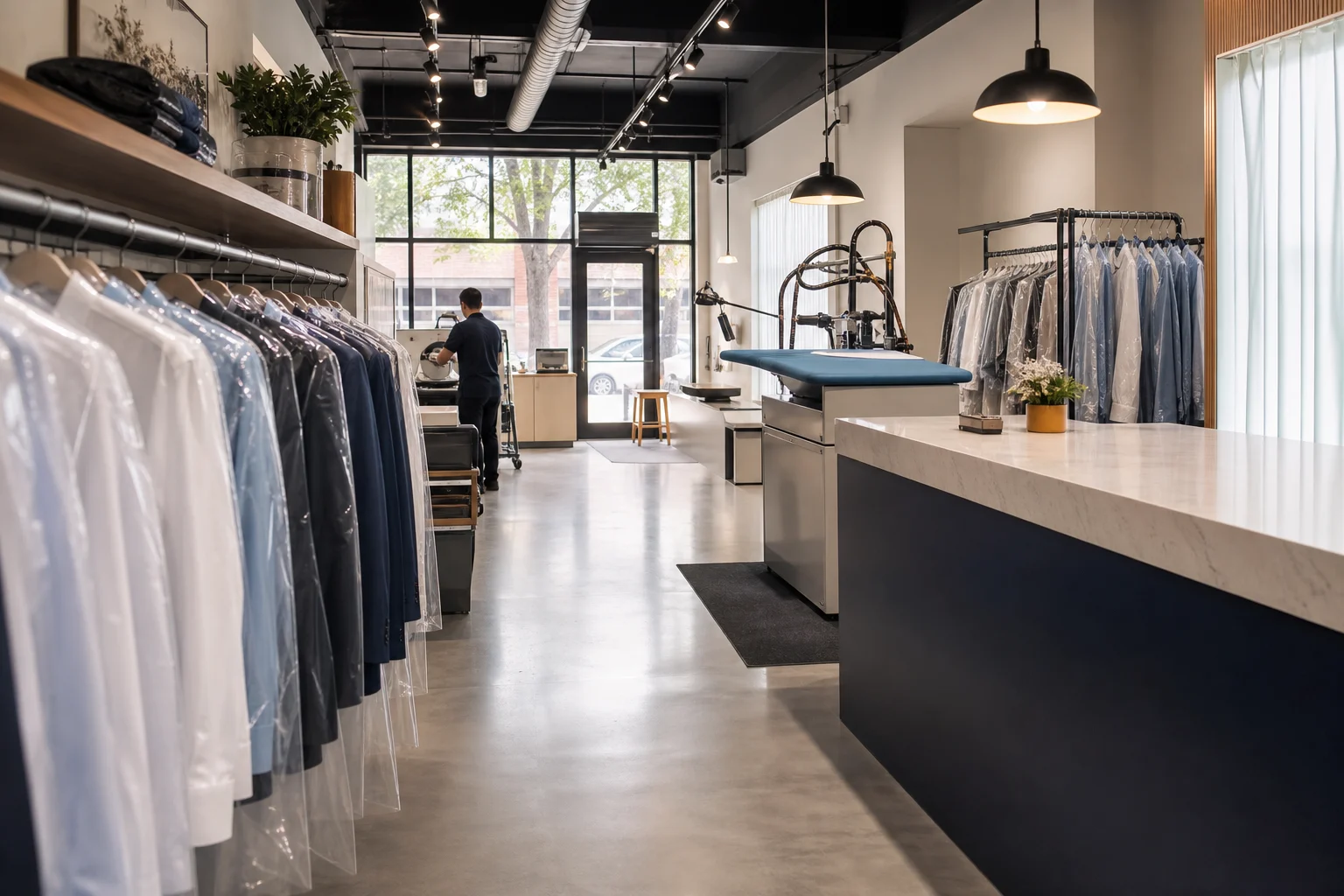
Equipment categories by launch format
Dry cleaning operations require several categories of equipment, each serving a specific function in your workflow. The most essential pieces include cleaning machines, pressing equipment, finishing stations, and point-of-sale systems. Your format choice—whether traditional drop-off, curbside service, or hybrid model—will determine which equipment categories need emphasis. For example, a curbside-focused operation like the one recommended for Green Valley might prioritize efficient sorting and packaging systems over extensive customer waiting areas.
Cleaning machines form the backbone of your operation, with options ranging from small 15-pound capacity units for boutique operations to industrial 100-pound machines for high-volume locations. Pressing equipment varies from basic hand irons to sophisticated automated presses that can handle garments at scale. Finishing stations include steam cabinets, form finishers, and spotting stations that ensure garments meet quality standards before customer delivery. Each category represents a significant investment that scales with your business ambitions and service offerings.
Buildout assumptions that change the budget
Buildout requirements dramatically impact your equipment budget and timeline. Green Valley presents an interesting case with zero existing dry cleaner competitors, meaning you'll likely need complete buildout from foundation to ceiling. The rent level in Green Valley falls in the neighborhood-corridor range, which influences how much you can allocate to specialized equipment versus basic infrastructure. A new buildout requires plumbing for steam systems, electrical work for heavy machinery, ventilation for chemical handling, and flooring designed to withstand constant foot traffic and chemical exposure.
In contrast, a second-generation space like those in Town Square / South Strip might already have some infrastructure in place. The area has one existing competitor—Deluxe Cleaners & Alterations (4.8★, 61 reviews, closed weekends)—which means the building might have compatible utilities and layout. However, you'd still need to assess whether existing systems meet your equipment requirements or need upgrades. Lake Las Vegas offers another scenario with rent in the $30-50/sqft NNN range, potentially allowing for more equipment investment if the space is properly configured.
The market temperature in Las Vegas is mixed, which affects how aggressively you should approach buildout. In a growing market, investing in higher-quality equipment makes sense as demand increases. In a more uncertain market, modular equipment that can be scaled later might be the wiser choice. Your buildout decisions should align with both your immediate needs and long-term growth plans for the specific area you choose.
New vs used equipment tradeoffs
New equipment offers reliability, warranties, and energy efficiency but comes with a higher upfront cost. Used equipment can reduce initial investment by 30-50% but may come with higher maintenance costs and shorter useful life. The competition density in Las Vegas is medium, meaning you'll need equipment that allows you to differentiate your service while maintaining operational efficiency. New equipment often provides better consistency in cleaning quality and faster processing times, which can be crucial in competitive markets.
Used equipment from closing operations presents opportunities but requires careful inspection. Look for machines with complete maintenance records and verify that replacement parts are still available. The score confidence of 75% for Las Vegas area data suggests that market conditions are relatively stable, making equipment investments more predictable. However, equipment lifecycles don't always align with market fluctuations, so consider how your equipment choices will perform across different economic conditions.
The rent level in your chosen location directly impacts how much you can allocate to equipment versus other startup costs. In areas with medium rent levels like Green Valley and Town Square / South Strip, balancing new and used equipment might be the optimal approach. Reserve new purchases for critical equipment that directly impacts service quality and customer experience, while considering used options for supporting systems that don't affect the final product as directly.
What to inspect in a second-generation space
When evaluating existing spaces, focus on infrastructure compatibility with dry cleaning equipment. Steam systems, electrical capacity, ventilation, and plumbing are the four critical areas that can make or break your equipment plans. The data vintage of 2026-05 means you're working with relatively current information about Las Vegas commercial real estate conditions. In Green Valley, where there are zero existing dry cleaner competitors, you'll need to assess whether the building can support the specific requirements of dry cleaning equipment without extensive modifications.
Check the electrical system's capacity to handle industrial machines, which often require dedicated circuits and higher voltage than standard commercial spaces. Steam systems need proper ventilation and drainage, which may already exist in buildings previously used for dry cleaning or similar services. Plumbing must accommodate both water intake and waste disposal for cleaning chemicals. The Lake Las Vegas area, with rent in the $30-50/sqft NNN range, might offer spaces with some of these systems already in place, potentially reducing buildout costs.
The residential density in Green Valley and Lake Las Vegas means you'll need equipment that can handle varying volumes throughout the week. Spaces in high-density residential areas should have adequate storage for both incoming and outgoing garments, as well as efficient workflow design to minimize bottlenecks. In Town Square / South Strip, with its maxed-out office index and strong walkability around the Town Square Mall, equipment placement should prioritize customer visibility and convenience, potentially requiring different layout considerations than residential-focused locations.
FAQ
What equipment do I need for A Dry Cleaner in Las Vegas?
A dry cleaner in Las Vegas requires several essential equipment categories: cleaning machines for the actual dry cleaning process, pressing equipment for garment finishing, spotting stations for stain treatment, finishing stations for final touches, and a point-of-sale system for customer transactions. The specific equipment needs will vary based on your chosen format—whether traditional drop-off, curbside service, or hybrid model—and the location you select within Las Vegas. Green Valley, with zero existing dry cleaner competitors, would require a full equipment setup, while areas with existing competitors might allow for more targeted equipment investments based on market gaps.
How does location affect equipment needs in Las Vegas?
Location significantly impacts equipment requirements based on customer demographics and competition. Green Valley's strong residential density with above-average office-worker lunch traffic suggests equipment that can handle both residential and light commercial volumes. Town Square / South Strip's maxed-out office index and strong walkability around the Town Square Mall would prioritize equipment that serves office workers efficiently, potentially with faster processing times. Lake Las Vegas's strong residential density with very low office-worker daytime population would focus equipment on residential needs with different volume considerations throughout the week.
Should I buy new or used equipment for my Las Vegas dry cleaner?
The decision between new and used equipment depends on your budget, risk tolerance, and long-term plans. New equipment offers reliability, warranties, and energy efficiency but requires higher upfront investment. Used equipment can reduce initial costs by 30-50% but may come with higher maintenance expenses and shorter useful life. The mixed market temperature in Las Vegas suggests a balanced approach might be optimal—investing in new equipment for critical functions that directly impact service quality while considering used options for supporting systems. Your specific location's rent level will also influence how much you can allocate to equipment versus other startup costs.
What buildout requirements should I consider for a dry cleaner in Las Vegas?
Buildout requirements for a dry cleaner include specialized plumbing for steam systems, electrical work for heavy machinery, ventilation for chemical handling, and flooring designed to withstand constant foot traffic and chemical exposure. Green Valley's zero existing dry cleaner competitors likely mean complete buildout from foundation to ceiling, while second-generation spaces might have some infrastructure in place. The rent level in your chosen location—whether in the neighborhood-corridor range like Green Valley or the $30-50/sqft NNN range like Lake Las Vegas—will influence how much you can allocate to specialized equipment versus basic infrastructure improvements.
How does competition affect equipment planning in Las Vegas?
Competition density in Las Vegas is medium, meaning your equipment choices should focus on differentiation while maintaining operational efficiency. Town Square / South Strip has one existing competitor—Deluxe Cleaners & Alterations (4.8★, 61 reviews, closed weekends)—which suggests an opportunity to differentiate through equipment that enables weekend service or faster processing times. In areas with no existing competitors like Green Valley, equipment can focus on establishing quality standards and service expectations from the outset. The competition landscape should inform your equipment investment priorities, ensuring you have capabilities that address market gaps while maintaining operational efficiency.
Last reviewed: 2026-05-08
Sources: U.S. Census Bureau ACS, LEHD LODES, Google Places, OpenStreetMap, Locavisor neighborhood scoring.
Methodology: Locavisor scores neighborhoods across demand, competition fit, rent fit, accessibility, and customer match. Scores reflect a snapshot of recent data and should be combined with on-the-ground research before lease decisions.
Disclaimer: This article provides informational content only and does not constitute legal, financial, accounting, or real-estate advice. Verify lease terms, licensing, local regulations, costs, and professional requirements with qualified local professionals before making business decisions.
Free preview shows top 3 neighborhoods. Full $9.99 report covers all 10 areas with personalized scoring + 90-day check-ins.
Informational only. Verify lease, licensing, local regulations, costs, and professional requirements with qualified local professionals.