Los Angeles, CA · dry cleaner
Dry cleaner equipment costs Los Angeles
Starting a dry cleaning business in Los Angeles requires careful planning of equipment and buildout costs. The right equipment setup can significantly impact your operational efficiency and customer satisfaction. This guide breaks down the equipment and buildout considerations for opening a dry cleaner in Los Angeles, with specific insights into the top three neighborhoods for this business type.
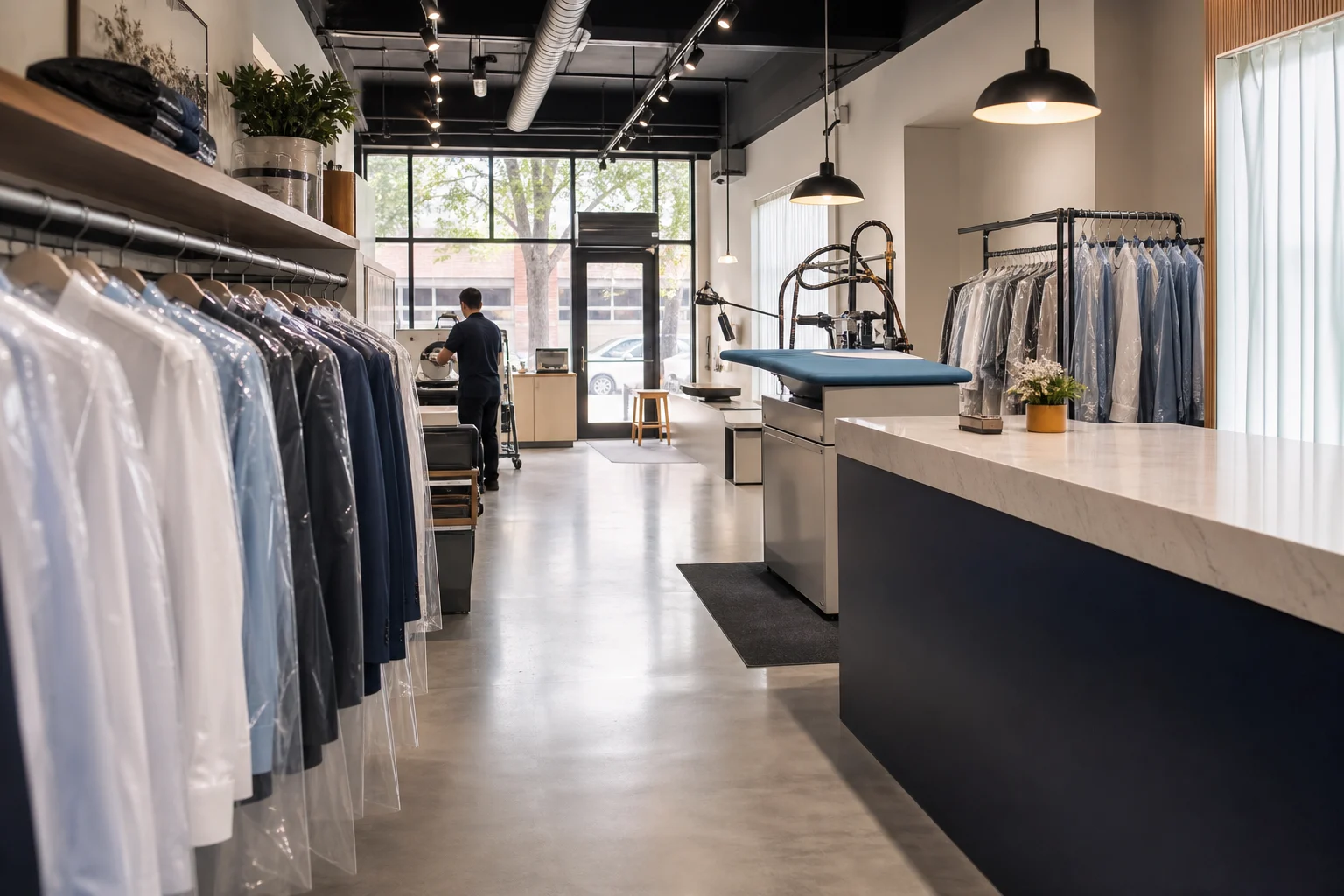
Equipment categories by launch format
When planning your dry cleaner equipment in Los Angeles, the format you choose will determine your equipment needs. A traditional dry cleaning operation requires different equipment than a drop-off service or a hybrid model that offers both cleaning and alterations. The equipment categories remain consistent across formats, but the scale and specifications may vary based on your business model.
Traditional dry cleaning operations need industrial-grade washing machines, dry cleaning machines, pressing equipment, and finishing stations. These facilities typically require more space and higher initial investment but offer full-service capabilities. Drop-off services can operate with smaller equipment, focusing on receiving, sorting, and quality control before sending items to off-site cleaning facilities. Hybrid models combine elements of both, requiring a balanced approach to equipment selection.
The market temperature for dry cleaning in Los Angeles is promising, with medium competition density across the top neighborhoods. This balance suggests there's room for new entrants while maintaining realistic expectations about market saturation. Your equipment choices should align with the specific demands of your chosen location and target customer base.
Buildout assumptions that change the budget
Buildout requirements for a dry cleaner in Los Angeles vary significantly based on the condition of the space and the specific needs of your operation. A second-generation space with existing plumbing and electrical infrastructure will require less buildout than a raw shell space. The rent level in your chosen neighborhood will directly impact your buildout budget, with higher rent areas typically allowing for more investment in quality finishes and specialized equipment.
Culver City offers a strong market with low rent levels, making it an attractive option for new dry cleaners. The area has maxed-out office density with major employers like Sony, Apple TV+, and Amazon Studios driving a massive weekday lunch crowd. The Expo Line provides transit access for drop-off/pickup customers, and walkability is city-leading along downtown Culver. With only one direct competitor (So Fresh Cleaners, 4.8★, 39 reviews) within 500m, you're not entering a saturated market.
DTLA's Financial District presents a different buildout scenario with the highest daytime population density in LA and maxed-out transit access through 7th Street/Metro Center and Union Station. However, with four existing dry cleaners within 800m—including Executive Image Cleaners (4.4★, 177 reviews) just 61m from the centroid—competition is more established. Expect roughly $30-50/sqft NNN rent, making it more affordable than Culver City despite the higher competition.
Sawtelle Japantown offers a dense West LA corridor with strong office/residential mix and the highest retail-anchor density of any area. Three existing dry cleaners operate within 800m (Santo's Tailor, Globe Cleaners, Art Cleaners), but none above 4.2★, indicating a quality gap in the market. Rent runs roughly $45-70/sqft NNN, and the proximity to UCLA provides a steady stream of business-casual dry cleaning customers.
New vs used equipment tradeoffs
The decision between new and used equipment for your Los Angeles dry cleaner involves careful consideration of budget constraints, operational needs, and long-term planning. New equipment typically comes with manufacturer warranties, energy efficiency, and the latest technology, but represents a significant upfront investment. Used equipment can reduce initial costs but may come with higher maintenance requirements and shorter operational lifespans.
The market temperature in Los Angeles's top dry cleaning neighborhoods is promising, suggesting that investing in quality equipment could position your business for long-term success. Culver City's strong daytime population and limited competition make it an ideal location for investing in new equipment that can handle high volume efficiently. The area's score of 8.0/10 with 82% confidence indicates a solid market opportunity for well-equipped dry cleaners.
In DTLA, the established competition suggests that used equipment might be a viable entry strategy, allowing you to test the market with lower initial investment. However, the high daytime population density means that reliable equipment is essential to maintain customer satisfaction and build reputation. The rent level in DTLA is lower than in Culver City, potentially freeing up budget for equipment upgrades as the business establishes itself.
Sawtelle Japantown's quality gap among existing competitors presents an opportunity to differentiate through superior equipment and service. While the rent level is higher in this area, investing in new equipment could help establish your business as the premium option in the market. The UCLA student adjacency provides a consistent customer base that values quality and convenience, making reliable equipment a worthwhile investment.
What to inspect in a second-generation space
When evaluating a second-generation space for your Los Angeles dry cleaner, thorough inspection of existing infrastructure is crucial to avoid unexpected costs and operational challenges. Plumbing systems must be capable of handling the water demands of industrial washing machines and steam presses. Electrical systems should accommodate the power requirements of dry cleaning machines, pressing equipment, and specialized lighting.
Ventilation systems are particularly important in dry cleaning facilities to handle chemical fumes and heat from pressing equipment. Existing spaces may require modifications to meet current air quality standards and ensure a safe working environment. Floor surfaces should be evaluated for durability and chemical resistance, as dry cleaning chemicals can damage standard flooring materials.
In Culver City, inspect the space for proximity to the Expo Line and walkability along downtown Culver. The area's maxed-out office density creates significant daytime traffic, so ensure your space has adequate customer flow and visibility. With only one direct competitor within 500m, your location advantage can be maximized with proper space planning.
DTLA spaces should be evaluated for access to transit hubs like 7th Street/Metro Center and Union Station. The high daytime population density means efficient customer flow is essential. With four existing dry cleaners within 800m, your space should offer clear differentiation in terms of visibility, accessibility, and customer experience.
Sawtelle Japantown spaces should be assessed for their proximity to retail anchors and the UCLA campus. The area's three existing dry cleaners all have ratings below 4.2★, suggesting an opportunity for improvement in service quality. Ensure your space can accommodate the equipment needed to deliver superior results and create a customer experience that stands out in the market.
FAQ
What equipment do I need for A Dry Cleaner in Los Angeles?
A dry cleaner in Los Angeles requires several categories of equipment depending on your business format. Traditional dry cleaning operations need industrial washing machines, dry cleaning machines, pressing equipment, and finishing stations. Drop-off services can operate with smaller equipment focusing on receiving, sorting, and quality control. Hybrid models combine elements of both formats. The specific equipment needs will vary based on your chosen neighborhood's characteristics and target customer base.
How does location affect equipment needs for a dry cleaner in Los Angeles?
Location significantly impacts equipment needs for a Los Angeles dry cleaner. High-traffic areas like Culver City with maxed-out office density may require equipment capable of handling higher volume. Transit-accessible locations near stations like DTLA's 7th Street/Metro Center benefit from equipment that allows for quick turnaround times. Neighborhoods with specific demographics, like Sawtelle Japantown's proximity to UCLA, may require equipment tailored to the cleaning needs of those populations.
What buildout considerations are specific to dry cleaner equipment in Los Angeles?
Dry cleaner equipment in Los Angeles requires specific buildout considerations including plumbing systems capable of handling industrial water demands, electrical systems that accommodate high-power equipment, and ventilation systems to manage chemical fumes. Floor surfaces should be chemical-resistant, and the layout should optimize workflow from receiving to cleaning to finishing. Local regulations may impose additional requirements on equipment installation and operation.
How do I balance equipment costs with other startup expenses for a dry cleaner in Los Angeles?
Balancing equipment costs with other startup expenses requires careful prioritization based on your business model and location. In areas with lower rent like DTLA, more budget may be allocated to equipment. In higher rent areas like Sawtelle Japantown, equipment investment might be balanced with location costs. Culver City's low rent level allows for more flexible budgeting across all startup expenses. The market temperature and competition density in each neighborhood should inform your investment strategy.
What equipment maintenance considerations are specific to Los Angeles's climate?
Los Angeles's climate presents specific equipment maintenance considerations. The warm, dry climate can affect the performance of dry cleaning machines, requiring regular calibration to maintain optimal cleaning results. High temperatures may impact the storage of cleaning chemicals, necessitating climate-controlled storage areas. The occasional Santa Ana winds can introduce dust and debris into equipment, requiring more frequent cleaning and maintenance of filters and ventilation systems.
Last reviewed: 2026-05-08
Sources: U.S. Census Bureau ACS, LEHD LODES, Google Places, OpenStreetMap, Locavisor neighborhood scoring.
Methodology: Locavisor scores neighborhoods across demand, competition fit, rent fit, accessibility, and customer match. Scores reflect a snapshot of recent data and should be combined with on-the-ground research before lease decisions.
Disclaimer: This article provides informational content only and does not constitute legal, financial, accounting, or real-estate advice. Verify lease terms, licensing, local regulations, costs, and professional requirements with qualified local professionals before making business decisions.
Free preview shows top 3 neighborhoods. Full $9.99 report covers all 10 areas with personalized scoring + 90-day check-ins.
Informational only. Verify lease, licensing, local regulations, costs, and professional requirements with qualified local professionals.