Philadelphia, PA · dry cleaner
Dry cleaner equipment costs Philadelphia
Starting a dry cleaning business in Philadelphia requires careful planning of equipment needs and buildout costs. The city offers several promising neighborhoods, each with unique characteristics that impact your equipment requirements and budget. According to Locavisor neighborhood scoring, Rittenhouse Square leads with a 6.5/10 rating, followed by University City at 6.4/10, and Fairmount / Art Museum Area at 6.2/10. Understanding dry cleaner equipment costs in Philadelphia is crucial for developing an accurate budget and selecting the right location for your business.
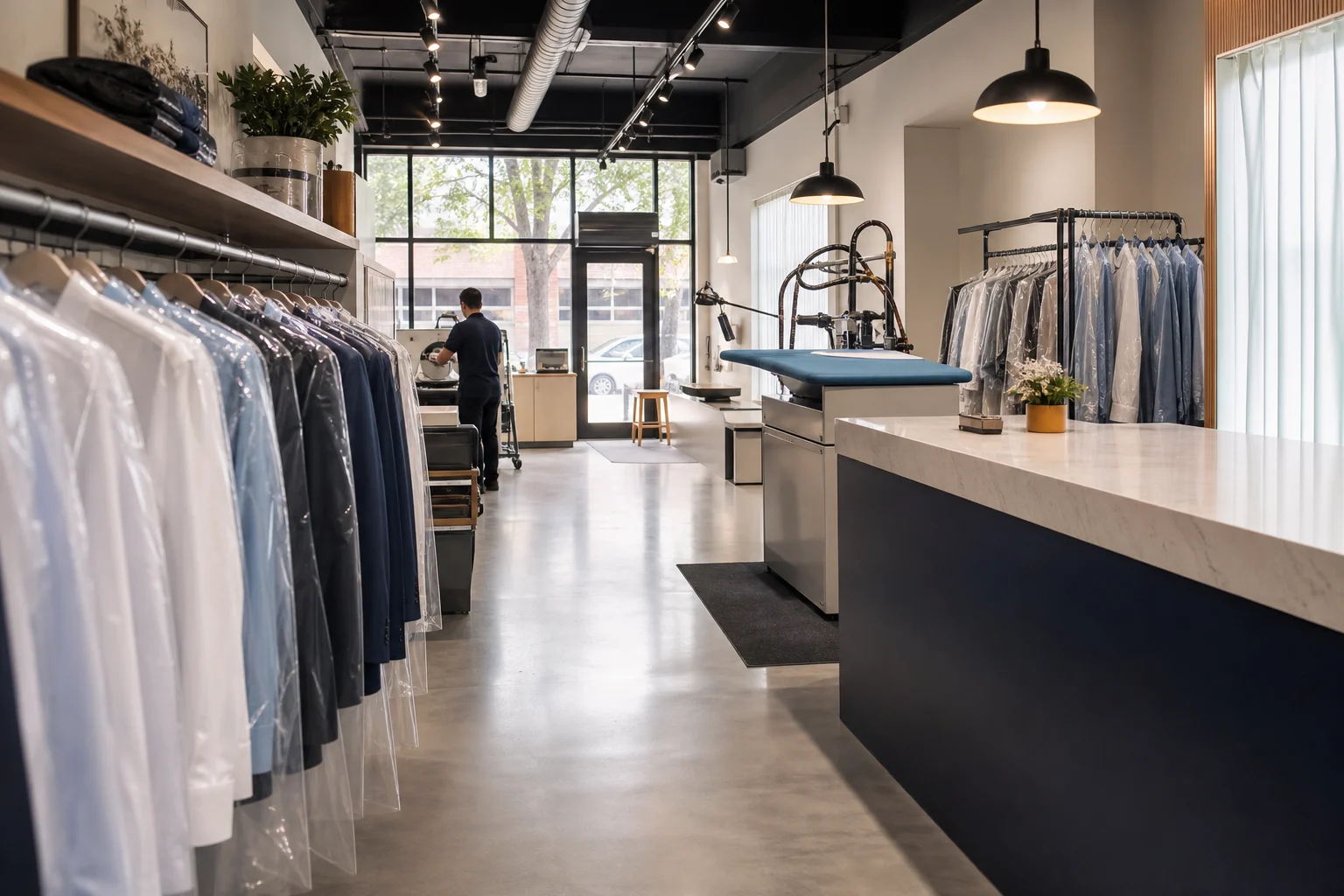
Equipment categories by launch format
Your dry cleaner equipment needs will vary significantly based on your chosen business format. A full-service dry cleaning operation requires a complete set of machinery, while a drop-off only model needs less specialized equipment. In Philadelphia's competitive market, your equipment choices directly impact service quality and operational efficiency.
For a traditional dry cleaner, you'll need pressing equipment, dry cleaning machines, spotting stations, and finishing tools. The high-rent areas like Rittenhouse Square demand maximum efficiency from your equipment to justify the premium location costs. In contrast, University City's student-heavy customer base might allow for a more streamlined equipment setup focused on volume processing rather than premium services.
The market temperature in Philadelphia is mixed, with medium competition density. This means your equipment should help differentiate your business from existing competitors. In Rittenhouse Square, where there are 15+ existing dry cleaners within a half-mile, having specialized equipment for faster service and better tailoring could provide a competitive edge. Your equipment choices should align with the specific needs of your target neighborhood.
Buildout assumptions that change the budget
Buildout requirements significantly impact your dry cleaner budget in Philadelphia. The rent levels vary dramatically across neighborhoods, with Rittenhouse Square commanding roughly $90-140/sqft NNN, while University City and Fairmount / Art Museum Area offer slightly more manageable rates of $65-95/sqft NNN. These differences directly affect how much you can invest in buildout and equipment.
In high-rent areas like Rittenhouse Square, you'll need to maximize every square foot of space. This means compact, efficient equipment layouts that don't compromise functionality. The space requirements for your equipment will determine whether you can operate profitably in these premium locations. Your buildout must accommodate not just the equipment itself, but also customer waiting areas, counter space, and storage.
The competition density in Philadelphia's dry cleaning market is medium, with varying numbers of competitors in each neighborhood. In University City, where only 3 direct competitors exist, you might have more flexibility in your buildout approach. However, in Rittenhouse Square's saturated market, your buildout needs to create a customer experience that stands out from the 15+ existing dry cleaners nearby. This might require investing in more visible equipment or specialized service areas that enhance the customer experience.
New vs used equipment tradeoffs
When planning your dry cleaner equipment costs in Philadelphia, you'll face the decision between new and used equipment. New equipment offers the latest technology, energy efficiency, and warranty protection, but comes with a higher upfront cost. Used equipment can significantly reduce initial investment but may require more maintenance and lack modern efficiency features.
In Philadelphia's high-rent market, the efficiency gains from new equipment might justify the additional investment. Energy-efficient machines can reduce operating costs over time, which is particularly valuable in premium locations where every dollar counts. However, in areas like University City with a price-sensitive customer base, used equipment might allow for more competitive pricing while still providing quality service.
The market temperature in Philadelphia is mixed, suggesting that flexibility in your equipment investment strategy could be beneficial. Starting with essential used equipment and upgrading as your business grows might be a prudent approach. This strategy allows you to enter the market with lower initial investment while maintaining the option to upgrade as you establish your customer base and revenue stream. Your equipment choices should align with both your budget constraints and the specific demands of your chosen Philadelphia neighborhood.
What to inspect in a second-generation space
When evaluating existing dry cleaner spaces in Philadelphia, thorough inspection of the existing equipment and buildout is essential. The condition of plumbing, ventilation, and electrical systems can significantly impact your renovation costs and timeline. In Philadelphia's competitive market, identifying spaces with existing infrastructure that meets your needs can provide substantial cost savings.
In Rittenhouse Square, where rent is maxed out at roughly $90-140/sqft NNN, verifying that existing equipment is in good working condition becomes even more critical. The high rent levels mean you need to be operational quickly to start generating revenue. A thorough inspection should include testing all machinery, checking for code compliance, and assessing whether the layout supports your business model.
The competition density in Philadelphia's dry cleaning market is medium, with varying numbers of competitors in each neighborhood. When inspecting a second-generation space, research why the previous tenant left. If they closed due to equipment failures or operational issues, these problems might recur. In University City, where only 3 direct competitors exist, understanding the previous tenant's challenges can help you avoid similar pitfalls and position your business for success.
FAQ
What equipment do I need for A Dry Cleaner in Philadelphia?
A basic dry cleaner in Philadelphia requires a dry cleaning machine, pressing equipment, spotting station, finishing tools, and a point-of-sale system. The specific equipment needs will vary based on your business format and location. In premium areas like Rittenhouse Square, you might want additional specialized equipment for faster service and better tailoring to differentiate from the 15+ existing competitors nearby.
How does location affect my equipment budget in Philadelphia?
Location significantly impacts your equipment budget through rent levels and competition. In high-rent areas like Rittenhouse Square ($90-140/sqft NNN), you'll need more efficient equipment to justify the premium costs. In areas with less competition like University City (only 3 direct competitors), you might have more flexibility in your equipment choices and can focus on meeting the specific needs of that market.
Should I buy new or used equipment for my Philadelphia dry cleaner?
The decision between new and used equipment depends on your budget, business model, and location. New equipment offers better efficiency and warranties but comes with higher upfront costs. Used equipment reduces initial investment but may require more maintenance. In Philadelphia's mixed market temperature, a hybrid approach—using essential used equipment initially and upgrading as your business grows—might be the most prudent strategy.
How does Philadelphia's market temperature affect my equipment planning?
Philadelphia's mixed market temperature suggests that flexibility in your equipment planning is beneficial. The medium competition density means you need equipment that helps differentiate your business. In areas with high competition like Rittenhouse Square, specialized equipment for faster service and better tailoring can provide a competitive edge. In less competitive areas like University City, you might focus on equipment that serves the specific needs of the student and young professional demographic.
What should I look for in a second-generation dry cleaner space in Philadelphia?
When inspecting a second-generation space, check the condition of existing equipment, plumbing, ventilation, and electrical systems. Verify that the layout supports your business model and that the space meets code requirements. In Philadelphia's high-rent market, spaces with existing infrastructure in good condition can provide substantial cost savings. Also, research why the previous tenant left to avoid potential recurring issues.
Last reviewed: 2026-05-08
Sources: U.S. Census Bureau ACS, LEHD LODES, Google Places, OpenStreetMap, Locavisor neighborhood scoring.
Methodology: Locavisor scores neighborhoods across demand, competition fit, rent fit, accessibility, and customer match. Scores reflect a snapshot of recent data and should be combined with on-the-ground research before lease decisions.
Disclaimer: This article provides informational content only and does not constitute legal, financial, accounting, or real-estate advice. Verify lease terms, licensing, local regulations, costs, and professional requirements with qualified local professionals before making business decisions.
Free preview shows top 3 neighborhoods. Full $9.99 report covers all 10 areas with personalized scoring + 90-day check-ins.
Informational only. Verify lease, licensing, local regulations, costs, and professional requirements with qualified local professionals.