Phoenix, AZ · dry cleaner
Dry cleaner equipment costs Phoenix
Opening a dry cleaner in Phoenix requires careful planning around equipment and buildout costs. The equipment you choose and how you configure your space will directly impact your operational efficiency and customer experience. Phoenix's climate and local market dynamics create specific considerations for dry cleaning businesses that differ from other cities. Understanding the equipment needs and buildout requirements is crucial for budgeting and planning your new venture.
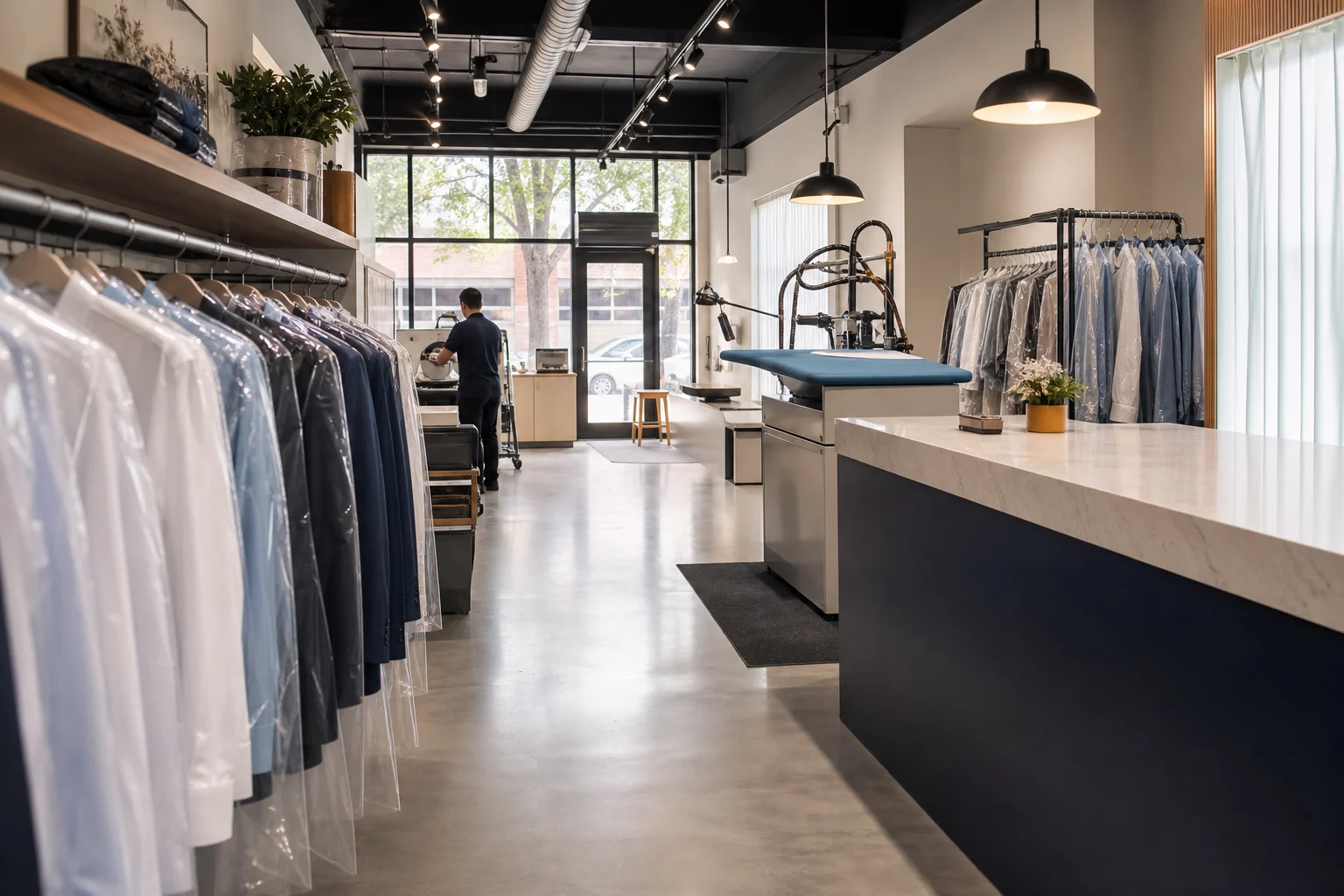
What equipment do you need to open a dry cleaner in Phoenix?
The core equipment for a dry cleaner includes several essential components that work together to clean and finish garments. A typical dry cleaning operation requires a dry cleaning machine, spotting station, finishing equipment, and pressing machines. In Phoenix's arid climate, humidity control becomes particularly important for maintaining fabric quality and preventing damage to delicate items. The dry cleaning machine is the heart of your operation, responsible for cleaning garments using chemical solvents. Spotting stations allow you to treat stains before cleaning, while finishing equipment helps restore garments to their original shape and appearance. Pressing machines ensure that clothes look crisp and professional when returned to customers.
When planning your equipment needs, consider the scale of your operation and the types of garments you'll handle. Phoenix has a diverse customer base, from professionals needing formal wear cleaned to families with everyday clothing. Your equipment selection should accommodate this range while maintaining efficiency. The layout of your space will also influence equipment placement, as workflow optimization is key to reducing processing time and improving customer satisfaction.
Buildout cost categories
Plumbing and electrical
Dry cleaning operations have specific plumbing and electrical requirements that differ from standard retail spaces. The dry cleaning machine requires dedicated electrical circuits and proper ventilation systems. Plumbing needs include connections for solvent recovery systems and waste management. In Phoenix, where water conservation is increasingly important, efficient plumbing design can also provide operational cost benefits. Electrical systems must accommodate the high-power demands of dry cleaning equipment while ensuring safety and compliance with local codes.
HVAC and ventilation
Phoenix's extreme temperatures make HVAC and ventilation critical components of your buildout. Dry cleaning solvents require proper ventilation to ensure worker safety and environmental compliance. Your HVAC system must maintain consistent temperatures while managing humidity levels that could affect both equipment performance and garment quality. The ventilation system needs to be designed specifically for solvent handling, with appropriate exhaust and filtration to meet Phoenix's environmental regulations.
Flooring and finishes
The flooring in a dry cleaning facility must withstand chemical exposure and heavy foot traffic. Epoxy or chemical-resistant flooring is standard, as traditional materials can degrade from solvent exposure. Finishes should be easy to clean and maintain, as dry cleaning environments generate significant debris and require frequent cleaning. In Phoenix's dusty climate, sealed surfaces that resist dust accumulation provide both practical and aesthetic benefits.
Permits-driven items
Building a dry cleaning facility requires specific permits and inspections. You'll need to work with local agencies to ensure compliance with environmental regulations, fire codes, and health standards. In Phoenix, the Maricopa County Environmental Services Department oversees solvent handling and waste disposal regulations. Your buildout must accommodate inspection requirements, including proper storage for chemicals and waste, emergency systems, and safety equipment.
Furniture and signage
Customer-facing elements like furniture and signage contribute to your brand experience but also require careful planning. Reception areas, waiting spaces, and drop-off stations need to be designed for efficiency and customer comfort. Signage must clearly communicate your services, pricing, and business hours while adhering to local zoning regulations. In competitive Phoenix neighborhoods, thoughtful design can help your business stand out among established operators.
Equipment line items to validate in Phoenix
When selecting equipment for your Phoenix dry cleaner, consider how local conditions affect performance and longevity. The dry cleaning machine's solvent recovery system is particularly important in Arizona's dry climate, as proper humidity control prevents solvent degradation. Spotting stations should be equipped with Phoenix-specific stain treatment solutions that account for the region's dust and heat-related staining patterns. Finishing equipment needs to handle the wide range of fabrics common in Phoenix's diverse wardrobe, from lightweight summer fabrics to heavier winter materials.
Your equipment configuration should also consider the layout constraints of Phoenix commercial spaces. Many available locations have specific dimensional requirements that may influence machine selection. For example, the Camelback Corridor area, with its $48/sqft/yr NNN rent band, often has spaces with particular ceiling heights and utility configurations that affect equipment placement. Understanding these local constraints helps avoid costly modifications during installation.
How established operators in Phoenix configure their kitchens
Looking at existing dry cleaners in Phoenix provides valuable insights into equipment configuration and operational efficiency. AZ Valley Dry Cleaners in the Camelback Corridor and Dry Cleaners@Alterations & Creations in Roosevelt Row demonstrate different approaches to equipment layout and service offerings. These established businesses have optimized their spaces based on years of operational experience in Phoenix's market.
AZ Valley Dry Cleaners, located in the high-rent Camelback Corridor ($48/sqft/yr NNN), likely focuses on premium services and efficient workflow to justify higher operating costs. Their equipment configuration probably emphasizes speed and quality to serve the area's professional clientele. Dry Cleaners@Alterations & Creations in Roosevelt Row, with its $26-$65/sqft/yr NNN rent band, may balance cost efficiency with service variety to attract a diverse customer base in this arts and culture district.
Both businesses have developed equipment setups that work within their respective neighborhood contexts. The Camelback Corridor location likely prioritizes quick turnaround for business professionals, while the Roosevelt Row operation may emphasize specialized services for the area's creative community. Studying these configurations can help you make informed equipment decisions that align with your target market and location.
Used vs. new vs. lease
When acquiring equipment for your Phoenix dry cleaner, you'll face decisions about purchasing new, buying used, or leasing. Each option has implications for your initial investment, ongoing costs, and operational flexibility. New equipment typically comes with warranties and the latest technology, which can be beneficial for energy efficiency and compliance with evolving environmental regulations. Used equipment offers lower upfront costs but may require more maintenance and lack current efficiency standards.
Leasing provides flexibility, especially for businesses testing the Phoenix market or anticipating growth. Leasing terms can include maintenance, which reduces unexpected repair costs - a significant consideration given Phoenix's extreme temperatures that can stress equipment. However, leasing typically results in higher long-term costs compared to purchasing.
Your decision should consider Phoenix's specific market conditions, including the availability of quality used equipment in the area and the potential for equipment obsolescence as environmental regulations evolve. The rent bands in different Phoenix neighborhoods also influence this decision, as higher-rent areas may justify investing in more efficient, long-term equipment solutions.
Buildout timeline
The timeline for your dry cleaner buildout in Phoenix depends on several factors, including permit processing, equipment delivery, and contractor availability. Phoenix's construction season and local holidays can affect scheduling, so planning well in advance is crucial. Permit approval times vary by neighborhood, with some areas having more streamlined processes than others.
The Camelback Corridor, with its higher rent band of $48/sqft/yr NNN, may have more stringent review processes due to the area's commercial density and specific zoning requirements. Roosevelt Row, with its $26-$65/sqft/yr NNN rent band, might offer different timelines based on the neighborhood's development priorities. Understanding these local variations helps set realistic expectations for your project timeline.
Coordination between equipment installation and buildout completion is critical. Delays in one area can cascade through the entire project, affecting your opening date and revenue projections. Working with experienced local contractors who understand Phoenix's building processes can help minimize these risks.
Common buildout overruns
Several factors commonly lead to budget overruns in dry cleaner buildouts in Phoenix. Unforeseen utility upgrades, particularly electrical and ventilation systems, often exceed initial estimates. Phoenix's building codes and environmental regulations may require additional safety features or waste management systems that weren't initially planned. The extreme climate also means HVAC systems may need more robust capacity than anticipated, especially in spaces without existing climate control.
Layout adjustments to accommodate specific equipment dimensions can also cause cost increases. Many available commercial spaces in Phoenix have unique configurations that require creative solutions for equipment placement. The rent bands in different neighborhoods reflect varying levels of buildout complexity, with higher-rent areas often having more demanding requirements.
Permitting delays are another common issue, as Phoenix's various municipal and county agencies have different review processes and timelines. Budgeting for potential delays and having contingency plans helps mitigate financial impacts. Working with professionals experienced in Phoenix's regulatory environment can help identify and address these issues before they become costly problems.
| Neighborhood | Locavisor score | Rent band | Local operator signal | Founder validation check |
|---|---|---|---|---|
| Camelback Corridor | 7.9/10 | $48/sqft/yr NNN | AZ Valley Dry Cleaners | Check utility capacity, ventilation, plumbing, storage, and fixture layout. |
| Old Town Scottsdale | 7.1/10 | $26-$65/sqft/yr NNN | No direct operator listed | Check utility capacity, ventilation, plumbing, storage, and fixture layout. |
| Biltmore | 6.9/10 | $48/sqft/yr NNN | No direct operator listed | Check utility capacity, ventilation, plumbing, storage, and fixture layout. |
| Roosevelt Row | 6.6/10 | $26-$65/sqft/yr NNN | Dry Cleaners@Alterations & Creations | Check utility capacity, ventilation, plumbing, storage, and fixture layout. |
| North Central Phoenix | 6.5/10 | $26-$65/sqft/yr NNN | No direct operator listed | Check utility capacity, ventilation, plumbing, storage, and fixture layout. |
FAQ
What are the key considerations for dry cleaner equipment in Phoenix's climate?
Phoenix's extreme heat and dry conditions require special attention to equipment that manages humidity and temperature. Dry cleaning machines need efficient solvent recovery systems to prevent degradation in arid conditions. Ventilation systems must be robust enough to handle both the dry climate and the chemical solvents used in the cleaning process. Equipment placement should consider Phoenix's dust, which can affect performance and require more frequent maintenance.
How do Phoenix neighborhood rent bands affect equipment decisions?
Phoenix's varying rent bands across neighborhoods influence equipment investment decisions. Higher-rent areas like the Camelback Corridor ($48/sqft/yr NNN) may justify investing in more efficient, long-term equipment solutions that can help offset higher operating costs. Lower-rent areas with $26-$65/sqft/yr NNN bands might favor more cost-effective equipment options. The neighborhood's customer base and service expectations also play a role in determining the appropriate level of equipment investment.
What permits are required for a dry cleaner in Phoenix?
Dry cleaners in Phoenix require several permits, including business licensing, environmental permits for solvent handling, and building permits for any construction or renovation. The Maricopa County Environmental Services Department oversees solvent use and waste disposal regulations. Fire permits are also necessary, particularly for spaces with chemical storage. It's essential to consult with local authorities early in the planning process, as requirements can vary by neighborhood and specific location.
How do established Phoenix dry cleaners configure their spaces?
Established operators like AZ Valley Dry Cleaners in the Camelback Corridor and Dry Cleaners@Alterations & Creations in Roosevelt Row optimize their spaces based on neighborhood characteristics. The Camelback Corridor location likely emphasizes efficiency and premium service for business professionals, while the Roosevelt Row operation may focus on specialized services for the creative community. Both configurations reflect the specific demands and customer expectations of their respective neighborhoods.
What's the typical timeline for a dry cleaner buildout in Phoenix?
Buildout timelines in Phoenix vary based on neighborhood and project complexity, typically ranging from a variable local timeline. Permit processing can take a variable local timeline, with variations across different municipal jurisdictions. Equipment delivery and installation usually require a variable local timeline. Factoring in potential delays for inspections and weather-related issues (even in Phoenix's generally dry climate) is important for setting realistic timelines.
How does Phoenix's dry climate affect dry cleaning operations?
Phoenix's arid climate impacts dry cleaning in several ways. Low humidity can affect fabric quality and require additional moisture control in the finishing process. Dust and sand can create more frequent need for thorough cleaning of equipment and facilities. The extreme temperatures also mean HVAC systems must work harder to maintain consistent conditions, potentially increasing energy costs and requiring more robust equipment.
Last reviewed: 2026-05-30
Sources: U.S. Census Bureau ACS, LEHD LODES, Google Places, OpenStreetMap, Locavisor neighborhood scoring.
Methodology: Locavisor scores neighborhoods across demand, competition fit, rent fit, accessibility, and customer match. Scores reflect a snapshot of recent data and should be combined with on-the-ground research before lease decisions.
Disclaimer: This article provides informational content only and does not constitute legal, financial, accounting, or real-estate advice. Verify lease terms, licensing, local regulations, costs, and professional requirements with qualified local professionals before making business decisions.
Free preview shows top 3 neighborhoods. Full $9.99 report covers all 10 areas with personalized scoring + 90-day check-ins.
Informational only. Verify lease, licensing, local regulations, costs, and professional requirements with qualified local professionals.