Portland, OR · dry cleaner
Dry cleaner equipment costs Portland
Starting a dry cleaning business in Portland requires careful planning of equipment and buildout costs. The right equipment selection depends on your business format, location, and target market. In Portland's competitive dry cleaning landscape, understanding equipment costs and buildout requirements is essential for budget planning and operational success.
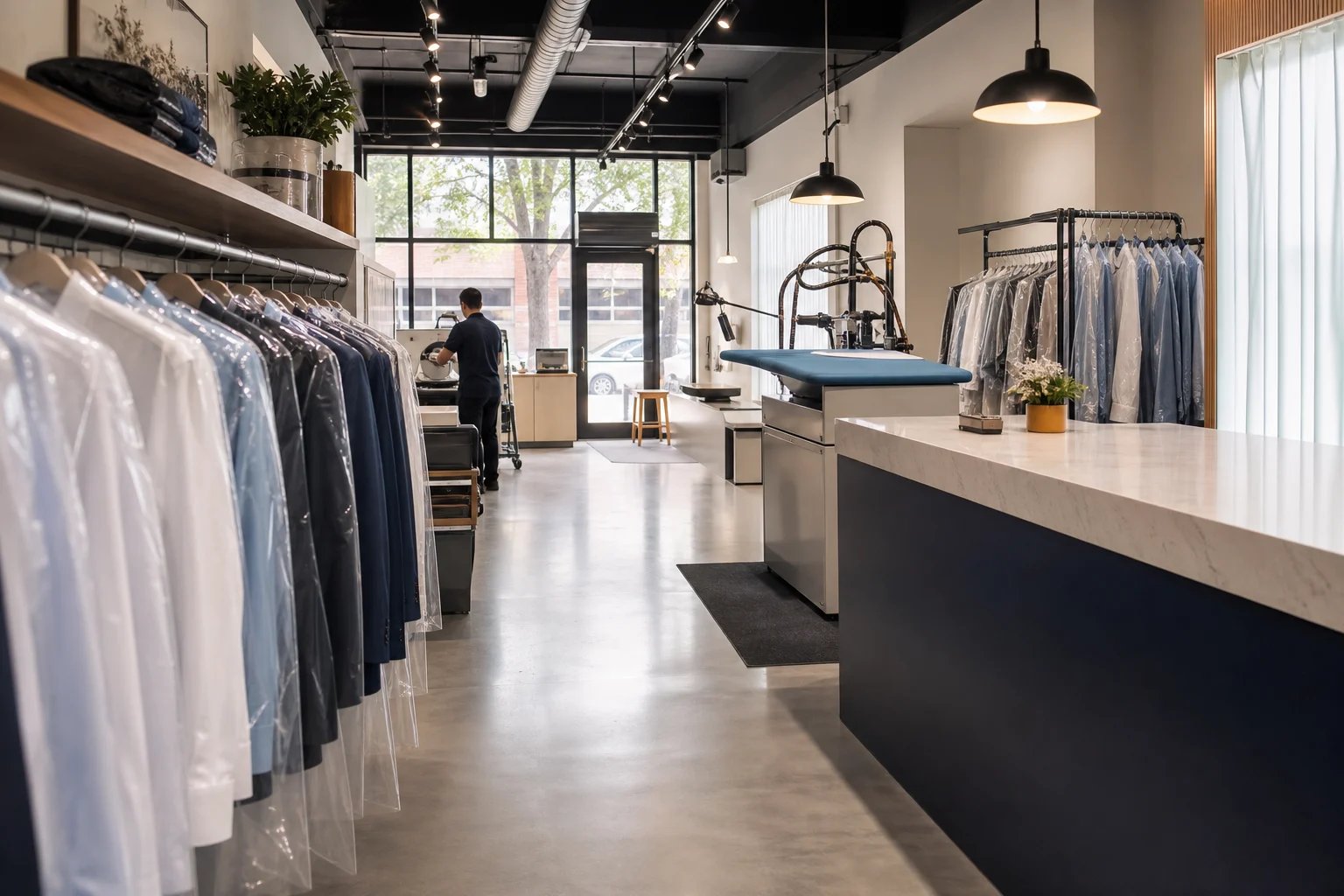
Equipment categories by launch format
Dry cleaning equipment falls into several key categories that vary based on your business format. Traditional dry cleaners need pressing equipment, washing machines, dry cleaning machines, and finishing stations. Drop-off locations require less equipment but need robust customer management systems and quality control processes. Mobile dry cleaning services need specialized vehicles with built-in cleaning capabilities.
The equipment requirements change based on your chosen format. A full-service dry cleaner needs significant capital investment in industrial-grade machines. A drop-off location can operate with less equipment but must partner with a cleaning facility. Mobile services require vehicle modifications and portable cleaning units.
Portland's market temperature is mixed, affecting equipment purchasing decisions. The competition density is medium, meaning you'll need quality equipment to differentiate your service. Rent levels are low in Portland, which can offset some equipment costs through lower overhead.
Buildout assumptions that change the budget
Buildout requirements vary significantly by location and format. St. Johns ranks #1 for a dry cleaner in Portland with zero direct competitors, strong rent fit at roughly $30-50/sqft NNN, and a solid residential base along N Lombard. However, car-access and parking scores are weak, which matters for a business where 55% of customers arrive by car. You'd need dedicated curbside drop-off to overcome the below-average parking situation.
Hollywood District scores well on rent fit (roughly $20-35/sqft NNN) and walkability, but the customerMatch score is low — this is a retail/dining corridor, not a dry-cleaning destination. Two existing dry cleaners (Tie's Dry Cleaners at 4.3★/142 reviews and Majestic Cleaners at 4.1★/20 reviews) already serve the area.
Downtown Portland has the highest walkability and transit scores in the city, plus strong tourist and student populations. But the dry-cleaning fundamentals are shaky: near-zero office daytime population (WFH headwind), two existing competitors (Bee Cleaners at 3.9★/80 reviews and Auditorium Cleaners at 2.9★/17 reviews), and a low customerMatch score.
Buildout requirements change based on these location factors. St. Johns requires investment in parking solutions despite lower rent. Hollywood District needs visibility in a retail corridor. Downtown requires efficient space utilization for high foot traffic but less equipment capacity.
New vs used equipment tradeoffs
New equipment offers the latest technology, energy efficiency, and warranty protection. However, new equipment represents a significant capital investment. Used equipment reduces upfront costs but may come with higher maintenance expenses and shorter useful life.
In Portland's market, the low rent levels can help offset the higher costs of new equipment through lower overhead. The mixed market temperature suggests that investing in quality equipment could help differentiate your business in a competitive landscape.
When considering new vs used equipment, evaluate the total cost of ownership, including maintenance, energy efficiency, and expected lifespan. New equipment may offer better energy efficiency, which can reduce operating costs over time. Used equipment might require more frequent maintenance but has a lower initial investment.
What to inspect in a second-generation space
When evaluating existing dry cleaning spaces, focus on the condition of plumbing, ventilation, and electrical systems. These are expensive to replace and critical for dry cleaning operations. Check that the space can accommodate your specific equipment requirements and workflow.
In Portland's top areas, consider how the existing space meets the unique needs of each location. St. Johns requires space that can accommodate curbside drop-off despite parking challenges. Hollywood District needs visibility in a retail corridor. Downtown requires efficient space utilization for high foot traffic.
Inspect the existing equipment if it stays with the space. Evaluate its condition, maintenance history, and compatibility with your business model. Consider whether the equipment meets current environmental standards and energy efficiency requirements.
FAQ
What equipment do I need for A Dry Cleaner in Portland?
The essential equipment for a dry cleaner in Portland includes:
- Dry cleaning machine for solvent-based cleaning
- Washing machines for wet cleaning and pretreatment
- Pressing equipment for finishing garments
- Finishing stations with steam irons and formers
- Garment sorting and storage systems
- Point-of-sale system for customer transactions
- Quality control inspection stations
The specific equipment requirements depend on your business format. A full-service dry cleaner needs all these components, while a drop-off location may only need sorting and customer management systems. Mobile services require specialized vehicle modifications with portable cleaning units.
Portland's market conditions influence equipment decisions. The low rent levels can help offset equipment costs, while the mixed market temperature suggests investing in quality equipment to differentiate your business. The competition density is medium, meaning quality equipment can help you stand out among existing providers.
When selecting equipment, consider the unique characteristics of Portland's top areas. St. Johns requires equipment that supports curbside drop-off due to parking challenges. Hollywood District needs equipment that fits a retail corridor environment. Downtown requires efficient equipment for high foot traffic with limited space.
The score confidence of 72% for Portland's location data suggests that equipment decisions should be based on thorough market research and professional advice. Consider visiting potential locations, talking to existing dry cleaners, and consulting with equipment suppliers before making final decisions.
Last reviewed: 2026-05-08
Sources: U.S. Census Bureau ACS, LEHD LODES, Google Places, OpenStreetMap, Locavisor neighborhood scoring.
Methodology: Locavisor scores neighborhoods across demand, competition fit, rent fit, accessibility, and customer match. Scores reflect a snapshot of recent data and should be combined with on-the-ground research before lease decisions.
Disclaimer: This article provides informational content only and does not constitute legal, financial, accounting, or real-estate advice. Verify lease terms, licensing, local regulations, costs, and professional requirements with qualified local professionals before making business decisions.
Free preview shows top 3 neighborhoods. Full $9.99 report covers all 10 areas with personalized scoring + 90-day check-ins.
Informational only. Verify lease, licensing, local regulations, costs, and professional requirements with qualified local professionals.