San Francisco, CA · dry cleaner
Dry cleaner equipment costs San Francisco
Starting a dry cleaning business in San Francisco requires careful planning of equipment and buildout costs. The city's high rent levels and competitive market make strategic equipment selection crucial for maintaining profitability. Locavisor neighborhood scoring shows San Francisco's dry cleaner market temperature as promising with medium competition density, but the high rent level presents significant cost pressure for new entrants.
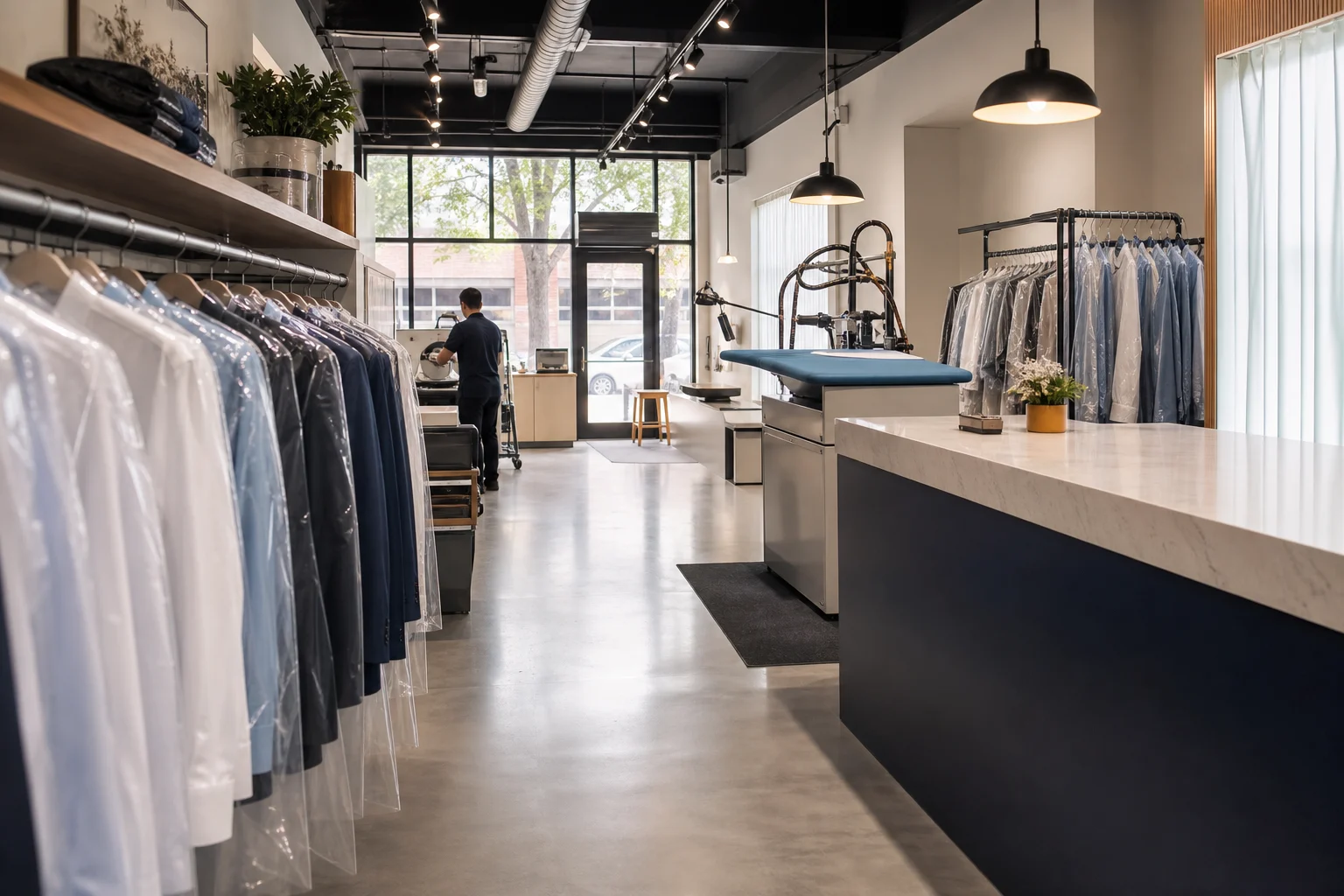
Equipment categories by launch format
When planning your dry cleaning equipment in San Francisco, the format you choose will determine your equipment needs. Full-service dry cleaners require different equipment than drop-off locations or specialized garment care centers. The Tenderloin area ranks #1 for a dry cleaner in SF according to Locavisor neighborhood scoring, with office-worker density near ceiling and daytime population maxed out. However, the limited car access means you'll need to invest in pickup and delivery systems to serve customers effectively.
Nob Hill offers strong office-worker density and a dense residential base of upscale professionals - your core demographic. But the cable-car hills and limited parking make car-dependent drop-off challenging. In Mission Bay / Dogpatch, UCSF Mission Bay, biotech offices, and Chase Center create a dense daytime population of high-income young professionals. However, the trophy-tier rent at roughly $90-140/sqft NNN is punishing for dry-cleaner margins, requiring more efficient equipment utilization.
Your equipment categories will depend on whether you offer traditional dry cleaning, wet cleaning, or specialized services like leather or suede treatment. Each format requires different machinery and supporting equipment. The high rent levels across all three top areas mean space efficiency is paramount, affecting your equipment selection and layout.
Buildout assumptions that change the budget
Buildout assumptions significantly impact your equipment budget in San Francisco's competitive market. The Tenderloin neighborhood expects roughly $45-70/sqft NNN, while Nob Hill offers similar rent levels. Mission Bay / Dogpatch commands premium pricing at roughly $90-140/sqft NNN, which directly affects how much you can allocate to equipment versus leasehold improvements.
Your buildout must account for the specific requirements of dry cleaning equipment, including ventilation systems, plumbing for steam presses, electrical capacity for machines, and waste management solutions. The high rent levels in San Francisco mean you need to maximize every square foot, requiring more compact or multi-functional equipment that can serve multiple purposes.
The neighborhood context also affects buildout needs. In the Tenderloin, the social-service context means some customers may avoid the area, potentially requiring more welcoming storefront design. Nob Hill's upscale professional demographic demands a premium appearance, while Mission Bay / Dogpatch's high-income young professionals expect modern, efficient service that might influence equipment selection toward more technologically advanced options.
New vs used equipment tradeoffs
The decision between new and used equipment involves careful consideration of San Francisco's market conditions. New equipment offers the latest technology, energy efficiency, and warranty protection, but comes with a higher upfront cost. Used equipment reduces initial investment but may require more maintenance and have higher operating costs.
In San Francisco's high-rent environment, the efficiency gains from new equipment might justify the additional investment through lower operating costs over time. The market temperature is promising, suggesting that investing in reliable equipment could position you well for long-term success. However, the medium competition density means you might not need the absolute cutting-edge technology to differentiate your business.
The Tenderloin's manageable rent levels might allow for more flexibility in equipment decisions, while Mission Bay / Dogpatch's premium rent would strongly favor efficient, reliable equipment that maximizes throughput. Nob Hill's upscale demographic might justify premium equipment that offers superior garment care results, even at higher cost.
What to inspect in a second-generation space
When considering a second-generation space for your dry cleaning business in San Francisco, thorough inspection of existing infrastructure is crucial. The high rent levels make it essential to evaluate whether existing systems can support your equipment needs without costly modifications.
Check the electrical capacity to handle dry cleaning machines, steam presses, and other equipment. Verify that ventilation systems meet requirements for chemical handling and fume extraction. Assess plumbing capabilities for steam generation and waste disposal. The accessibility score of 4.0 in Nob Hill highlights the importance of evaluating customer flow and access points, especially for car-dependent drop-off.
In the Tenderloin, where car access is near-zero, evaluate whether the existing space can accommodate a pickup and delivery operation. In Mission Bay / Dogpatch, consider whether the space can handle the high volume expected from UCSF Mission Bay, biotech offices, and Chase Center visitors.
Look for signs of water damage or chemical exposure that could indicate previous issues with dry cleaning operations. Check the condition of floors for chemical resistance and drainage. Evaluate storage space for supplies and finished garments, as efficient space utilization is critical in San Francisco's high-rent environment.
FAQ
What equipment do I need for A Dry Cleaner in San Francisco?
The essential equipment for a dry cleaner in San Francisco includes cleaning machines, pressing equipment, finishing tools, and point-of-sale systems. The specific requirements depend on your business format and location. In high-rent areas like Mission Bay / Dogpatch, space-efficient equipment that maximizes throughput is particularly important. The Tenderloin's limited car access may require investment in pickup and delivery systems, while Nob Hill's hills and limited parking make customer flow planning essential.
How does location affect equipment needs in San Francisco?
Location significantly impacts equipment requirements in San Francisco. The Tenderloin's office-worker density near ceiling requires equipment that can handle volume efficiently despite limited car access. Nob Hill's upscale professional demographic demands premium equipment for superior garment care. Mission Bay / Dogpatch's high-income young professionals and UCSF presence requires efficient equipment that can handle high volume with quick turnaround times. Rent levels also affect equipment decisions, with premium areas favoring more efficient, space-saving solutions.
What buildout considerations are specific to San Francisco dry cleaners?
San Francisco dry cleaners must account for the city's strict environmental regulations regarding chemical handling and waste disposal. Buildout must include proper ventilation systems, chemical storage areas, and waste management solutions. The high rent levels necessitate space-efficient layouts that maximize every square foot. Neighborhood-specific considerations include the Tenderloin's social-service context affecting storefront design, Nob Hill's hills requiring careful customer flow planning, and Mission Bay / Dogpatch's premium rent demanding efficient equipment utilization.
How do I balance equipment costs with San Francisco's high rent levels?
Balancing equipment costs with San Francisco's high rent requires strategic planning. Consider more compact or multi-functional equipment that maximizes space utilization. Evaluate whether new equipment's energy efficiency justifies higher upfront costs through lower operating expenses. The promising market temperature suggests that investing in reliable equipment could position you well for long-term success despite high initial costs. In premium areas like Mission Bay / Dogpatch, prioritize equipment that maximizes throughput to justify the higher rent.
What should I consider when choosing between different dry cleaning equipment formats?
When choosing between dry cleaning equipment formats, consider your target market and location requirements. Traditional dry cleaning uses solvents like perchloroethylene, while wet cleaning uses water-based processes for delicate garments. Specialized equipment is needed for leather, suede, or fur treatments. In San Francisco's competitive market, consider how each format aligns with neighborhood demographics. The Tenderloin's office workers might benefit from quick turnaround services, Nob Hill's professionals might prefer premium garment care, and Mission Bay / Dogpatch's young professionals might value eco-friendly options.
Last reviewed: 2026-05-08
Sources: U.S. Census Bureau ACS, LEHD LODES, Google Places, OpenStreetMap, Locavisor neighborhood scoring.
Methodology: Locavisor scores neighborhoods across demand, competition fit, rent fit, accessibility, and customer match. Scores reflect a snapshot of recent data and should be combined with on-the-ground research before lease decisions.
Disclaimer: This article provides informational content only and does not constitute legal, financial, accounting, or real-estate advice. Verify lease terms, licensing, local regulations, costs, and professional requirements with qualified local professionals before making business decisions.
Free preview shows top 3 neighborhoods. Full $9.99 report covers all 10 areas with personalized scoring + 90-day check-ins.
Informational only. Verify lease, licensing, local regulations, costs, and professional requirements with qualified local professionals.