San Jose, CA · dry cleaner
Dry cleaner equipment costs San Jose
Starting a dry cleaning business in San Jose requires careful planning of equipment and buildout costs. The right equipment setup depends on your chosen location, business model, and target customer base. Understanding dry cleaner equipment costs in San Jose is essential for creating a realistic budget that aligns with your business goals.
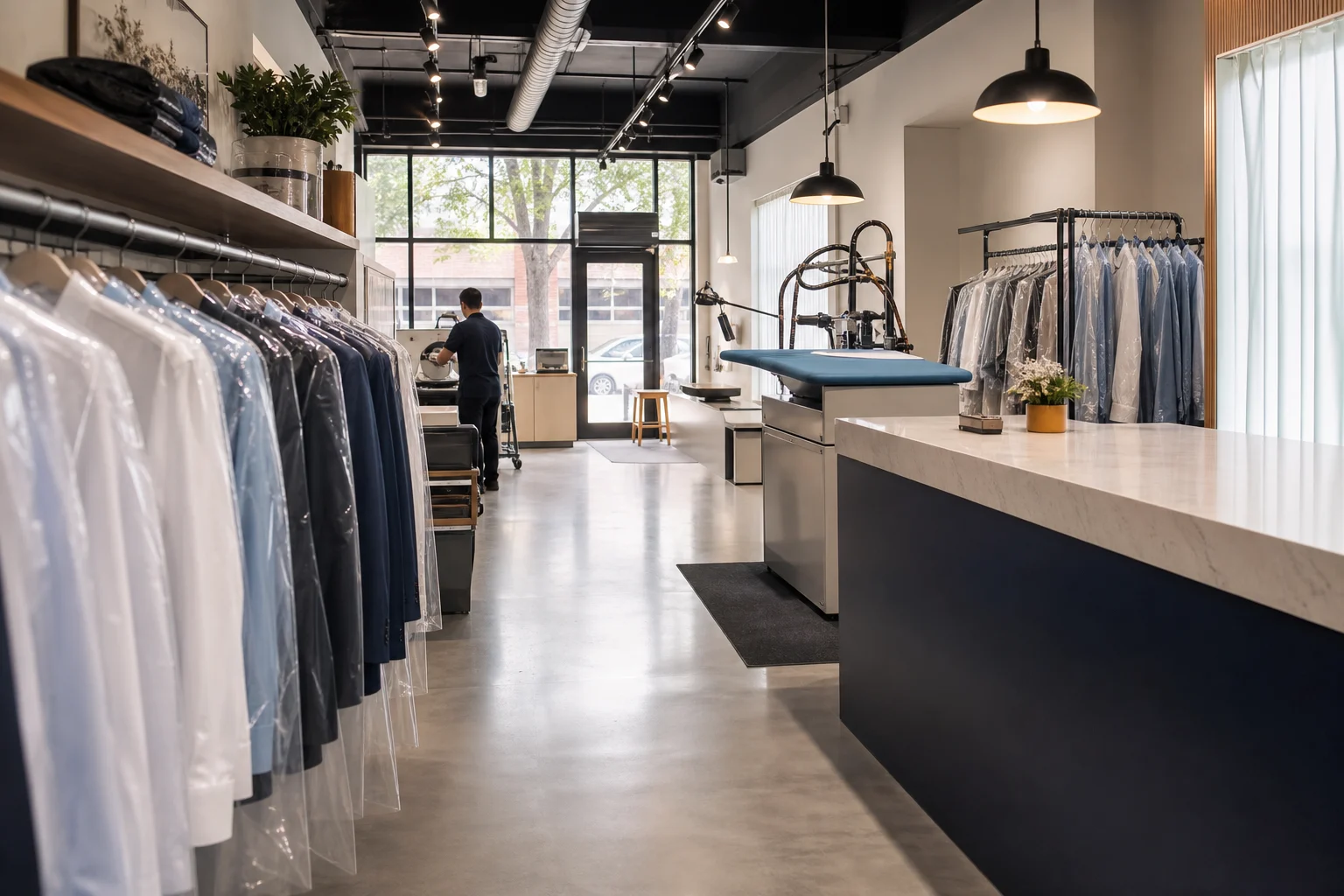
Equipment categories by launch format
When planning your dry cleaner equipment costs in San Jose, the first decision is your launch format. Each approach requires different equipment investments and buildout considerations. The three primary formats are traditional dry cleaning, eco-friendly dry cleaning, and specialty services like wedding dress preservation.
Traditional dry cleaning requires standard equipment including dry cleaning machines, pressing units, finishing equipment, and garment management systems. These form the backbone of most dry cleaning operations and represent the largest portion of initial equipment investment.
Eco-friendly dry cleaning operations need specialized equipment that uses wet cleaning or CO2 cleaning technologies. These systems typically cost more upfront but can command premium pricing and appeal to environmentally conscious customers in San Jose's competitive market.
Specialty services require additional equipment beyond standard dry cleaning capabilities. Wedding dress preservation units, leather cleaning stations, and fur care facilities represent significant investments but can create valuable niche markets within your San Jose dry cleaning business.
Buildout assumptions that change the budget
Buildout costs for a San Jose dry cleaner vary significantly based on location and space condition. The top three areas for dry cleaning in San Jose offer different buildout considerations:
Santana Row / Valley Fair (7.6/10) presents the highest rent level at roughly $45-70/sqft NNN, which directly impacts buildout budget. This premium location offers city-leading daytime office-worker density and premium retail foot traffic with no direct dry-cleaner competitors within the immediate corridor. The steep rent means buildout budgets must be carefully planned to maximize efficiency in this high-cost area.
Downtown San Jose (7.3/10) also features rent at roughly $45-70/sqft NNN but offers strong demand (6.6) and excellent competitionFit (10). With one existing dry cleaner—Diamond Laundry & Cleaners at 4.5★ with 37 reviews—located 800m from the core, the central office/SJSU corridor remains open. The high walkability and strong transit access with Diridon Station nearby justify premium buildout investments in this area.
Willow Glen (6.8/10) presents a different challenge with three existing dry cleaners already within a 200m cluster: C Cleaners & Alterations (4.9★, 24 reviews), Bay Dry Cleaners (4.0★, 5 reviews), and 7 Star Cleaners (5.0★, 1 review). This saturated micro-market requires either significant differentiation through superior buildout or consideration of alternative locations.
Buildout assumptions must account for plumbing requirements, ventilation systems, electrical capacity, and workflow efficiency. Each location type—street-front, mall-anchored, or standalone—presents different buildout challenges that affect equipment placement and operational efficiency.
New vs used equipment tradeoffs
When evaluating dry cleaner equipment costs in San Jose, the decision between new and used equipment significantly impacts initial investment and long-term reliability. New equipment offers the latest technology, energy efficiency, and manufacturer warranties but comes with a higher price tag.
Used equipment can reduce initial investment by 40-60% compared to new systems. However, older machines may have higher maintenance costs and reduced efficiency. In San Jose's market temperature described as "promising," investing in reliable equipment becomes crucial for establishing a competitive position.
The competition density in San Jose is classified as "medium," meaning equipment quality can serve as a key differentiator. New pressing equipment and finishing systems can produce superior results that justify premium pricing in areas like Santana Row / Valley Fair where customer expectations are higher.
Equipment financing options should be evaluated against the expected lifespan of each machine. While new equipment may have longer useful lives, the lower upfront cost of used equipment might provide better cash flow for businesses in areas with higher rent levels like Santana Row / Valley Fair and Downtown San Jose.
What to inspect in a second-generation space
When considering a second-generation space for your San Jose dry cleaning business, thorough inspection of existing equipment and infrastructure can reveal hidden costs and opportunities. The score confidence of 78% for San Jose market data suggests that on-the-ground verification remains essential.
Inspect existing plumbing for capacity and condition. Dry cleaning operations require significant water usage, and inadequate plumbing can lead to costly upgrades. The data vintage of 2026-05 snapshot provides current context, but physical inspection remains critical.
Evaluate electrical systems for capacity to support dry cleaning equipment. Older buildings may require expensive rewiring to handle the power demands of modern dry cleaning machines and pressing equipment.
Assess ventilation systems for compliance with environmental regulations. Proper ventilation is essential for solvent removal and air quality, both for customer comfort and regulatory compliance.
Check the condition of existing equipment if it remains with the space. While this can reduce initial investment, older equipment may have hidden maintenance issues or outdated technology that affects service quality.
Verify zoning compliance and permitting requirements for dry cleaning operations in your chosen location. The market temperature described as "promising" suggests favorable conditions, but regulatory hurdles can still impact timelines and budgets.
FAQ
What equipment do I need for A Dry Cleaner in San Jose?
A dry cleaner in San Jose requires several categories of equipment: dry cleaning machines for solvent-based cleaning, wet cleaning systems for delicate garments, pressing units for finishing, garment management systems for tracking orders, and specialized equipment for specific fabrics or services. The exact configuration depends on your chosen location, business model, and target market segments within San Jose's competitive landscape.
How does location affect dry cleaner equipment costs in San Jose?
Location significantly impacts equipment costs through rent levels and customer expectations. Santana Row / Valley Fair and Downtown San Jose both feature rent at roughly $45-70/sqft NNN, which may justify premium equipment investments. In contrast, Willow Glen's lower rent level might allow for more modest equipment budgets, though the presence of three existing dry cleaners within a 200m cluster creates competitive pressure.
What's the best area for a new dry cleaner in San Jose?
According to Locavisor neighborhood scoring, Santana Row / Valley Fair (7.6/10) ranks as the top area with the strongest demand and customer-match scores in San Jose. This area offers city-leading daytime office-worker density and premium retail foot traffic with no direct dry-cleaner competitors within the immediate corridor. The trade-off is the steep rent level, which may require careful equipment budget planning.
Should I buy new or used equipment for my San Jose dry cleaner?
The decision between new and used equipment depends on your budget, business model, and location. New equipment offers better energy efficiency and reliability but comes with higher upfront costs. Used equipment can reduce initial investment by 40-60% but may have higher maintenance costs. In San Jose's medium competition density environment, equipment quality can serve as a key differentiator, particularly in premium areas like Santana Row / Valley Fair.
How does buildout impact dry cleaner equipment costs in San Jose?
Buildout significantly impacts overall costs through infrastructure requirements like plumbing, electrical systems, and ventilation. Areas with higher rent levels like Santana Row / Valley Fair and Downtown San Jose may have more stringent buildout requirements that increase initial investment. Second-generation spaces can reduce buildout costs if existing infrastructure meets equipment requirements, but thorough inspection is essential to identify potential issues.
Last reviewed: 2026-05-08
Sources: U.S. Census Bureau ACS, LEHD LODES, Google Places, OpenStreetMap, Locavisor neighborhood scoring.
Methodology: Locavisor scores neighborhoods across demand, competition fit, rent fit, accessibility, and customer match. Scores reflect a snapshot of recent data and should be combined with on-the-ground research before lease decisions.
Disclaimer: This article provides informational content only and does not constitute legal, financial, accounting, or real-estate advice. Verify lease terms, licensing, local regulations, costs, and professional requirements with qualified local professionals before making business decisions.
Free preview shows top 3 neighborhoods. Full $9.99 report covers all 10 areas with personalized scoring + 90-day check-ins.
Informational only. Verify lease, licensing, local regulations, costs, and professional requirements with qualified local professionals.