Seattle, WA · dry cleaner
Dry cleaner equipment costs Seattle
Planning a dry cleaner in Seattle requires careful consideration of equipment costs and buildout requirements. The dry cleaner equipment costs Seattle market presents unique opportunities depending on your chosen location. Eastlake / Cascade emerges as the top area with a score of 8.1/10, offering a promising market temperature with medium competition density and low rent levels. This article breaks down equipment and buildout planning for Seattle dry cleaners, with format-specific tradeoffs and what to validate before signing a lease.
Equipment categories by launch format
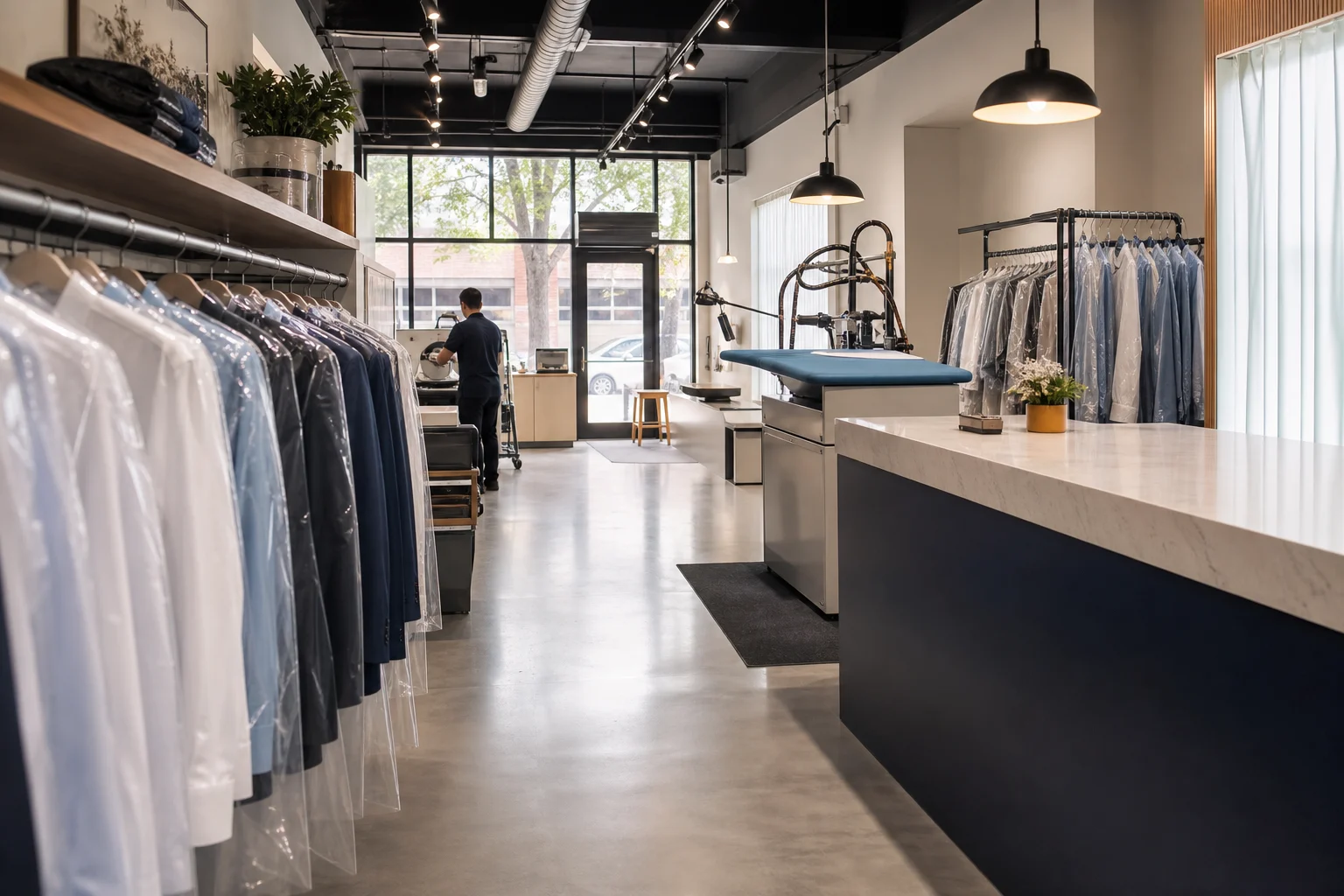
Dry cleaner equipment costs in Seattle vary significantly based on your chosen format. Traditional dry cleaning operations require different equipment than newer eco-friendly or specialized cleaning services. The equipment categories you'll need to budget for include cleaning machines, pressing equipment, finishing tools, and point-of-sale systems.
Eastlake / Cascade's low rent level of roughly $30-50/sqft NNN makes it workable for a medium-budget operator. This area has maxed-out office density and strong daytime worker population—roughly 10,500 weekday lunch workers within 800m. Two existing dry cleaners (Julie's Cleaners 4.7★, Aloha Cleaners 4.0★) operate nearby but neither dominates, suggesting room for differentiation.
Your equipment choices will depend on whether you're targeting residential customers, office workers, or both. Capitol Hill, with its highest daytime population density and near-perfect walkability, presents different equipment requirements. This area anchored by the light-rail station, Broadway Market, and Seattle Central College has four existing dry cleaners—Green Dry Cleaners (3.9★), Alterations Plus (3.8★), All Seasons Cleaners (3.3★), and C.H. Cleaners (4.0★)—all with mediocre ratings and limited Saturday hours.
Madrona / Leschi offers a blue-ocean opportunity with zero existing dry cleaners in this upscale lakefront residential corridor with strong household incomes. The commercial node around 34th Ave and E Union has Hi-Spot Cafe (4.6★, 921 reviews) and Golden Wheat Bakery (4.8★, 336 reviews) proving local retail demand. Rent is the most affordable of the top candidates at roughly $30-50/sqft NNN.
Buildout assumptions that change the budget
Buildout requirements significantly impact your overall budget for a Seattle dry cleaner. The space's condition, layout, and existing infrastructure will determine how much you need to invest before opening. Eastlake / Cascade's workable rent levels make it attractive for operators who need to invest in buildout.
When evaluating potential spaces, consider plumbing requirements for cleaning equipment, ventilation systems for chemical handling, electrical capacity for machines, and customer flow patterns. Capitol Hill's high walkability and dense population mean customer-facing areas should be prioritized in your buildout plan.
The 82% score confidence in Locavisor neighborhood scoring suggests reliable data for planning purposes. However, buildout costs can vary dramatically based on whether you're starting from scratch or renovating an existing dry cleaning facility. Madrona / Leschi's lack of existing dry cleaners means you'll likely need to build out a complete system from the ground up, while Capitol Hill's established dry cleaning presence might offer opportunities to repurpose existing infrastructure.
New vs used equipment tradeoffs
New equipment offers the latest technology, energy efficiency, and warranty protection but comes with a higher upfront cost. Used equipment can significantly reduce initial investment but may require more maintenance and lack modern efficiency features.
Eastlake / Cascade's promising market temperature suggests that investing in newer, more efficient equipment could pay off through lower operating costs over time. The area's medium competition density means you might benefit from equipment that offers unique features or faster processing times to differentiate your service.
Capitol Hill's four existing dry cleaners with mediocre ratings present an opportunity to outperform competitors with superior equipment and service quality. The area's near-perfect walkability and high daytime population density mean you'll need equipment that can handle volume efficiently while maintaining quality standards.
Madrona / Leschi's zero existing dry cleaners create a blue-ocean opportunity where you can establish equipment standards from the beginning. The area's upscale residential demographic might respond well to premium equipment that offers specialized cleaning options or eco-friendly processes.
What to inspect in a second-generation space
When considering a space previously used as a dry cleaner, thorough inspection of existing equipment and infrastructure is crucial. Check for signs of chemical damage, plumbing integrity, and electrical capacity that meets your equipment requirements.
Eastlake / Cascade's two existing dry cleaners might offer opportunities to purchase established businesses or lease spaces with existing infrastructure. However, verify that equipment is in good working condition and meets current environmental and safety standards.
Capitol Hill's four dry cleaners with mediocre ratings suggest there may be opportunities to take over existing spaces and improve operations. Inspect carefully for any issues that previous owners may have neglected, particularly regarding ventilation systems and chemical handling procedures.
Madrona / Leschi's lack of existing dry cleaners means you'll likely need to evaluate spaces that weren't originally designed for dry cleaning operations. Look for spaces with appropriate zoning, ventilation potential, and sufficient utility capacity to support your equipment needs.
FAQ
What equipment do I need for A Dry Cleaner in Seattle?
A dry cleaner in Seattle typically needs cleaning machines (dry cleaning machines, wet cleaning machines), pressing equipment (steam presses, finishing systems), spotting stations, point-of-sale systems, and proper ventilation and plumbing infrastructure. The specific equipment requirements will depend on your chosen format, target market, and service offerings.
How does location affect equipment costs in Seattle?
Location impacts equipment costs indirectly through rent levels and market characteristics. Areas with lower rent like Eastlake / Cascade and Madrona / Leschi (roughly $30-50/sqft NNN) may allow for more equipment investment, while areas with higher operational costs might require more budget-conscious equipment choices.
What's the best area in Seattle for a new dry cleaner?
According to Locavisor neighborhood scoring, Eastlake / Cascade ranks highest with a score of 8.1/10. This area offers a promising market temperature with medium competition density and low rent levels. Capitol Hill (8.0/10) and Madrona / Leschi (7.9/10) are also strong options with different market characteristics.
How does competition affect equipment decisions?
Competition density influences equipment choices by creating opportunities for differentiation. In areas with established competitors like Capitol Hill's four dry cleaners, superior equipment can help you stand out. In areas with no competition like Madrona / Leschi, you have more flexibility to choose equipment based on your target market preferences.
What should I look for in a dry cleaner space?
When evaluating spaces, consider plumbing requirements for cleaning equipment, ventilation systems for chemical handling, electrical capacity for machines, customer flow patterns, and zoning regulations. The space's condition and existing infrastructure will significantly impact your buildout budget and timeline.
Last reviewed: 2026-05-08
Sources: U.S. Census Bureau ACS, LEHD LODES, Google Places, OpenStreetMap, Locavisor neighborhood scoring.
Methodology: Locavisor scores neighborhoods across demand, competition fit, rent fit, accessibility, and customer match. Scores reflect a snapshot of recent data and should be combined with on-the-ground research before lease decisions.
Disclaimer: This article provides informational content only and does not constitute legal, financial, accounting, or real-estate advice. Verify lease terms, licensing, local regulations, costs, and professional requirements with qualified local professionals before making business decisions.
Free preview shows top 3 neighborhoods. Full $9.99 report covers all 10 areas with personalized scoring + 90-day check-ins.
Informational only. Verify lease, licensing, local regulations, costs, and professional requirements with qualified local professionals.