Boston, MA · laundromat
Laundromat equipment costs Boston
Planning a laundromat in Boston requires careful consideration of equipment costs and buildout requirements. The city's diverse neighborhoods present different opportunities and challenges for laundry business owners, with varying rent levels, competition density, and market temperatures that directly impact your equipment budget and overall startup costs.
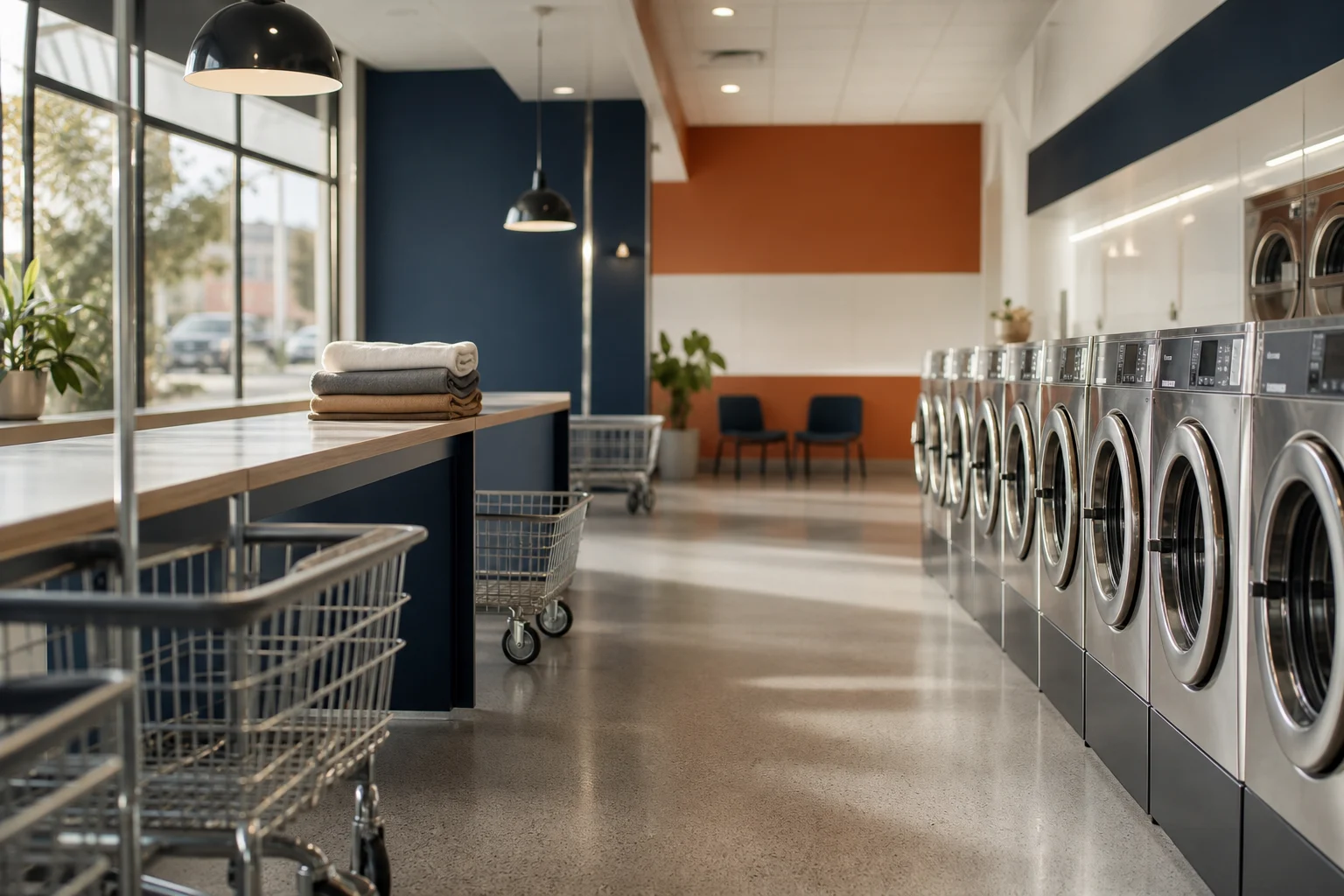
Equipment categories by launch format
When planning your Boston laundromat, equipment selection will depend on your chosen launch format and neighborhood characteristics. The three top areas identified by Locavisor neighborhood scoring offer distinct market conditions that influence equipment decisions.
Quincy Center / North Quincy (6.4/10) presents the most balanced opportunity with zero existing laundromat competitors within the search radius and strong residential density with ~8,000 potential repeat households within 800m. This area's rent band won't crush your unit economics, allowing for standard commercial-grade equipment without excessive cost pressure.
Cambridge (Harvard Square) (6.1/10) demands premium equipment investment due to its punishing rent levels of roughly $65-95/sqft NNN. The massive student and tourist population here justifies considering higher-capacity machines, though the existing competition—Cambridge Cleaners at 3.5★, Hillside Cleaners at 3.2★, and HSA Cleaners at 2.9★—all score below 4.0★, suggesting service quality gaps you might address with specialized equipment.
Kendall Square / MIT (5.8/10) presents the highest equipment cost challenge with trophy-level rent of roughly $90-140/sqft NNN. The area's daytime population density is the highest in the dataset, dominated by biotech and tech offices (Google Cambridge, CIC, Regus) plus MIT's campus. This environment favors efficient, high-throughput equipment that can handle large volumes during peak hours.
Buildout assumptions that change the budget
Buildout requirements vary significantly across Boston's top laundromat locations, directly impacting your budget planning. Quincy Center / North Quincy's more moderate rent levels allow for standard buildout approaches, while Cambridge's premium locations require more strategic space utilization.
In Quincy Center / North Quincy, you can expect typical commercial construction costs for a laundromat layout with standard plumbing and electrical requirements. The absence of direct competitors means you can establish your own operational rhythm without needing to immediately differentiate through specialized buildout features.
Cambridge locations present different challenges. Harvard Square's high rent demands maximum space efficiency, potentially requiring more compact equipment arrangements or vertical storage solutions. Kendall Square / MIT's trophy rent levels necessitate even more careful space planning, with equipment selection that maximizes throughput per square foot.
The market temperature in these areas also influences buildout decisions. Quincy Center / North Quincy's mixed market temperature suggests a measured approach to buildout investment. Cambridge's competitive environment may justify more premium buildout elements to establish market presence quickly.
New vs used equipment tradeoffs
Equipment sourcing decisions represent a critical budget consideration for Boston laundromat owners. The tradeoffs between new and used equipment vary by neighborhood based on local market conditions and competitive dynamics.
Quincy Center / North Quincy's lack of direct competitors allows for more flexibility in equipment sourcing. You might consider a mix of new and used equipment to balance initial investment costs with reliability expectations. The area's strong residential density with ~8,000 potential repeat households supports investing in newer equipment that can handle consistent usage patterns.
Cambridge's competitive landscape suggests different equipment strategies. Harvard Square's existing competitors with below-average ratings (all under 4.0★) present an opportunity to differentiate through newer, more reliable equipment. Kendall Square / MIT's high daytime population density justifies investing in newer, more durable equipment that can withstand heavy weekday usage from office workers and students.
Rent levels directly impact equipment decisions across all locations. Quincy Center / North Quincy's more moderate rent band allows for standard commercial-grade equipment without excessive cost pressure. Cambridge's premium rent levels require equipment that maximizes revenue potential per square foot, potentially justifying higher initial investment in more efficient models.
What to inspect in a second-generation space
When evaluating existing laundromat spaces in Boston, thorough inspection of existing equipment and infrastructure can significantly impact your budget planning. The top three areas present different considerations for second-generation spaces.
In Quincy Center / North Quincy, the absence of existing laundromat competitors means you'll likely be evaluating spaces previously used for other purposes. Key inspection points include plumbing capacity for multiple washing machines, electrical systems that can handle commercial equipment loads, and ventilation systems appropriate for laundry operations.
Cambridge spaces require more specialized inspection due to their premium nature. Harvard Square locations may have existing laundry infrastructure that could be repurposed, though you'll need to verify capacity against the area's massive student and tourist demand. Kendall Square / MIT spaces likely have commercial-grade systems but may require modifications to accommodate the unique usage patterns of biotech and tech workers plus MIT's campus population.
Regardless of location, inspect existing equipment for remaining useful life, maintenance history, and compatibility with your business model. The market temperature and competition density in each area should guide your decisions about which existing elements to retain versus replace.
FAQ
What equipment do I need for A Laundromat in Boston?
Your Boston laundromat will require washing machines, dryers, and potentially additional services based on your target neighborhood. Quincy Center / North Quincy's residential density suggests a focus on standard-capacity machines for household use. Cambridge locations may benefit from larger-capacity machines to handle student and tourist volumes, with Harvard Square potentially requiring specialized equipment to compete with existing below-rated services. Kendall Square / MIT's daytime population density favors efficient, high-throughput equipment that can handle quick turnover during peak hours.
How does location affect equipment costs in Boston?
Location significantly impacts equipment costs through rent levels and market demands. Quincy Center / North Quincy's more moderate rent band allows for standard commercial-grade equipment without excessive cost pressure. Cambridge's premium rent levels require equipment that maximizes revenue potential per square foot, potentially justifying higher initial investment in more efficient models. The competition density in each area also influences equipment decisions, with Quincy Center / North Quincy's lack of direct competitors allowing more flexibility.
What buildout considerations are unique to Boston laundromats?
Boston's top laundromat locations present different buildout challenges. Quincy Center / North Quincy allows for standard commercial construction approaches. Cambridge locations require more strategic space utilization due to higher rent levels, potentially favoring compact equipment arrangements or vertical storage solutions. Kendall Square / MIT's trophy rent levels necessitate particularly efficient space planning with equipment that maximizes throughput per square foot.
How do I balance new and used equipment in my Boston laundromat?
The balance between new and used equipment depends on your specific location and market conditions. Quincy Center / North Quincy's lack of direct competitors allows for more flexibility, potentially justifying a mix of new and used equipment. Cambridge's competitive environment may favor newer equipment to establish market presence quickly, especially given the existing competitors with below-average ratings. Rent levels across all locations should guide your investment strategy, with higher rent areas justifying more efficient equipment that maximizes revenue potential.
What should I look for when inspecting existing laundry equipment?
When inspecting existing equipment, evaluate remaining useful life, maintenance history, and compatibility with your business model. Check for signs of wear that could lead to premature failure, especially in high-usage areas like Cambridge's Harvard Square and Kendall Square / MIT. Verify that existing equipment meets the demands of your target market—whether residential households in Quincy Center / North Quincy or the high-volume student and worker populations in Cambridge. Consider the cost of potential upgrades or replacements against the benefits of retaining existing infrastructure.
Last reviewed: 2026-05-08
Sources: U.S. Census Bureau ACS, LEHD LODES, Google Places, OpenStreetMap, Locavisor neighborhood scoring.
Methodology: Locavisor scores neighborhoods across demand, competition fit, rent fit, accessibility, and customer match. Scores reflect a snapshot of recent data and should be combined with on-the-ground research before lease decisions.
Disclaimer: This article provides informational content only and does not constitute legal, financial, accounting, or real-estate advice. Verify lease terms, licensing, local regulations, costs, and professional requirements with qualified local professionals before making business decisions.
Free preview shows top 3 neighborhoods. Full $9.99 report covers all 10 areas with personalized scoring + 90-day check-ins.
Informational only. Verify lease, licensing, local regulations, costs, and professional requirements with qualified local professionals.