Houston, TX · laundromat
Laundromat equipment costs Houston
Planning a laundromat in Houston requires careful consideration of equipment costs and buildout planning. The market temperature is mixed with medium competition density and low rent levels, making it an interesting landscape for new entrants. Locavisor neighborhood scoring identifies three top areas for consideration: Energy Corridor (6.0/10), Spring Branch (6.0/10), and Memorial (6.0/10), each with unique characteristics that impact equipment decisions.
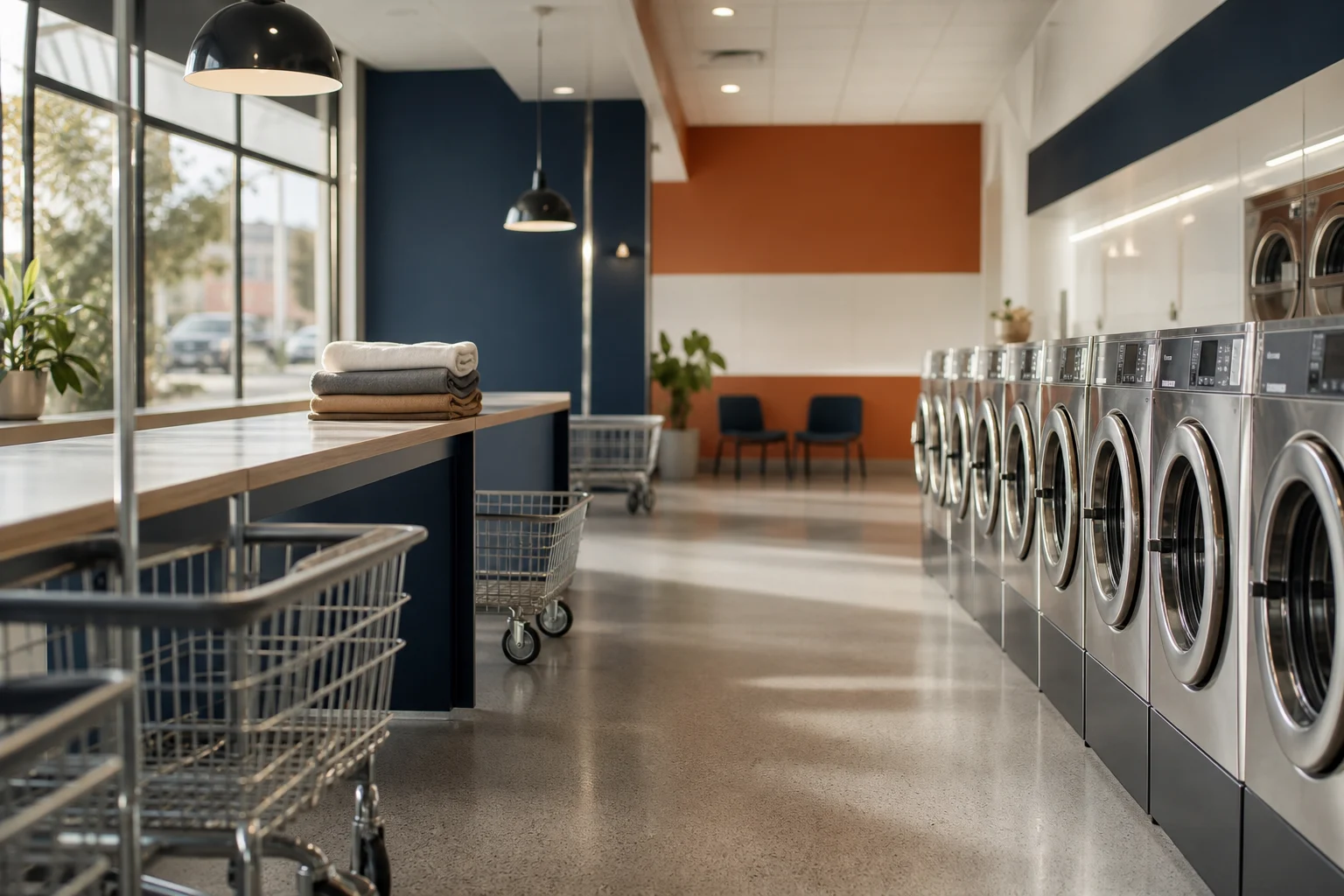
Equipment categories by launch format
Equipment selection forms the backbone of your laundromat investment. The format you choose—whether coin-operated, card-based, or hybrid—directly impacts your initial equipment budget. Houston's low rent levels ($30-50/sqft NNN range across top areas) provide flexibility in allocating capital between equipment and buildout.
Standard equipment categories include washers, dryers, folding tables, payment systems, and ancillary items like soap dispensers and seating. Each category offers different price points based on capacity, efficiency ratings, and features. The Energy Corridor's strong weekday lunch traffic from major office campuses (Conoco, Shell, BP) suggests higher-capacity commercial washers might see better utilization, while Spring Branch's strong residential density supports a more balanced equipment mix.
Market temperature considerations should guide your equipment purchasing decisions. In mixed markets like Houston, having a flexible equipment strategy allows you to adapt to changing customer preferences. The Memorial area's above-average office and residential density with below-average family index indicates potential demand for commercial-grade equipment that serves both professional and residential users efficiently.
Buildout assumptions that change the budget
Buildout requirements significantly impact your overall budget allocation. Houston's top three areas—Energy Corridor, Spring Branch, and Memorial—all have rent in the $30-50/sqft NNN range, but their different characteristics create distinct buildout considerations.
Floor preparation represents one of the largest buildout expenses. Concrete must withstand heavy equipment loads and constant moisture exposure. The Energy Corridor's moderate residential base and below-average family index might allow for a more streamlined layout, while Spring Branch's strong residential density requires careful traffic flow planning to accommodate peak usage times.
Utility infrastructure modifications often represent hidden costs. Houston's mixed market temperature means you should budget for both standard and high-efficiency utility connections. The Memorial area's strong office density suggests potential for extended operating hours, which may require additional electrical capacity to support simultaneous equipment operation during peak times.
Plumbing and ventilation systems directly affect equipment performance and customer experience. Spring Branch's above-average daytime population anchored by CITYCENTRE and Town & Country Village shopping centers indicates higher foot traffic, making proper ventilation essential for customer comfort. Each area's specific characteristics should inform your buildout priorities and budget allocations.
New vs used equipment tradeoffs
The decision between new and used equipment represents a critical budget consideration for Houston laundromat operators. New equipment offers warranty protection, energy efficiency, and modern payment system integration, but comes with a higher upfront cost. Used equipment provides immediate cost savings but may require more frequent maintenance and lack energy-efficient features.
Energy efficiency becomes particularly important given Houston's climate. Newer washer and dryer models can reduce utility costs by 20-30% compared to older units, potentially offsetting the higher initial investment over time. The low rent levels in Houston's top areas ($30-50/sqft NNN range) provide more flexibility to invest in energy-efficient equipment that pays dividends in reduced operating expenses.
Warranty considerations should factor into your equipment decisions. New equipment typically comes with manufacturer warranties covering parts and labor, reducing unexpected maintenance costs. The mixed market temperature in Houston suggests that reliability is paramount, as equipment downtime directly impacts revenue. The zero existing laundromats detected in all three top areas indicates an opportunity to establish equipment standards that differentiate your business from future competitors.
Payment system compatibility represents another consideration when evaluating new versus used equipment. Modern card-based systems offer convenience for customers and better tracking for owners. Houston's market characteristics suggest that payment flexibility could be a competitive advantage, particularly in areas like the Energy Corridor with its strong weekday lunch traffic from office workers.
What to inspect in a second-generation space
When considering a second-generation laundromat space in Houston, thorough inspection of existing infrastructure can reveal cost-saving opportunities. The top three areas—Energy Corridor, Spring Branch, and Memorial—all show zero existing laundromats in Locavisor's search radius, suggesting that most available spaces will require significant buildout.
Plumbing infrastructure deserves special attention. Existing connections for water, drainage, and gas must be evaluated for capacity and condition. The Energy Corridor's anchored office campuses producing strong weekday lunch traffic indicate potential for high-volume equipment, requiring robust plumbing systems capable of handling simultaneous multiple-machine operation.
Electrical systems must be assessed for capacity and compliance. Houston's mixed market temperature means your equipment may experience varying levels of demand throughout the week. The Memorial area's above-average office density suggests potential for extended operating hours, requiring electrical systems that can sustain equipment operation during peak times without tripping breakers or causing voltage drops.
Floor condition impacts both installation costs and long-term maintenance. Concrete floors must be evaluated for cracks, unevenness, and drainage capabilities. Spring Branch's strong residential density and above-average daytime population indicate high foot traffic, making floor durability essential for both customer safety and equipment longevity.
Ventilation systems directly affect customer comfort and equipment performance. Proper air exchange prevents moisture buildup and extends equipment life. The Energy Corridor's below-average family index suggests a customer base more sensitive to environmental comfort, making adequate ventilation a priority for customer retention.
FAQ
What equipment do I need for A Laundromat in Houston?
A standard Houston laundromat requires washers of various capacities (small, medium, large, and extra-large), dryers (both standard and extra-large), folding tables, seating areas, payment systems (coin and/or card-based), soap dispensers, and change machines. Equipment selection should align with the specific characteristics of your chosen location—whether Energy Corridor with its strong weekday lunch traffic from office campuses, Spring Branch with its strong residential density, or Memorial with its balanced office and residential presence.
How does Houston's rent level affect equipment budgeting?
Houston's low rent levels ($30-50/sqft NNN range across top areas) provide more flexibility in allocating capital between equipment and buildout compared to higher-rent markets. This allows operators to potentially invest in higher-quality equipment or additional capacity that might not be feasible in more expensive markets.
What equipment considerations are specific to Houston's climate?
Houston's hot, humid climate makes ventilation and cooling particularly important. Equipment should be selected with energy efficiency in mind to combat high cooling costs. Additionally, proper moisture control systems help prevent mold and mildew, protecting both equipment and customer belongings.
How do the top three Houston areas differ in equipment requirements?
The Energy Corridor's strong weekday lunch traffic from major office campuses (Conoco, Shell, BP) suggests higher-capacity commercial washers might see better utilization. Spring Branch's strong residential density supports a more balanced equipment mix suitable for residential users. Memorial's above-average office and residential density with below-average family index indicates potential demand for commercial-grade equipment that serves both professional and residential users efficiently.
Should I prioritize new or used equipment for my Houston laundromat?
The decision depends on your budget constraints and long-term strategy. New equipment offers warranty protection, energy efficiency, and modern payment system integration, but comes with a higher upfront cost. Used equipment provides immediate cost savings but may require more frequent maintenance. Houston's mixed market temperature suggests that reliability is paramount, as equipment downtime directly impacts revenue.
Last reviewed: 2026-05-08
Sources: U.S. Census Bureau ACS, LEHD LODES, Google Places, OpenStreetMap, Locavisor neighborhood scoring.
Methodology: Locavisor scores neighborhoods across demand, competition fit, rent fit, accessibility, and customer match. Scores reflect a snapshot of recent data and should be combined with on-the-ground research before lease decisions.
Disclaimer: This article provides informational content only and does not constitute legal, financial, accounting, or real-estate advice. Verify lease terms, licensing, local regulations, costs, and professional requirements with qualified local professionals before making business decisions.
Free preview shows top 3 neighborhoods. Full $9.99 report covers all 10 areas with personalized scoring + 90-day check-ins.
Informational only. Verify lease, licensing, local regulations, costs, and professional requirements with qualified local professionals.