Portland, OR · laundromat
Laundromat equipment costs Portland
Opening a laundromat in Portland means balancing equipment choices with the city's unique market dynamics-from neighborhood rent bands to local utility constraints. The right equipment and buildout plan can make or break a startup, but navigating these decisions requires clarity on what's needed and how Portland's context shapes those choices.
What equipment do you need to open a laundromat in Portland?
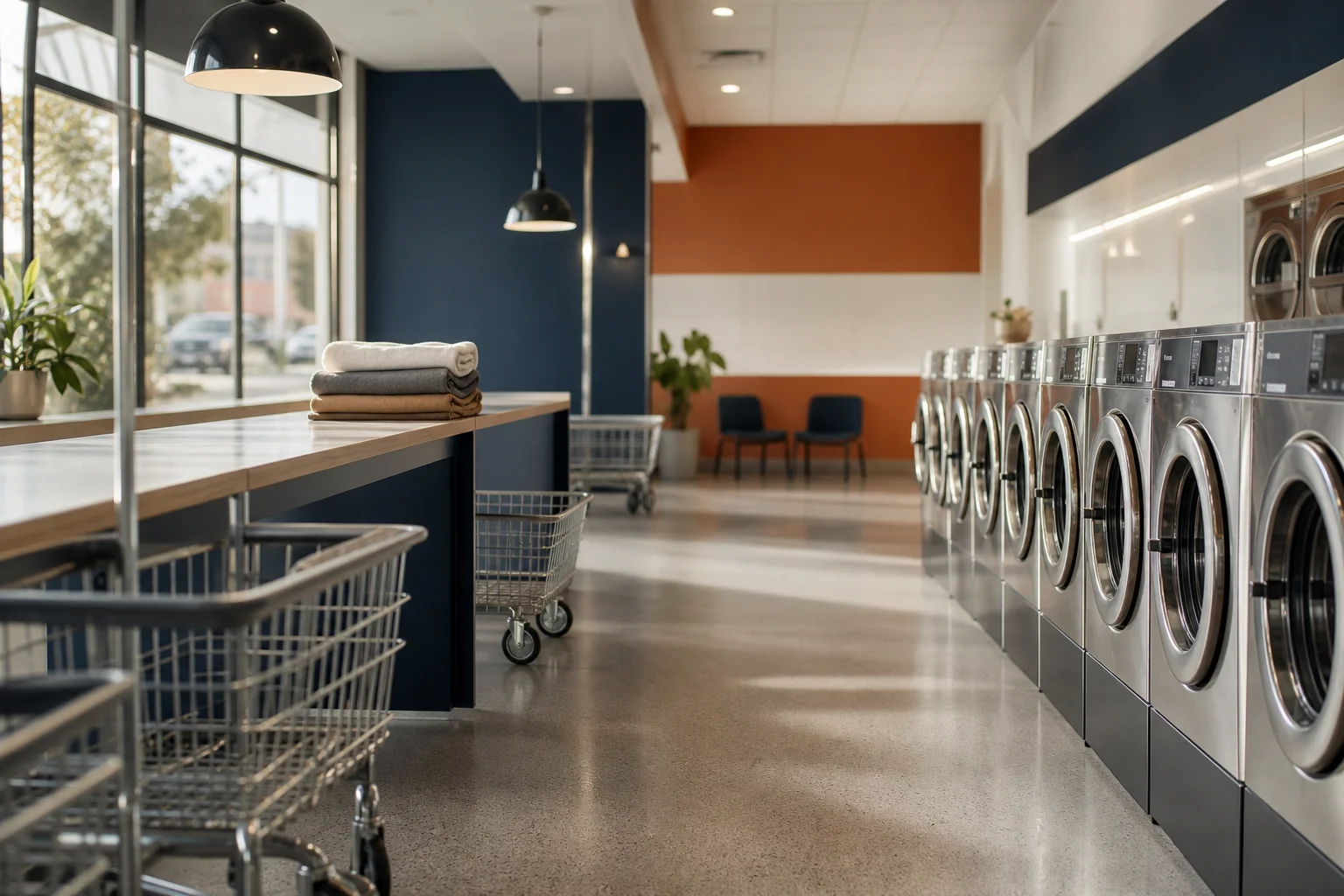
A core laundromat setup in Portland typically includes:
- Washers: Front-load or top-load machines (capacity varies by location demand).
- Dryers: Electric or gas dryers (gas may be preferred in areas with lower utility costs).
- Folding tables: Sturdy, space-efficient designs for customer use.
- Payment systems: Coin, card, or mobile payment options (Portland's tech-savvy population favors digital).
- Utility infrastructure: Water heaters, plumbing for multiple machines, and electrical panels.
- Safety features: Fire suppression systems (required for commercial laundries).
The exact mix depends on neighborhood foot traffic, rent costs, and local competition-factors we'll break down next.
Buildout cost categories
Buildout costs for a Portland laundromat fall into five key areas, each influenced by the city's neighborhoods and regulatory environment.
Plumbing and electrical
Portland's older buildings (common in Downtown and Goose Hollow) often require upgraded plumbing to handle multiple high-capacity machines. Electrical systems may need upgrades to support dryers and payment systems, especially in areas with high rent like Downtown ($42/sqft/yr NNN). Local contractors report that electrical work in historic districts can add 15-20% to costs due to compliance checks.
HVAC and ventilation
Laundromats generate heat and moisture, so robust HVAC and ventilation are non-negotiable. In neighborhoods like OHSU/South Waterfront, where buildings are newer, pre-installed ductwork may reduce costs. In contrast, St. Johns (rent band $25-$42/sqft/yr NNN) with older structures may require custom ducting, increasing expenses.
Flooring and finishes
Durable, slip-resistant flooring is critical. Vinyl or epoxy coatings are common, but costs vary by neighborhood. Downtown's high foot traffic may demand premium finishes to withstand wear, while Hollywood District (rent band $25-$42/sqft/yr NNN) with nearby Lloyd Center could prioritize cost-effective, low-maintenance options.
Permits-driven items
Permits for plumbing, electrical, and fire safety are mandatory. Portland's Bureau of Development Services (BDS) oversees these, and delays are common in busy areas like Downtown. Factor in time for inspections-especially if your location is near transit hubs like SW 5th & Madison.
Furniture and signage
Customer seating, signage, and branding add to costs. In Goose Hollow, where anchors like Pioneer Place draw foot traffic, clear signage is key. St. Johns, with Wonderwood Springs nearby, may benefit from community-focused design to attract local residents.
Equipment line items to validate in Portland
Beyond basics, validate these items for Portland:
- Machine capacity: Downtown's high rent means smaller footprints-opt for compact, high-efficiency machines.
- Utility compatibility: Check gas availability in areas like OHSU/South Waterfront (rent band $25-$42/sqft/yr NNN) to reduce energy costs.
- Payment flexibility: Portland's mobile-first culture demands support for apps like Venmo or local payment platforms.
How established operators in Portland configure their spaces
While specific laundromat operators aren't named in the data, local anchors like Lloyd Center (Hollywood District) and Pioneer Place (Downtown) suggest that proximity to retail drives demand for quick, efficient service. Operators in these areas often prioritize high-capacity machines to handle peak hours, while St. Johns (with University of Portland nearby) may focus on student-friendly pricing and extended hours.
Used vs. new vs. lease
- New equipment: Offers warranties but higher upfront costs-ideal for high-rent areas like Downtown.
- Used equipment: Lower initial cost but higher maintenance risk-common in neighborhoods like St. Johns with lower rent bands.
- Leasing: Spreads costs over time, useful for startups in competitive areas like Hollywood District.
Buildout timeline
Buildout timelines in Portland depend on neighborhood complexity. Downtown's historic districts may take a variable local timeline for permits and construction, while newer areas like OHSU/South Waterfront could finish in a variable local timeline. Factor in weather delays-Portland's rainy season can extend timelines.
Common buildout overruns
- Unexpected plumbing issues: Older buildings in Goose Hollow often reveal hidden pipe problems.
- Permit delays: Busy areas like Downtown face longer inspection wait times.
- Material shortages: Portland's construction boom can delay flooring or electrical supplies.
| Neighborhood | Locavisor score | Rent band | Local operator signal | Founder validation check |
|---|---|---|---|---|
| Downtown | 5.9/10 | $42/sqft/yr NNN | No direct operator listed | Check utility capacity, ventilation, plumbing, storage, and fixture layout. |
| Goose Hollow | 5.8/10 | $25-$42/sqft/yr NNN | No direct operator listed | Check utility capacity, ventilation, plumbing, storage, and fixture layout. |
| St. Johns | 5.6/10 | $25-$42/sqft/yr NNN | No direct operator listed | Check utility capacity, ventilation, plumbing, storage, and fixture layout. |
| OHSU / South Waterfront | 5.5/10 | $25-$42/sqft/yr NNN | No direct operator listed | Check utility capacity, ventilation, plumbing, storage, and fixture layout. |
| Hollywood District | 5.4/10 | $25-$42/sqft/yr NNN | No direct operator listed | Check utility capacity, ventilation, plumbing, storage, and fixture layout. |
How established operators in Portland configure their kitchens
Downtown (5.9/10, $42/sqft/yr NNN), Goose Hollow (5.8/10, $25-$42/sqft/yr NNN), St. Johns (5.6/10, $25-$42/sqft/yr NNN) are useful benchmarks for validating laundromat buildout assumptions in Portland. Before signing, inspect utility capacity, plumbing, ventilation, storage, customer circulation, back-of-house workflow, fixture condition, signage constraints, and landlord delivery obligations.
Ground-truth the shortlist with site visits, broker feedback, and current operator mapping.
FAQ
What permits are required for a laundromat in Portland?
You'll need plumbing, electrical, and fire safety permits from the Bureau of Development Services (BDS). Check with BDS for specific requirements based on your neighborhood.
How do Portland's rent bands affect equipment choices?
Higher rent bands (e.g., Downtown's $42/sqft/yr NNN) mean smaller spaces-prioritize compact, high-efficiency machines to maximize revenue per square foot. Lower rent areas (e.g., St. Johns) allow for larger machines or more seating.
Can I use used equipment in a Portland laundromat?
Yes, but inspect for wear and ensure compliance with local codes. Used equipment is common in neighborhoods with lower rent bands, but prioritize reliability to avoid frequent repairs.
Last reviewed: 2026-05-30
Sources: U.S. Census Bureau ACS, LEHD LODES, Google Places, OpenStreetMap, Locavisor neighborhood scoring.
Methodology: Locavisor scores neighborhoods across demand, competition fit, rent fit, accessibility, and customer match. Scores reflect a snapshot of recent data and should be combined with on-the-ground research before lease decisions.
Disclaimer: This article provides informational content only and does not constitute legal, financial, accounting, or real-estate advice. Verify lease terms, licensing, local regulations, costs, and professional requirements with qualified local professionals before making business decisions.
Free preview shows top 3 neighborhoods. Full $9.99 report covers all 10 areas with personalized scoring + 90-day check-ins.
Informational only. Verify lease, licensing, local regulations, costs, and professional requirements with qualified local professionals.