San Antonio, TX · laundromat
Laundromat equipment costs San Antonio
Planning a laundromat in San Antonio requires careful consideration of equipment costs and buildout requirements. The city offers several promising neighborhoods with different market characteristics that impact your equipment decisions. Understanding these factors helps you allocate your budget effectively while positioning your business for success in San Antonio's competitive laundry market.
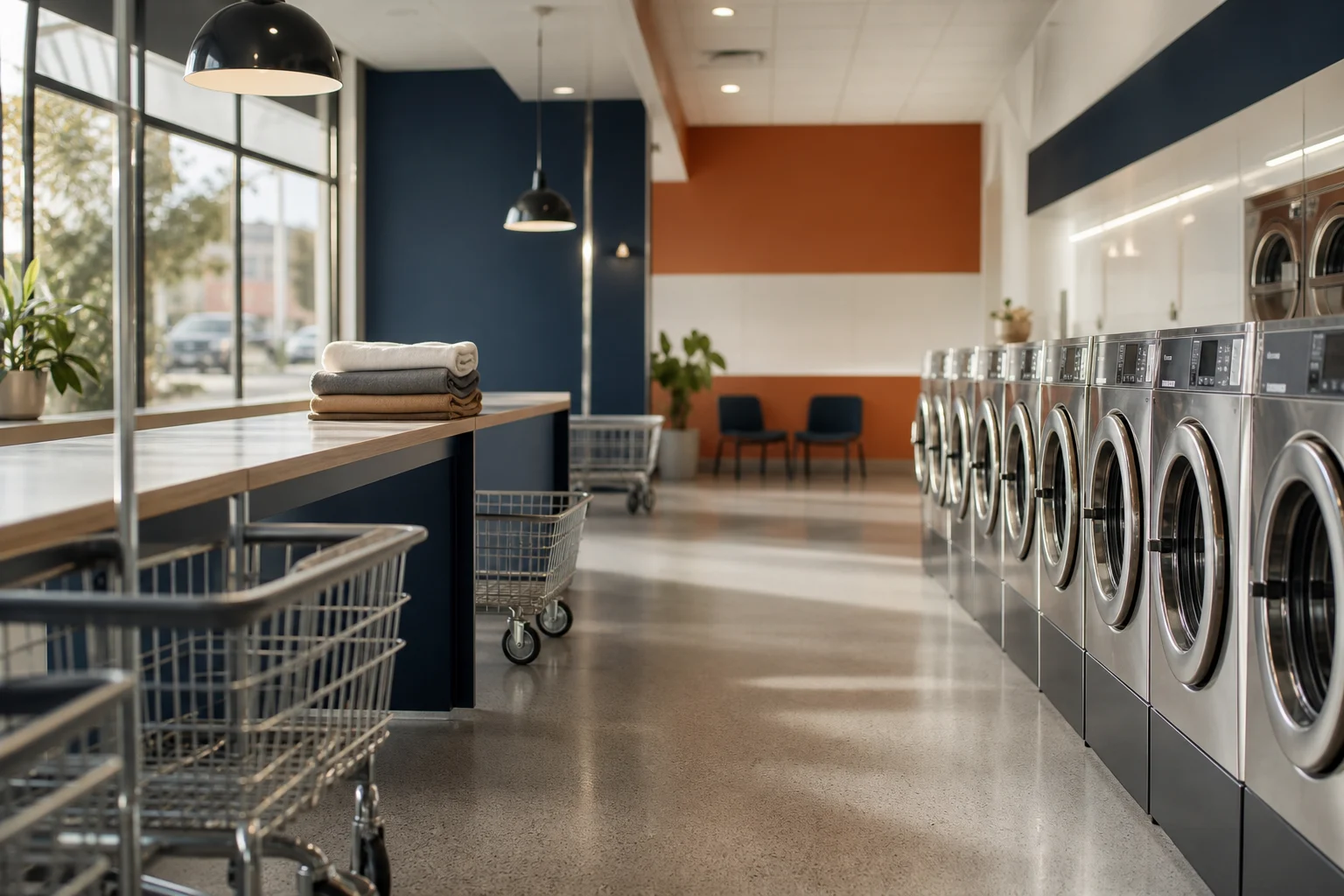
Equipment categories by launch format
Your equipment selection depends heavily on your target market and chosen format. Coin-operated machines remain the standard, but card-based systems offer modern advantages. The UTSA Main Campus area presents an opportunity with 30K+ students and no dedicated laundromat within the immediate campus footprint. Student laundry habits align well with evening and weekend usage patterns, making standard washers and dryers with card payment systems particularly effective here.
Washers form the backbone of your operation. Top-load machines serve basic needs, while front-load models offer efficiency and capacity advantages. Dryers require careful consideration of capacity and drying time. The West Side / Westwood area offers the best rent fit in the set—roughly $30-50/sqft NNN—with solid residential density and a family index that's above-average for your list. This demographic mix suggests you'll need both standard and larger capacity machines to accommodate families.
Payment systems represent another critical equipment category. Traditional coin mechanisms work well for some markets, but card systems reduce maintenance and increase security. Downtown San Antonio delivers strong daytime population density (~10,500 weekday workers within 800m) but faces a fundamental challenge: tourists don't do laundry and downtown residents skew toward in-unit machines. This market may benefit from more flexible payment options and potentially smaller, more efficient equipment to maximize space utilization.
Buildout assumptions that change the budget
Buildout requirements vary significantly by location and existing conditions. The UTSA Main Campus area has strong walkability and lunch/evening daypart coverage that aligns with student laundry habits. Rent runs roughly $20-35/sqft NNN, keeping overhead manageable. This relatively low rent level allows for more substantial buildout investments in quality equipment and amenities that enhance the customer experience.
Floor preparation represents a major buildout consideration. Concrete must be properly sealed to withstand water exposure and detergent spills. Plumbing requirements differ by machine type and quantity. The West Side / Westwood area already proves laundry demand exists with Comet Cleaners and Laundry San Antonio (4.8★, 1,539 reviews), though they're dry-cleaner focused rather than self-service. This existing demand suggests customers in this area are accustomed to professional laundry services, potentially justifying higher-quality buildout standards.
Electrical systems require special attention. Commercial-grade washers and dryers demand significant power, often requiring dedicated circuits and potentially electrical upgrades. The Downtown San Antonio market faces challenges with a below-average family index and low affluence, despite strong daytime population density. This demographic reality may constrain your buildout budget, requiring more economical solutions while still maintaining equipment reliability and customer satisfaction.
New vs used equipment tradeoffs
New equipment offers reliability, warranty protection, and energy efficiency benefits. Modern machines often feature advanced controls and payment systems that enhance the customer experience. The UTSA Main Campus area's student demographic may respond particularly well to new equipment with intuitive interfaces and mobile payment options. However, new equipment represents a significant upfront investment that impacts your initial cash flow.
Used equipment provides immediate cost savings but carries higher maintenance risks. Older machines may consume more water and energy, increasing operating expenses over time. The West Side / Westwood area's above-average family index suggests that durability and capacity might be more important than the latest technology, potentially making quality used equipment a viable option. The Comet Cleaners and Laundry San Antonio success story indicates that customers value service quality over equipment age.
Equipment financing options can bridge the gap between new and used purchases. Leasing programs spread costs over time while maintaining access to modern equipment. The Downtown San Antonio market's tourist population and below-average family index may benefit from a mixed approach, combining newer front-load machines for efficiency with reliable used dryers to manage costs. Your equipment selection should balance initial investment with long-term operational expenses and customer expectations.
What to inspect in a second-generation space
When considering an existing laundromat location, thorough inspection prevents unexpected costs. Plumbing infrastructure requires particular attention. Older pipes may need replacement to handle commercial-grade equipment demands. The UTSA Main Campus area's strong walkability and student presence make it attractive, but existing plumbing may not support modern high-efficiency machines without significant upgrades.
Electrical systems need evaluation by qualified professionals. Outdated wiring may not accommodate the power requirements of contemporary washers and dryers. The West Side / Westwood area's $30-50/sqft NNN rent represents a workable middle ground, but electrical upgrades could significantly impact your budget. The absence of direct laundromat competitors in this area suggests an opportunity, but only if the existing space can support your equipment needs without excessive modification.
Floor condition affects both installation costs and long-term maintenance. Concrete must be properly sealed to prevent water damage and slip hazards. The Downtown San Antonio market's low affluence and below-average family index present challenges, but the strong daytime population density (~10,500 weekday workers within 800m) offers potential. A thorough assessment of the existing space helps determine whether renovation costs align with your budget and market expectations.
FAQ
What equipment do I need for A Laundromat in San Antonio?
Your laundromat equipment needs depend on your target location and customer base. The UTSA Main Campus area requires equipment suited to student usage patterns, with card payment systems and machines that handle typical student loads efficiently. The West Side / Westwood area's above-average family index suggests you'll need larger capacity machines to accommodate family-sized loads. Downtown San Antonio's tourist population and below-average family index may require more compact, efficient equipment that maximizes limited space.
Essential equipment includes washers of various sizes, dryers with appropriate capacity, payment systems, and folding tables. Additional amenities like vending machines, seating areas, and Wi-Fi can enhance customer experience but represent additional costs. The market temperature in San Antonio is mixed, with medium competition density and low rent levels, suggesting that equipment quality and customer service may be key differentiators in your chosen location.
Your equipment selection should balance initial investment with long-term operational expenses. Energy-efficient models may cost more upfront but reduce utility costs over time. The specific equipment needs for your San Antonio laundromat will depend on factors like your chosen neighborhood, target demographic, and business model. Careful planning based on location-specific market data helps ensure your equipment investment aligns with your business goals and customer expectations.
Last reviewed: 2026-05-08
Sources: U.S. Census Bureau ACS, LEHD LODES, Google Places, OpenStreetMap, Locavisor neighborhood scoring.
Methodology: Locavisor scores neighborhoods across demand, competition fit, rent fit, accessibility, and customer match. Scores reflect a snapshot of recent data and should be combined with on-the-ground research before lease decisions.
Disclaimer: This article provides informational content only and does not constitute legal, financial, accounting, or real-estate advice. Verify lease terms, licensing, local regulations, costs, and professional requirements with qualified local professionals before making business decisions.
Free preview shows top 3 neighborhoods. Full $9.99 report covers all 10 areas with personalized scoring + 90-day check-ins.
Informational only. Verify lease, licensing, local regulations, costs, and professional requirements with qualified local professionals.