Washington, DC · laundromat
Laundromat equipment costs Washington
Planning a laundromat in Washington requires careful consideration of equipment costs and buildout planning. The District's unique market conditions and neighborhood characteristics significantly impact your equipment decisions and budget allocation. Understanding these factors is crucial for a successful launch in this competitive market.
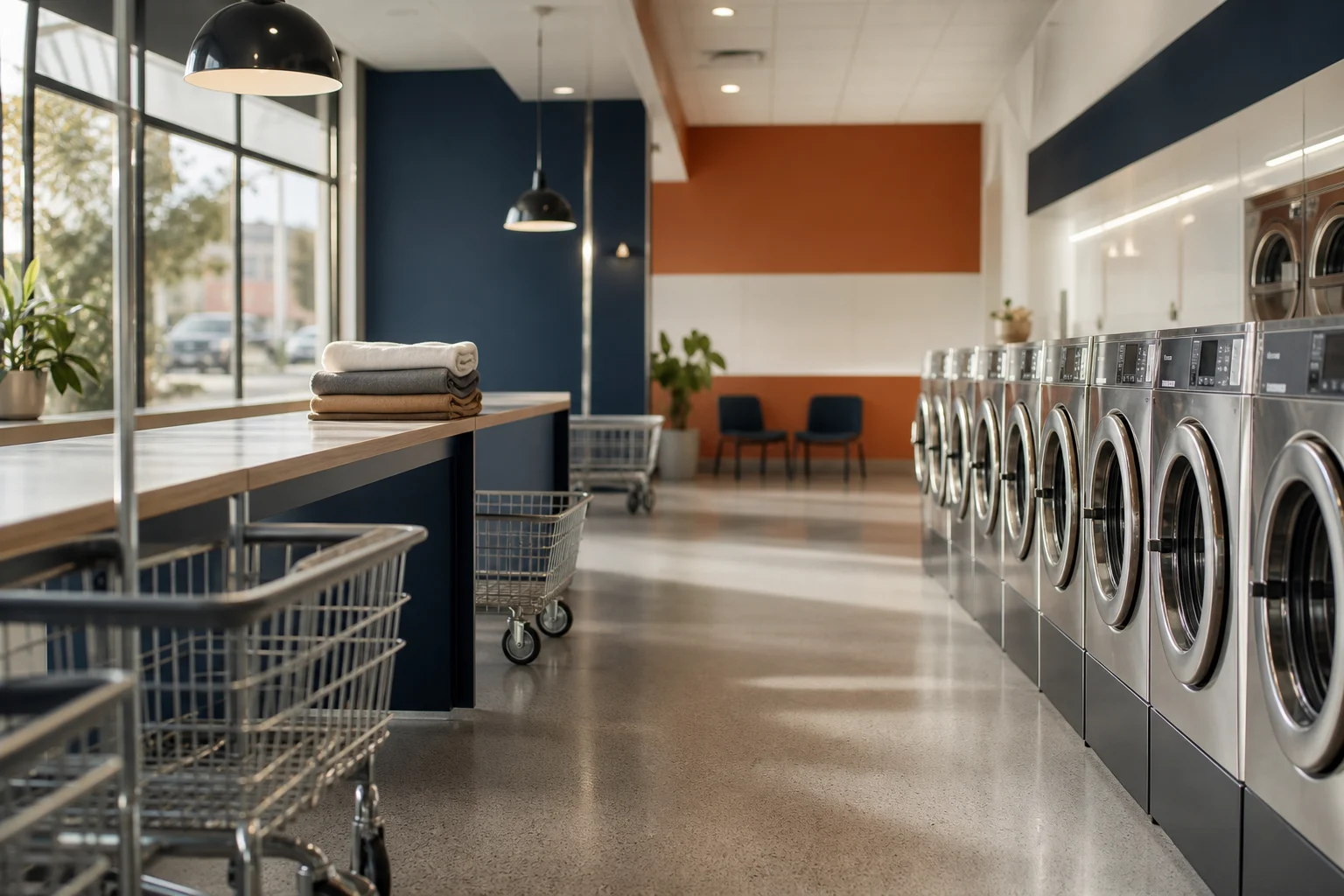
Equipment Categories by Launch Format
When planning your laundromat equipment costs in Washington, the format you choose directly impacts your equipment needs and budget allocation. The three main formats—self-service, attended service, and hybrid models—each require different equipment categories and investment levels.
Self-service laundromats form the backbone of Washington's laundry market. These facilities typically require washers, dryers, payment systems, and ancillary equipment. The Foggy Bottom/GWU area presents an interesting case with zero existing laundromats and high daytime density from GWU + State Dept offices. This creates opportunity but also means your equipment must handle high usage volumes during daytime hours.
Attended service models add staff-related equipment and premium washers to the basic self-service setup. In areas like Chevy Chase DC with strong affluence levels, residents can afford these premium services, justifying additional equipment investment. The absence of laundromat competitors in this upscale corridor along Connecticut Ave creates a market opportunity for differentiated equipment offerings.
Hybrid models combine elements of both formats, requiring more comprehensive equipment inventories. Ivy City's industrial-reuse neighborhood near Union Market with growing residential density represents an ideal location for such a model. The area's transition phase with distilleries, breweries, and food hall anchors suggests a customer base that might appreciate extended hours and flexible service options.
Buildout Assumptions That Change the Budget
Your buildout assumptions significantly impact equipment costs for a Washington laundromat. The Foggy Bottom/GWU area with rent running roughly $30-50/sqft NNN creates different budget pressures than Ivy City's more affordable $20-35/sqft NNN range. These rent levels directly influence how much you can allocate to equipment versus space improvements.
Plumbing infrastructure represents one of the most significant buildout considerations. Washington's older buildings may require substantial plumbing upgrades to accommodate commercial laundry equipment. The Foggy Bottom area's walkability and transit advantages are city-leading, but these older buildings often come with infrastructure challenges that increase buildout costs.
Electrical requirements also vary by location and equipment type. High-efficiency washers and dryers may need specialized electrical installations. In Chevy Chase DC, the upscale residential corridor might demand more aesthetically pleasing equipment enclosures, adding to buildout costs while potentially allowing premium pricing.
Flooring considerations differ across Washington neighborhoods. Ivy City's industrial-reuse spaces might require more extensive flooring preparation than newer construction in other areas. The $20-35/sqft NNN rent range in Ivy City provides budget flexibility for quality flooring that can withstand heavy commercial use.
New vs Used Equipment Tradeoffs
The decision between new and used equipment significantly impacts your laundromat startup costs in Washington. New equipment offers reliability, warranties, and energy efficiency but comes with higher upfront costs. Used equipment reduces initial investment but may increase maintenance expenses and have shorter lifespans.
Washington's mixed market temperature creates unique considerations for equipment decisions. In areas like Foggy Bottom/GWU with perfect competitionFit scores (zero existing laundromats), new equipment can help establish market leadership and justify premium pricing. The daytime density from GWU + State Dept offices suggests high usage that might benefit from newer, more reliable equipment.
Chevy Chase DC's strong affluence level near ceiling supports investment in premium new equipment. The absence of laundromat competitors in this upscale corridor along Connecticut Ave creates an opportunity to differentiate through high-quality equipment that matches the neighborhood's character.
Ivy City's transition phase with distilleries, breweries, and food hall anchors might present opportunities for acquiring quality used equipment at favorable prices. The area's most affordable rent range of $20-35/sqft NNN provides budget flexibility that could offset the risks associated with used equipment.
What to Inspect in a Second-Generation Space
When evaluating existing laundromat spaces in Washington, thorough inspection of equipment and infrastructure is essential. The medium competition density across Washington neighborhoods means second-generation spaces may offer opportunities but come with specific inspection requirements.
Plumbing infrastructure deserves special attention in older Washington buildings. The Foggy Bottom area's historic buildings may have plumbing systems that require evaluation before equipment installation. The 7.3/10 score for this area reflects its strengths but doesn't eliminate infrastructure challenges.
Electrical systems must be evaluated for capacity and compatibility with commercial laundry equipment. Chevy Chase DC's upscale residential corridor might have newer electrical systems, but verification is still necessary. The zero laundromat competitors in this area suggest that existing spaces may have been repurposed from other uses.
Flooring condition impacts both equipment installation and customer experience. Ivy City's industrial-reuse spaces often have concrete floors that may require preparation for laundry equipment installation. The area's growing residential density near Union Market means customer experience considerations are increasingly important.
FAQ
What equipment do I need for a laundromat in Washington?
A laundromat in Washington requires washers, dryers, payment systems, and ancillary equipment. The specific equipment needs vary by format—self-service, attended service, or hybrid—and location. Foggy Bottom/GWU with its daytime density from GWU + State Dept offices might favor high-capacity equipment, while Chevy Chase DC's affluence level supports premium offerings. Ivy City's growing residential density near Union Market suggests equipment that can handle diverse customer needs.
How does Washington's rent level impact equipment budget?
Washington's rent levels vary by neighborhood—Foggy Bottom/GWU and Chevy Chase DC run roughly $30-50/sqft NNN, while Ivy City offers $20-35/sqft NNN. These rent levels directly influence how much you can allocate to equipment versus space improvements. Lower rent areas like Ivy City provide more budget flexibility for quality equipment, while higher rent areas may require more strategic equipment selection to maintain profitability.
What are the equipment considerations for Washington's different neighborhoods?
Foggy Bottom/GWU's zero existing laundromats and high daytime density from GWU + State Dept offices suggest equipment that can handle high usage volumes. Chevy Chase DC's strong affluence level supports premium equipment offerings. Ivy City's industrial-reuse neighborhood with growing residential density near Union Market might benefit from versatile equipment that accommodates the area's transition phase with distilleries, breweries, and food hall anchors.
How does competition density affect equipment decisions?
Washington's medium competition density means equipment decisions should consider differentiation. Areas with zero existing laundromats like Foggy Bottom/GWU, Chevy Chase DC, and Ivy City present opportunities to establish market leadership through strategic equipment selection. The absence of competitors allows for equipment choices that match neighborhood characteristics and customer expectations.
What buildout factors impact equipment costs in Washington?
Plumbing infrastructure, electrical requirements, and flooring conditions significantly impact equipment costs in Washington. Older buildings in areas like Foggy Bottom may require substantial plumbing upgrades. Electrical systems must be evaluated for capacity, especially for high-efficiency equipment. Flooring preparation varies by neighborhood, with industrial-reuse spaces in Ivy City potentially requiring more extensive preparation than newer construction areas.
Last reviewed: 2026-05-08
Sources: U.S. Census Bureau ACS, LEHD LODES, Google Places, OpenStreetMap, Locavisor neighborhood scoring.
Methodology: Locavisor scores neighborhoods across demand, competition fit, rent fit, accessibility, and customer match. Scores reflect a snapshot of recent data and should be combined with on-the-ground research before lease decisions.
Disclaimer: This article provides informational content only and does not constitute legal, financial, accounting, or real-estate advice. Verify lease terms, licensing, local regulations, costs, and professional requirements with qualified local professionals before making business decisions.
Free preview shows top 3 neighborhoods. Full $9.99 report covers all 10 areas with personalized scoring + 90-day check-ins.
Informational only. Verify lease, licensing, local regulations, costs, and professional requirements with qualified local professionals.