Columbus, OH · sandwich and deli shop
Sandwich and deli shop equipment costs Columbus
Planning your sandwich and deli shop in Columbus requires careful consideration of equipment costs and buildout requirements. The right equipment setup impacts both your initial investment and operational efficiency. In Columbus's competitive food scene, understanding how equipment choices align with your business model and location is crucial for success.
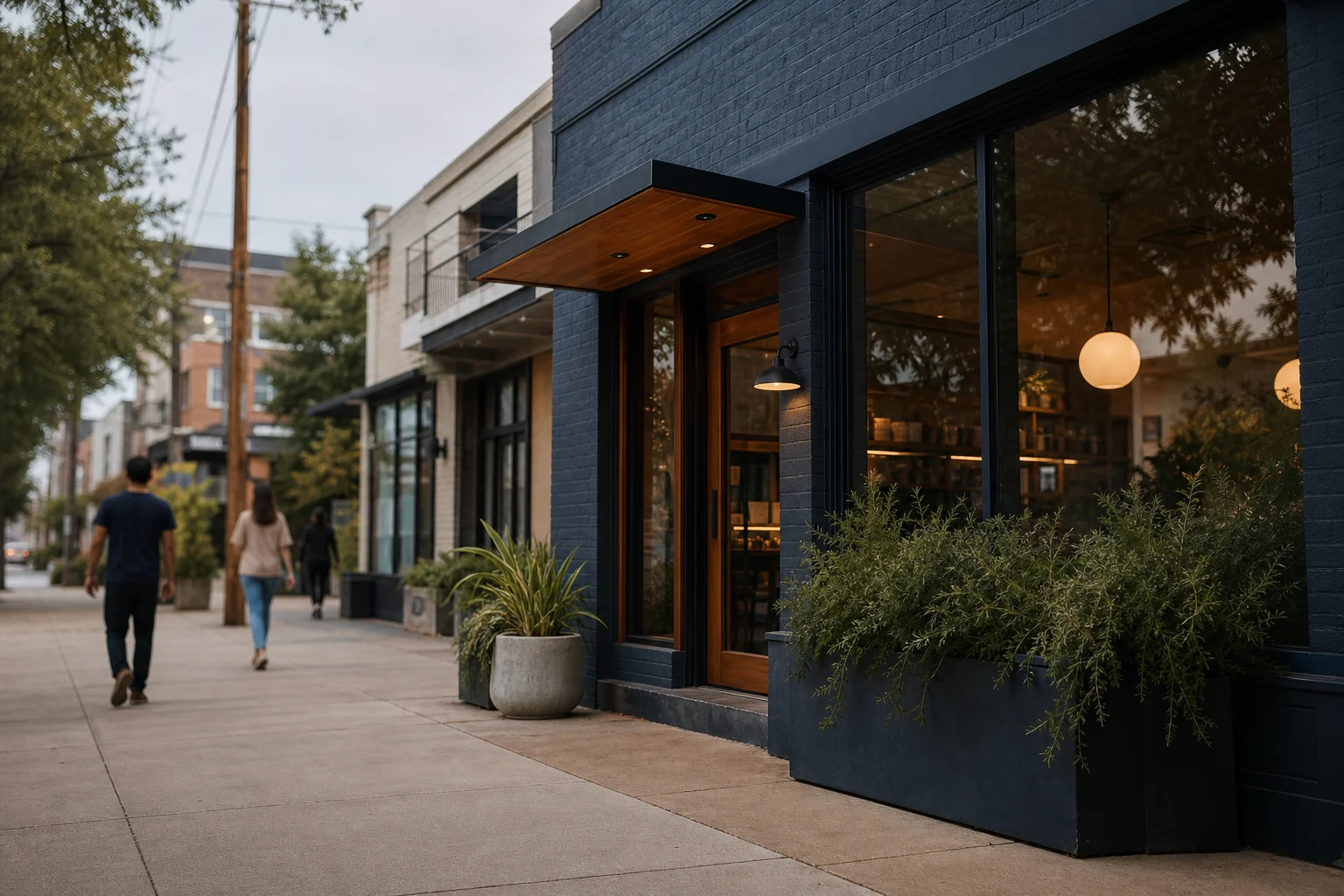
Equipment categories by launch format
Your sandwich and deli shop equipment needs will vary based on your chosen format. Quick-service operations prioritize speed and efficiency, requiring streamlined workflows with minimal equipment. Full-service delis need more extensive setups to handle preparation, cooking, and customer service components.
For Columbus's market, consider how your equipment aligns with the local customer base. In areas like Easton Town Center, where you'd be the first dedicated sandwich-deli shop in a high-foot-traffic corridor, equipment that supports both speed and quality presentation would be ideal. The heavy reliance on mall foot traffic means your equipment must handle peak lunch rushes efficiently.
In contrast, the Discovery District's daytime population density near ceiling with strong transit access suggests equipment that can maintain consistent quality during busy lunch periods. The existing sandwich operators (Jimmy John's 3.3★/171 reviews and Subway 3.5-3.8★) that are underperforming on quality indicate an opportunity for equipment that enables superior product preparation.
Polaris Fashion Place presents a different challenge with its premium-tier rent at roughly $65-95/sqft NNN. Here, your equipment investment must maximize efficiency to justify the higher rent, with two established competitors (Potbelly 4.1★/300 reviews and Jersey Mike's Subs 4.4★/362 reviews) already serving the market.
Buildout assumptions that change the budget
Your buildout approach significantly impacts equipment costs and overall budget. New construction offers maximum flexibility but comes with higher upfront costs. Renovating existing spaces can reduce expenses but may require compromises on layout and equipment placement.
In Columbus's Easton area, where rent ranges from $45-70/sqft NNN, your buildout decisions must balance initial investment with the heavy reliance on mall foot traffic. Limited residential base for evening/weekend repeat business means your buildout should optimize for daytime operations while remaining flexible for potential future expansion.
Polaris's premium rent levels at $65-95/sqft NNN demand a buildout approach that maximizes efficiency and space utilization. The existing competition suggests your buildout should create a distinct customer experience that differentiates from Potbelly and Jersey Mike's.
The Discovery District's roughly $45-70/sqft NNN rent range presents opportunities for strategic buildout investments. With daytime population density near ceiling and strong transit access, your buildout should focus on creating an efficient workflow that can handle high-volume lunch service while maintaining quality standards that outperform the existing Jimmy John's and Subway locations.
New vs used equipment tradeoffs
Choosing between new and used equipment represents a critical decision affecting your initial investment and long-term operational costs. New equipment offers warranties, energy efficiency, and the latest technology but comes with a higher price tag. Used equipment reduces upfront costs but may require more maintenance and lack modern efficiency features.
For Columbus's mixed market temperature, your equipment strategy should align with your business model and location. In Easton, where you'd be the first dedicated sandwich-deli shop, investing in new equipment could help establish quality standards and operational efficiency from day one, supporting your position as the only dedicated shop in the high-foot-traffic corridor.
Polaris's competitive environment with established players like Potbelly and Jersey Mike's might make used equipment more attractive initially, allowing you to enter the market with lower overhead while potentially allocating more resources to marketing and customer acquisition. However, the premium rent levels at $65-95/sqft NNN mean your equipment must be highly efficient to maintain profitability.
In the Discovery District, where existing operators are underperforming on quality, new equipment could provide the operational consistency needed to outperform competitors. The daytime population density near ceiling suggests that reliable, efficient equipment is essential to handle high-volume service while maintaining quality standards that exceed the current Subway and Jimmy John's offerings.
What to inspect in a second-generation space
When considering an existing space for your sandwich and deli shop, thorough inspection of existing equipment and buildout elements can reveal potential cost savings or necessary investments. Look for equipment that meets health code requirements and has remaining useful life.
In Columbus's Easton area, where no sandwich-deli competitors are detected within the search radius, inspecting existing spaces for equipment that can be repurposed for sandwich and deli operations could significantly reduce startup costs. The heavy reliance on mall foot traffic means your inspection should focus on equipment that can handle peak lunch rushes efficiently.
Polaris's existing sandwich shops offer opportunities to learn from their equipment setups while inspecting potential spaces. Look for equipment that has been proven effective in the premium rent environment at $65-95/sqft NNN, particularly from competitors like Potbelly and Jersey Mike's that have established strong market positions.
The Discovery District's existing operators, despite their underperforming quality ratings, may have equipment that could be upgraded to create a superior offering. When inspecting spaces in this area, focus on identifying equipment that can be enhanced to exceed the quality standards of the current Jimmy John's 3.3★/171 reviews and Subway 3.5-3.8★ locations, taking advantage of the daytime population density near ceiling.
FAQ
What equipment do I need for A Sandwich and Deli Shop in Columbus?
Your sandwich and deli shop will require several key equipment categories: preparation equipment (cutting boards, knives, mixers), cooking equipment (grills, ovens, toasters), refrigeration units (reach-in coolers, prep tables), display cases, point-of-sale systems, and storage solutions. The specific equipment needs will depend on your chosen format and menu offerings. Columbus's market conditions suggest investing in equipment that can handle high-volume lunch service, particularly in areas like Easton and the Discovery District where daytime traffic is significant.
How does location affect equipment costs in Columbus?
Location significantly impacts equipment costs through rent levels and operational requirements. In premium areas like Polaris with rent at $65-95/sqft NNN, equipment must maximize efficiency to justify higher overhead. In areas like Easton and the Discovery District with rent at $45-70/sqft NNN, you have more flexibility in equipment selection but must still align with local customer expectations and traffic patterns. Columbus's mixed market temperature suggests that equipment decisions should be tailored to specific neighborhood characteristics rather than a one-size-fits-all approach.
What equipment maintenance considerations should I plan for in Columbus?
Columbus's climate and usage patterns affect equipment maintenance planning. High-traffic areas like Easton Town Center and the Discovery District will require more frequent maintenance due to intensive use during peak hours. Consider equipment with accessible parts and local service availability to minimize downtime. The existing sandwich operators in Polaris and the Discovery District provide benchmarks for maintenance frequency and requirements, helping you plan for ongoing operational costs.
How do I balance equipment quality with budget constraints in Columbus?
Balancing equipment quality with budget constraints requires prioritizing items that directly impact product quality and operational efficiency. In Columbus's competitive market, investing in high-quality preparation and refrigeration equipment typically provides the best return, as these directly affect product freshness and consistency. Consider leasing options for expensive equipment to manage cash flow, particularly in premium locations like Polaris where rent levels are higher. Columbus's market temperature suggests that equipment quality can be a key differentiator, particularly in areas where existing operators are underperforming on quality metrics.
Last reviewed: 2026-05-08
Sources: U.S. Census Bureau ACS, LEHD LODES, Google Places, OpenStreetMap, Locavisor neighborhood scoring.
Methodology: Locavisor scores neighborhoods across demand, competition fit, rent fit, accessibility, and customer match. Scores reflect a snapshot of recent data and should be combined with on-the-ground research before lease decisions.
Disclaimer: This article provides informational content only and does not constitute legal, financial, accounting, or real-estate advice. Verify lease terms, licensing, local regulations, costs, and professional requirements with qualified local professionals before making business decisions.
Free preview shows top 3 neighborhoods. Full $9.99 report covers all 10 areas with personalized scoring + 90-day check-ins.
Informational only. Verify lease, licensing, local regulations, costs, and professional requirements with qualified local professionals.