Austin, TX · juice and smoothie bar
Best neighborhoods for a juice and smoothie bar in Austin
Finding the right location is critical for success in the competitive juice and smoothie bar industry. In Austin's dynamic food scene, choosing the best neighborhoods for a juice and smoothie bar can make or break your business. This article ranks the top areas based on demand, competition, rent fit, accessibility, and customer match factors. We'll examine the three most promising neighborhoods for aspiring juice bar entrepreneurs.
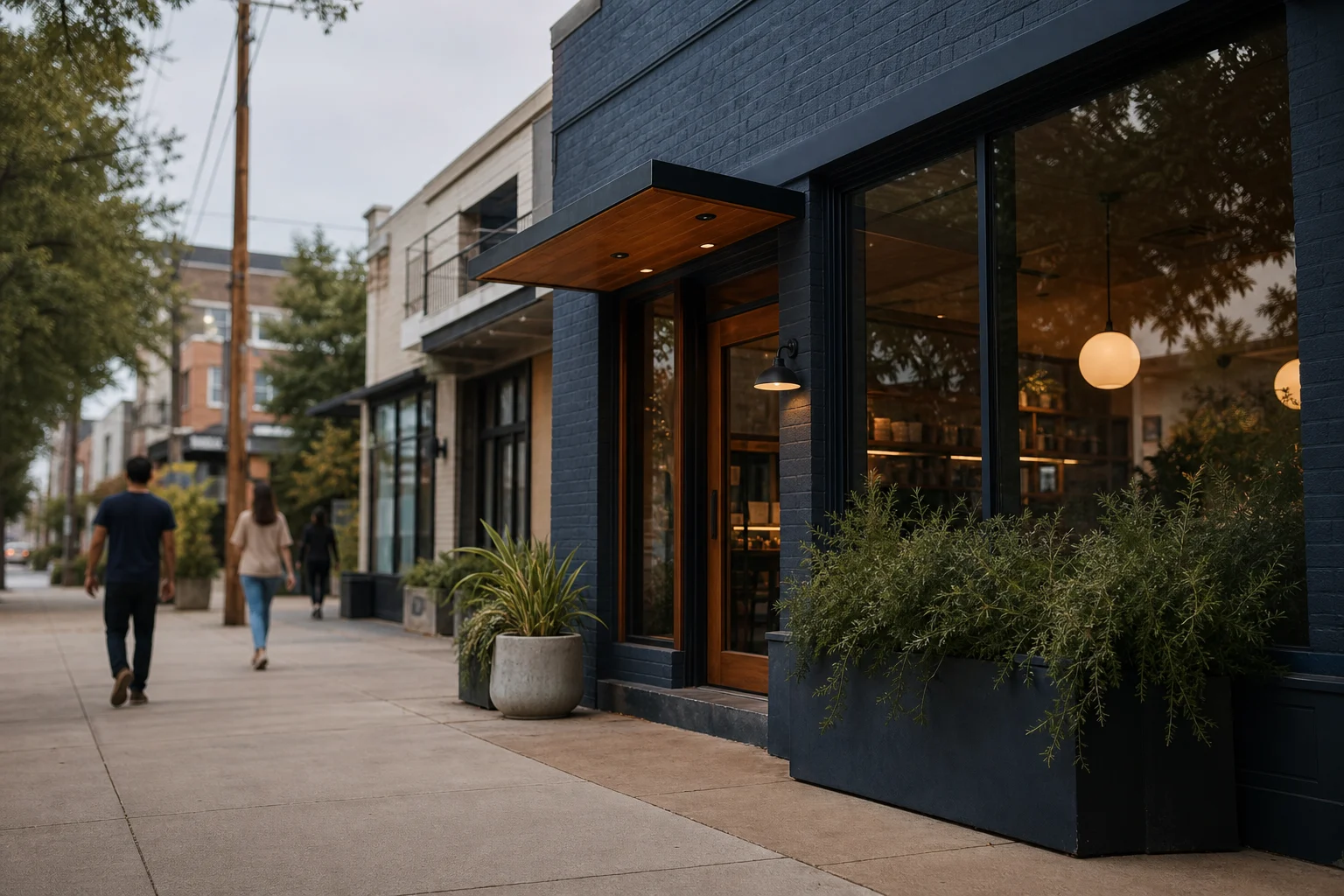
Why location fit matters for a juice and smoothie bar
Location is arguably the most important factor for a juice and smoothie bar business. Unlike restaurants that rely on reservations, juice bars thrive on walk-in traffic and visibility. Your location determines how many potential customers pass by your storefront daily. A prime spot near offices, gyms, or residential areas can provide consistent foot traffic throughout the day. Accessibility matters too—customers need convenient parking or public transportation options to visit regularly. Competition density affects your market share, while rent levels impact your profitability. The right neighborhood aligns with your target customer demographics and lifestyle preferences, ensuring your juice bar becomes a natural part of their daily routine.
Top 3 neighborhoods to consider
Based on Locavisor neighborhood scoring, here are the top three neighborhoods for opening a juice and smoothie bar in Austin:
Domain / North Austin (6.8/10)
The Domain is Austin's premier mixed-use tech hub with Apple, Google, and Indeed offices anchoring a dense daytime workforce. Strong lunch-daypart demand and high retail vibrancy make this a natural fit for a takeout-first juice bar. Rent is manageable at roughly $30-50/sqft NNN — workable for a medium-budget operator. Market temperature is mixed with medium competition density.
Hyde Park (6.5/10)
Hyde Park is a walkable historic neighborhood north of UT Austin with strong student density and a loyal local customer base. Two existing juice-smoothie competitors (JuiceLand at 4.6★/646 reviews and Tropical Smoothie Cafe at 3.9★/82 reviews) mean you're entering a contested space. Rent runs roughly $45-70/sqft NNN — premium for a medium-budget operator. Market temperature is mixed with medium competition density.
Downtown Austin (6.1/10)
Downtown Austin is the CBD core with the highest daytime population density in the city — office towers, state government, and tourist traffic converge here. Three juice-smoothie competitors already operate (JuiceLand Frost Tower at 4.6★/331 reviews, Juiced Up Cafe at 4.8★/355 reviews, and another JuiceLand at 4.7★/148 reviews). Market temperature is competitive with high competition density. Rent levels are high in this central business district.
How the neighborhood scores are built
Locavisor neighborhood scoring evaluates each area based on multiple factors relevant to juice and smoothie bar businesses. The scoring system considers demand indicators like daytime population density, foot traffic patterns, and nearby complementary businesses. Competition density assesses the number and quality of existing juice and smoothie establishments. Rent fit evaluates whether commercial leasing costs align with typical juice bar revenue models. Accessibility measures transportation options and parking availability. Customer match analyzes demographic alignment with typical juice bar patrons.
The scoring methodology has a confidence level of 78% based on the 2026-05 data snapshot. This means the scores are reliable indicators but should be supplemented with additional local research before making final decisions. The scoring system is designed to provide founders with a starting point for location evaluation rather than a definitive answer.
How to validate the shortlist before signing a lease
While neighborhood rankings provide valuable insights, successful founders conduct additional validation before committing to a location. Visit each neighborhood at different times of day and days of the week to observe actual foot traffic patterns. Monday mornings and Friday afternoons often reveal different customer volumes and demographics. Talk to local business owners about their experiences with customer traffic and seasonal variations. Check with the city's planning department about any upcoming developments or construction that might impact your location.
Consider conducting informal surveys with potential customers in your target neighborhoods. Ask about their juice consumption habits, preferred price points, and what they'd like to see in a new juice bar. This direct feedback can help refine your concept and menu offerings. Also, analyze the performance of existing juice bars in each neighborhood—both successful and struggling ones—to understand what works and what doesn't.
Common mistakes founders make in Austin
Many juice bar founders in Austin make avoidable location mistakes that impact their chances of success. One common error is underestimating the importance of visibility. A great product won't sell if customers can't find or see your location. Another mistake is failing to account for seasonal variations in foot traffic, which can be significant in Austin's climate. Some founders also overlook the importance of parking availability, especially for customers who might be carrying juice purchases.
Another pitfall is misjudging the competition landscape. Simply counting the number of existing juice bars isn't enough—you need to assess their strengths, weaknesses, and market positioning. Some founders also neglect to verify zoning regulations and permitting requirements specific to food service businesses in their chosen neighborhood. Finally, many first-time entrepreneurs overestimate their ability to sustain high rent levels during the crucial initial months when customer loyalty is still being established.

FAQ
Where is the best location for A Juice and Smoothie Bar in Austin?
Based on Locavisor neighborhood scoring, Domain / North Austin ranks as the best location for a juice and smoothie bar in Austin with a score of 6.8/10. This area offers a strong daytime workforce from tech companies like Apple, Google, and Indeed, making it ideal for a takeout-focused juice bar. The rent levels in this area ($30-50/sqft NNN) are manageable for medium-budget operators, though competition density is medium.
How much does commercial rent typically cost in Austin's top juice bar neighborhoods?
Rent varies significantly across Austin's neighborhoods. In Domain / North Austin, expect to pay roughly $30-50/sqft NNN. Hyde Park commands higher rents at $45-70/sqft NNN, reflecting its premium location near UT Austin. Downtown Austin typically has the highest commercial rents, though specific figures weren't provided in the neighborhood data.
How much competition should I expect in these neighborhoods?
Competition density varies by neighborhood. Domain / North Austin has medium competition density. Hyde Park has two established juice-smoothie competitors: JuiceLand and Tropical Smoothie Cafe. Downtown Austin has the highest competition with three existing juice-smoothie establishments already operating.
What's the best time of day to open a juice bar in Austin?
The optimal opening time depends on your target neighborhood. In business districts like Domain / North Austin and Downtown Austin, early morning (around 7 AM) captures the breakfast and pre-work crowd. In neighborhoods like Hyde Park with strong student populations, opening slightly later (around 9 AM) might be more appropriate. Many successful juice bars stay open through the afternoon to capture the post-work and after-school crowds.
How important is proximity to gyms and fitness centers for a juice bar?
Proximity to gyms and fitness centers can be beneficial for a juice bar as it creates a natural customer base interested in health and wellness products. However, this factor wasn't specifically included in the neighborhood scoring data. If your business model emphasizes post-workout nutrition, areas with high concentrations of fitness facilities might be worth additional consideration beyond the ranked neighborhoods.
Last reviewed: 2026-05-08
Sources: U.S. Census Bureau ACS, LEHD LODES, Google Places, OpenStreetMap, Locavisor neighborhood scoring.
Methodology: Locavisor scores neighborhoods across demand, competition fit, rent fit, accessibility, and customer match. Scores reflect a snapshot of recent data and should be combined with on-the-ground research before lease decisions.
Disclaimer: This article provides informational content only and does not constitute legal, financial, accounting, or real-estate advice. Verify lease terms, licensing, local regulations, costs, and professional requirements with qualified local professionals before making business decisions.
Free preview shows top 3 neighborhoods. Full $9.99 report covers all 10 areas with personalized scoring + 90-day check-ins.
Informational only. Verify lease, licensing, local regulations, costs, and professional requirements with qualified local professionals.